
Living abroad is supposed to be the adventure of a lifetime, but what happens when the reality feels more isolating than inspiring? For many, the expat experience is a silent struggle. You may be surrounded by the vibrant sights and sounds of a new city like Singapore, yet feel a profound sense of loneliness. The person you were back home feels distant, your sense of purpose seems to have gotten lost in transit, and a quiet guilt settles in-a feeling that you should be happy, but instead, you’re just struggling to stay afloat.
If this sounds familiar, please know you are not alone, and your feelings are entirely valid. This guide is here to offer a compassionate space to explore these hidden emotional challenges. We will help you navigate the complexities of culture shock and loneliness, and uncover gentle, actionable steps to rebuild your sense of self. Our goal is to support you in finding your footing, strengthening your connections, and creating a life abroad that feels not just manageable, but genuinely fulfilling and grounded, right here in your new home.
Key Takeaways
- Acknowledge the unspoken grief of leaving your old life behind and understand why the reality of moving abroad can feel different from the dream.
- Discover the predictable emotional stages of the expat adjustment curve to better navigate your own journey with self-compassion.
- Learn actionable strategies to rebuild your sense of identity and create grounding routines that support your wellbeing in a new environment.
- Recognise the key signs that it may be time to seek professional support and understand how a therapist can help you thrive, not just survive.
Beyond the Postcards: The Hidden Emotional Reality of Expat Life
Moving to Singapore often begins with a highlight reel of possibilities: stunning cityscapes, world-class travel at your doorstep, and a vibrant, multicultural lifestyle. While these exciting opportunities are real, they don’t tell the whole story. Beneath the surface of this new adventure lies a complex emotional landscape that many are unprepared to navigate.
Saying goodbye is not just about leaving a place; it’s about leaving behind a version of yourself-the one who knew the unspoken rules, had an established community, and moved with a sense of familiarity. This departure brings a unique form of grief. At the same time, the constant effort of adapting to a new culture, building a support system from scratch, and managing the logistics of a new life can lead to a deep-seated ‘expat fatigue’. It’s a quiet exhaustion born from being in a perpetual state of adjustment, where even simple tasks require extra mental energy.
The Instagram Ideal vs. The Daily Reality
Your social media may feature infinity pools and weekend trips to Bali, but the daily reality often involves navigating bureaucracy, finding a reliable doctor, or feeling a pang of loneliness on a familiar holiday. This gap between the curated, successful expat image and your internal experience can create a disorienting sense of shame, making you feel like you’re the only one not thriving.
Why It’s So Hard to Talk About the Struggles
Many of us hesitate to voice these challenges. There’s often a fear of sounding ungrateful to friends and family back home who see only the glamorous side of your new life. This pressure to remain positive can be isolating, and the cumulative emotional toll is very real. In fact, this unique set of challenges is sometimes framed within a psychological context, like the Ulysses Syndrome: The Stress of Migration, which acknowledges the profound and chronic stressors faced by people living far from their roots.
Common Mental Health Hurdles for Expat Women
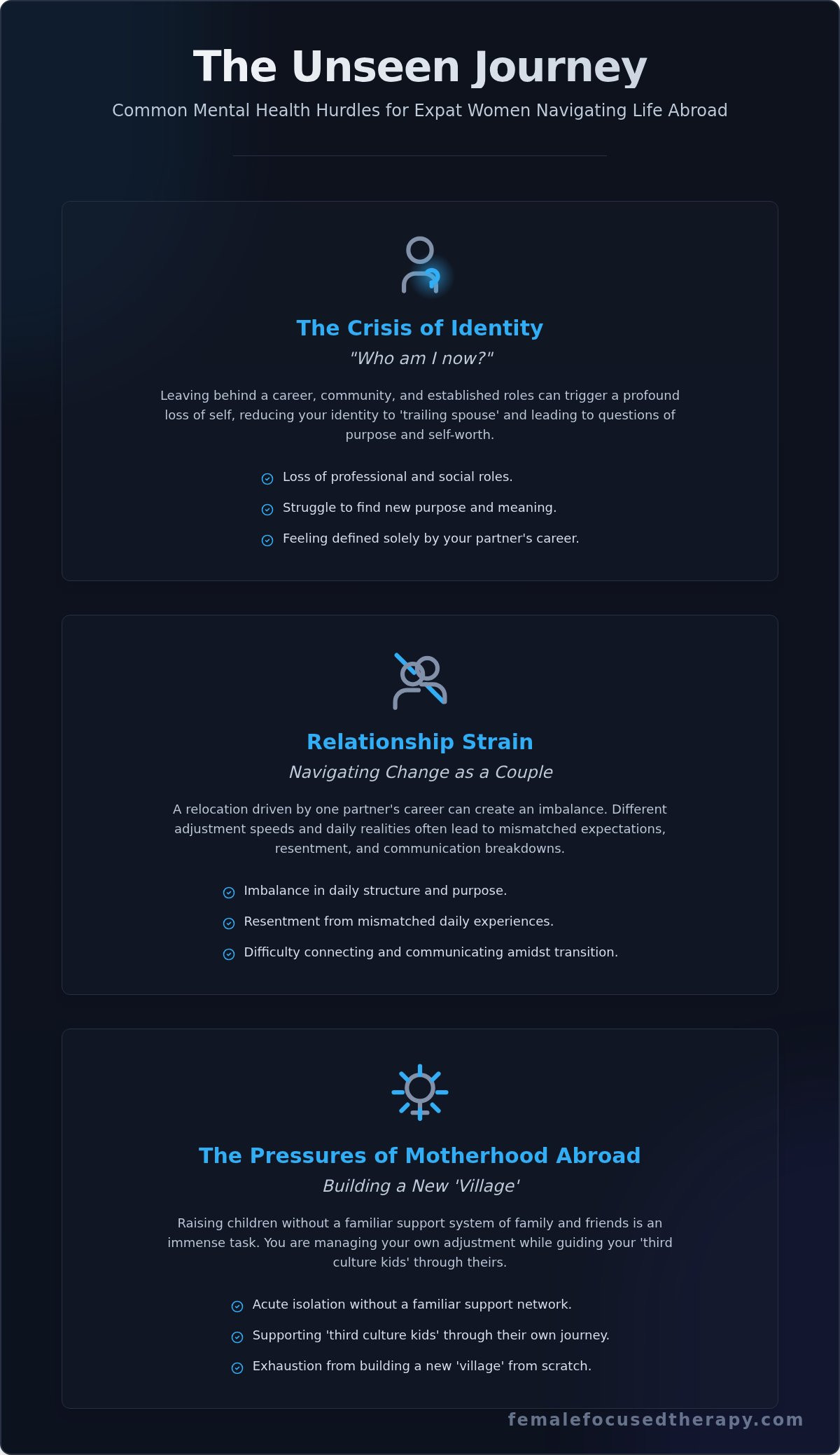
Moving to a vibrant city like Singapore is an adventure, but it can also unearth a unique set of emotional and psychological challenges, particularly for women. While every expat journey is different, many women find themselves navigating common hurdles that can deeply impact their wellbeing. The excitement of a new beginning can soon be overshadowed by feelings of isolation, a loss of identity, and unexpected strain on your most important relationships. Acknowledging these challenges is the first, most compassionate step toward finding your footing and rebuilding a sense of self.
The Crisis of Identity: ‘Who Am I Now?’
You may have left behind a fulfilling career, a strong community role, and a network of friends who have known you for years. Suddenly, your primary identity might feel reduced to that of a ‘trailing spouse’ or ‘expat wife’. This abrupt shift can trigger a profound sense of loss and leave you questioning your purpose and self-worth. Rebuilding your identity isn’t about recreating your old life; it’s about having the safe space to explore who you are in this new chapter and discover what brings you meaning now.
Relationship Strain: Navigating Change as a Couple
When one partner’s career drives the relocation, it can unintentionally create an imbalance in the relationship. The working partner is often immediately immersed in a structured new role, while the other navigates the complex, unstructured work of setting up a home and social life. This can lead to resentment, mismatched expectations, and communication breakdowns. It is vital to find new ways to connect and support each other through this transition. For many, couples therapy can help navigate these challenges and strengthen your bond.
The Unique Pressures of Motherhood Abroad
Raising children in a new country without the familiar support of grandparents, siblings, or lifelong friends is an immense task. You are not only managing your own adjustment but also guiding your ‘third culture kids’ through theirs. The isolation can feel particularly acute, and the pressure to build a new ‘village’ can be exhausting. Research consistently highlights the various expat family adjustment challenges that arise, underscoring that these feelings are a normal, shared experience for many families navigating life far from home.
Understanding the Expat Adjustment Curve: A Journey in Stages
Moving to Singapore is a profound life change, and the emotional journey that follows is often more predictable than you might think. Many psychologists refer to this as the “U-Curve of Adjustment,” a model that helps normalise the emotional highs and lows of relocation. Understanding these stages can be deeply validating, allowing you to see your feelings not as a sign of failure, but as a natural part of the expat experience. It’s a roadmap that shows you are on a well-trodden path.
Remember, this journey is rarely a straight line. It’s common to move back and forth between stages, and setbacks are a normal part of building a new life. The goal isn’t to rush through the curve, but to navigate it with self-compassion and support.
Stage 1: The Honeymoon Phase
This initial period is filled with excitement and discovery. Everything feels new and adventurous-from navigating the MRT to exploring vibrant hawker centres. Your energy is high, fuelled by the novelty of your surroundings and a sense of optimism about the future. You focus on the similarities and find the differences fascinating. While this phase is wonderful, it’s important to recognise that it is temporary, and a shift in feelings is a natural next step in the process.
Stage 2: The ‘Culture Shock’ or Distress Phase
As the initial excitement fades, the realities of living in a new culture set in. This is often the most challenging stage. Small difficulties-like deciphering Singlish, understanding different workplace etiquette, or navigating unfamiliar social cues-can feel overwhelming. Feelings of frustration, anxiety, loneliness, and intense homesickness are common. It’s a period where you may feel irritable and question your decision to move. Your feelings during this time are completely valid and shared by many.
Stage 3 & 4: Adjustment and Adaptation
Gradually, you begin to find your footing. You develop routines, build a small support network, and start to understand the nuances of life in Singapore. A new sense of normalcy emerges as you learn to navigate challenges with more confidence. Over time, this adjustment deepens into adaptation, where you feel genuinely at home. You may even develop a bicultural identity, integrating parts of Singaporean culture with your own. Navigating these significant life transitions is a testament to your resilience and growth.
Practical Strategies for Building Resilience and a Fulfilling Expat Life
Moving to a new country is a profound journey of adaptation. While the challenges of the expat experience are real, you hold the power to navigate this transition with intention and grace. Building resilience isn’t about ignoring the difficulties; it’s about developing the tools to move through them, creating a life in Singapore that feels authentic and supportive. This process is a gentle rebuilding of your world, one small, compassionate step at a time.
Create Your ‘Soft Landing’: Routines and Rituals
Uncertainty can be deeply unsettling. You can counteract this by creating pockets of predictability in your new environment. Find a favourite local coffee shop, a quiet bench in the Botanic Gardens, or a regular fitness class that you enjoy. Establishing simple daily and weekly routines provides an anchor in the unfamiliar, helping to ground you when things feel overwhelming. Consider incorporating small rituals from home to maintain a sense of connection and continuity.
Finding Your People: How to Build Community
Loneliness is one of the most common hurdles for any expat. Building a new support system requires gentle, consistent effort. Explore groups that align with your interests-be it a book club, a hiking group, or a volunteer organisation. Don’t wait for invitations; be the one to suggest a coffee or a walk. It can feel vulnerable to take the first step, but it’s a powerful way to foster connection. Remember, deep friendships take time to nurture, so be patient with the process and with yourself.
Mindfulness and Self-Compassion Practices
When you feel overwhelmed, simple grounding exercises can bring you back to the present moment. Try this:
- Notice five things you can see around you.
- Acknowledge four things you can feel (your feet on the ground, the texture of your clothes).
- Listen for three things you can hear.
- Identify two things you can smell.
- Focus on one thing you can taste.
This practice helps calm an anxious mind. Acknowledge difficult feelings without judgment-it’s okay to feel sad or homesick. Most importantly, schedule time for activities that genuinely bring you joy and replenishment.
Creating a new sense of ‘home’ is a deeply personal journey of reconnection-with your new environment and with yourself. If you need support in navigating these steps and rebuilding your self-trust, professional therapy can provide a safe, confidential space to explore your experience.
When to Seek Professional Support: You Don’t Have to Do It Alone
Navigating the complexities of life abroad can be deeply rewarding, but it also comes with unique pressures. It’s a sign of strength, not weakness, to recognise when the challenges feel overwhelming. Reaching out for professional support is a courageous step toward reclaiming your wellbeing and finding clarity amidst the change. You don’t have to navigate this journey by yourself.
Signs You Might Benefit from Therapy
Sometimes, the signs that you need extra support are subtle, while other times they are impossible to ignore. You may find therapy helpful if you are experiencing:
- A persistent low mood, overwhelming anxiety, or a pattern of social withdrawal.
- Feelings of isolation or loneliness that don’t seem to lift.
- Relationship conflicts with a partner or family that feel stuck or unresolvable.
- A sense of being lost, or unable to move forward in your adjustment process.
The Value of an Expat-Aware Therapist
Explaining the nuances of culture shock, identity loss, or repatriation anxiety to someone who hasn’t lived it can be exhausting. Working with a therapist who understands the expat experience means you can skip the background story and dive straight into what matters. This shared understanding creates a foundation of trust and allows for a more targeted, effective approach to navigating cross-cultural challenges. This deep empathy comes from lived experience, and you can read more about Cheryl’s own expat experience, which informs her compassionate approach.
How to Get Started with Female Focused Therapy
Taking the first step is simple and completely confidential. We begin with an initial consultation to understand your needs and ensure we are the right fit for you. With secure online sessions available, you can access support from the comfort of your home in Singapore or wherever you are in the world. Our commitment is to provide a safe, non-judgemental space where women can feel heard, rebuild self-trust, and move forward with confidence.
It’s okay to ask for help. Book your confidential consultation today.
Your Expat Journey: From Surviving to Thriving
Living abroad is a profound journey, one that extends far beyond picturesque postcards. Understanding that the emotional adjustment curve is a normal part of the experience is a crucial first step. By consciously building resilience and seeking out community, you can navigate the inevitable challenges and cultivate a life that feels authentic and fulfilling. Remember, your feelings are valid, and reaching out for support is a sign of incredible strength.
If you feel you could benefit from professional guidance, you are not alone. Female Focused Therapy offers specialised support for women navigating life transitions and relationship trauma. As a registered psychotherapist with personal expat experience, I provide a warm, confidential space to help you find clarity and confidence. You deserve to feel grounded and at home, wherever you are in the world.
Frequently Asked Questions About Expat Mental Health
What is ‘expat depression’ and is it a real thing?
Yes, it is a very real and valid experience. While not a formal clinical diagnosis, ‘expat depression’ describes the profound sadness, anxiety, and loss of identity many feel after moving. It often stems from the immense stress of adapting to a new culture, grieving the loss of your support network, and navigating the challenges of a new life. Acknowledging these feelings is the first step toward finding support and rebuilding your wellbeing.
How can I cope with extreme loneliness after moving abroad?
First, please know that feeling lonely is a normal part of the adjustment process. To cope, focus on creating small, consistent routines to build a sense of stability. Seek out communities that align with your interests, such as fitness classes, book clubs, or professional networking groups in Singapore. Building new connections takes time and gentle, intentional effort. Be patient with yourself as you navigate this new chapter and begin to form your new support system.
My partner is thriving as an expat, but I’m struggling. What can I do?
This is an incredibly common situation, and your feelings are completely valid. It’s important to communicate your struggles to your partner openly, creating space for mutual understanding. It is also vital to cultivate your own sense of purpose and identity outside of their career. Exploring personal hobbies, volunteering, or seeking therapy can provide a dedicated space for you to process your unique experience and rebuild your confidence on your own terms.
How long does it take to finally feel ‘at home’ in a new country?
There is no single timeline, as everyone’s journey is unique. Adjustment is not a linear process; it often comes in waves of progress and setbacks. While many people report feeling more settled after the first year, it can take longer to truly feel a sense of belonging. The goal is to release the pressure of a deadline and focus on being present. Show yourself compassion as you gradually build a life that feels authentic and meaningful to you here.
Is online therapy effective for expats?
Absolutely. Online therapy is an incredibly effective and valuable resource for the expat community. It provides consistent support from a therapist who understands your cultural background, which is a source of stability if you move again. It also offers the flexibility to schedule sessions around a demanding life and the privacy to speak freely from your own home. It is a powerful way to ensure you have dedicated, professional support no matter where you are.
How can I support my mental health before I even move abroad?
Proactive mental health care can make a significant difference. Before you move, research and manage your expectations-embrace the excitement while also anticipating challenges. Have open conversations with your family about potential stressors. It can be incredibly helpful to establish a relationship with a therapist before you leave, ensuring you have a trusted support system in place from the moment you arrive in Singapore, ready to help you navigate the transition.

Article by
Cheryl Kennedy MacDonald MA BA (Hons) Pg. Dip. SAC BACP
Cheryl Kennedy MacDonald is a psychotherapist specialising in women’s mental health, relationships, and life transitions. She works with women navigating trauma, relationship breakdown, identity shifts, and midlife change, helping them rebuild self-trust, emotional stability, and a clear sense of who they are and what they want.
With over 20 years’ experience working with women internationally, Cheryl is the founder of YogaBellies, a global women’s yoga school, and the creator of the Birth ROCKS method. Her work sits at the intersection of psychotherapy and embodiment, integrating evidence-based therapeutic approaches with somatic, body-based practices that support deep, lasting change.
Known for her grounded and direct approach, Cheryl moves beyond surface-level insight to address the patterns held in the body and nervous system. Her work supports women to regulate, reconnect, and respond to their lives from a place of clarity, strength, and self-respect.
She is a published author in academic journals and has written multiple books on women’s health, pregnancy, and midlife wellbeing, available on Amazon and leading book retailers worldwide.