
You’ve spent years trying to “fix” your focus with planners, yet the chronic overwhelm and brain fog haven’t lifted. It feels like an exhausting cycle of pushing yourself to burnout, only to spend your recovery feeling guilty. I know how heavy that weight of rejection sensitivity can feel; it’s a burden I’ve carried myself.
We often think we just need more discipline, but the truth is that your neurodivergent brain requires somatic safety, not more pressure. I promise to show you a path toward internal stability that moves beyond the typical productivity advice that has likely failed you before.
We will explore how adhd counselling can help quiet the mental noise and build a sense of self-trust that reduces shame and honours your natural rhythm.
Key Takeaways
- Understand why traditional productivity advice often triggers a shame response and how to break that cycle for good.
- Explore how adhd counselling can provide a safe, mask-free space to process your internal experiences without any judgment.
- Learn the vital link between your nervous system and emotional regulation to help you find true internal stability.
- Discover why an integrative approach involving both your mind and body is essential for lasting restoration and peace.
- Reframe your ADHD as an internal experience of restlessness rather than a deficit of will or a lack of discipline.
The Invisible Weight of Being a High-Functioning Woman with ADHD
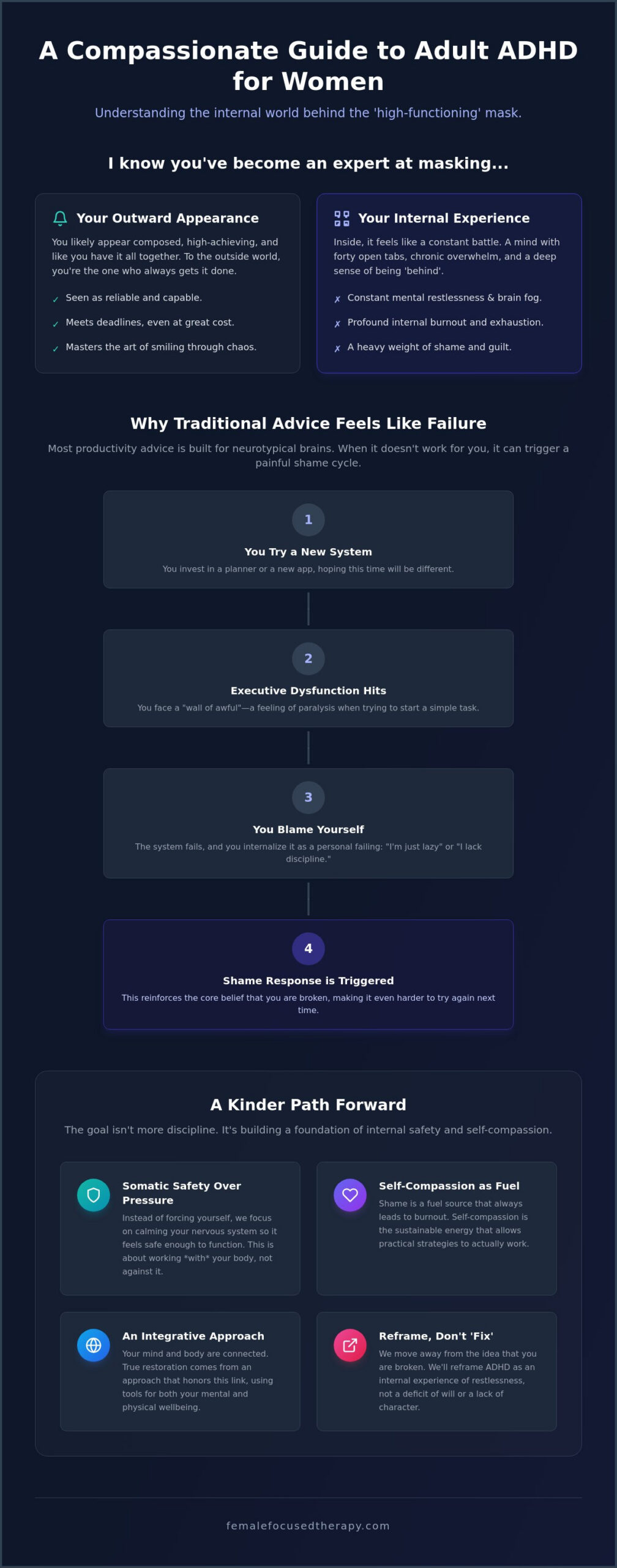
For many of us, ADHD doesn’t look like a child who can’t sit still in a classroom. It looks like a woman who is sitting perfectly still in a meeting while her mind is screaming with forty different open tabs. This internal restlessness is exhausting because it is entirely invisible to the outside world. You might appear composed, but the mental effort required to stay that way is immense.
We become experts at “masking,” which is the performance of looking okay while feeling chaotic inside. We learn to smile and meet deadlines, but the cost is a profound internal burnout. I’ve found that these symptoms often feel even more unmanageable during life transitions and menopause, when shifting hormones can make existing challenges feel like mountains.
This is where specialized adhd counselling becomes so important. It’s a space to acknowledge the heavy shame of not being able to “do it all” like everyone else seems to. When we work together, we move away from the idea that you are broken and toward an understanding that your brain simply processes the world through a different lens.
Why our ADHD often goes unnoticed until adulthood
Many women I support were “gifted” or “high-achieving” children. We used our intelligence to compensate for our struggles until the complexity of adult life finally outpaced our coping mechanisms. When the demands of a career, a home, and perhaps a family all hit at once, the system begins to buckle.
Because we didn’t fit the stereotype of the hyperactive boy, we internalised our challenges as personal failings. We told ourselves we were just lazy, messy, or scattered. It is quite common for women to be diagnosed with anxiety or depression first, without anyone looking at the underlying Adult attention deficit hyperactivity disorder that is driving the overwhelm.
The emotional toll of executive dysfunction
Have you ever stared at a simple task, like responding to a single email or folding a basket of laundry, and felt a physical sense of paralysis? This is the reality of executive dysfunction. Put simply, executive dysfunction is the brain’s difficulty in starting, stopping, and switching tasks.
This paralysis leads to a chronic feeling of being “behind” in life. You see others managing their lives with apparent ease, while you feel like you’re constantly treading water. Through adhd counselling, we can start to peel back those layers of self-blame and look at how to support your nervous system instead of just trying to “try harder.”
Why Traditional Advice Often Leaves Us Feeling Like We’re Failing
Most of us have a drawer full of beautiful, half-finished planners and “life-changing” journals. We buy them with the best intentions, hoping this time will be different. When the system inevitably fails, we don’t blame the tool; we blame ourselves. We assume we just lack the discipline that everyone else seems to have so naturally.
The problem isn’t your willpower. It’s that traditional productivity advice is designed for neurotypical brains. For those of us with ADHD, a “to-do” list can often feel like a list of ways we are currently failing. This creates what I call the ADHD-Trauma loop. Every time we can’t start a task, we trigger a shame response that makes the next attempt even harder. You can find more NIMH information on ADHD regarding how these symptoms manifest across different life stages.
I believe that self-compassion is a prerequisite for any practical strategy to actually work. Without it, we are just using shame as a fuel source, and that always leads to burnout. In my adhd counselling sessions, we focus on lowering the stakes so your nervous system can finally feel safe enough to function.
We also have to talk about Rejection Sensitive Dysphoria (RSD). This is that intense, overwhelming emotional pain we feel when we perceive rejection or criticism. It doesn’t just hurt our feelings; it impacts our relationships and how we view our place in the world. It makes us hyper-vigilant and prone to people-pleasing just to avoid that sting of disapproval.
Moving beyond the ‘productivity’ trap
I want you to realise that your worth isn’t tied to your output or how organised your kitchen is. Trying harder at a system that doesn’t fit your brain is like trying to fit a square peg in a round hole. It’s exhausting and ultimately fruitless.
Your brain needs interest, novelty, and urgency to engage. It doesn’t respond well to “shoulds” or rigid discipline. When we stop fighting our nature, we can find ways to work with our energy rather than against it. If you’re ready to explore a different way of being, you can book a supportive session to start that journey.
The link between ADHD and emotional intensity
Women with ADHD often feel emotions more deeply and “loudly” than others. A small frustration can feel like a catastrophe, while a moment of joy can feel like pure magic. This intensity is a beautiful part of who you are, but it can be incredibly draining without the right support.
This emotional landscape is why finding a therapist in Singapore who truly understands neurodivergence is so vital. You need someone who knows that your “big” emotions aren’t a sign of instability, but a natural part of your vibrant, sensitive brain. Through adhd counselling, we learn to navigate these waves with more grace and less fear.
An Integrative Approach: Healing the Mind and Body Together
I often tell my clients that we cannot simply talk our way out of a physiological state of overwhelm. When your brain is moving at a hundred miles an hour, traditional talk therapy can sometimes feel like trying to stop a train by shouting at it. That is why my approach to adhd counselling is deeply integrative.
We need to address the nervous system directly. For women with ADHD, our systems are often stuck in a state of high alert or total shutdown. This isn’t a character flaw; it is a biological response to a world that often feels too loud and too fast. You can read the American Psychiatric Association on ADHD to understand the clinical foundations of these experiences.
My work isn’t about “fixing” your brain so it acts like everyone else’s. It’s about learning to live in harmony with the brain you actually have. By combining evidence-based psychotherapy with somatic movement and mindfulness, we can create a sense of internal safety that allows you to breathe again.
Somatic regulation for the ADHD brain
We use simple breath and movement techniques during our sessions to help quiet that relentless internal noise. When you feel that familiar buzz of restlessness, coming back to the physical sensation of your feet on the floor can be incredibly grounding. It’s about finding a reliable anchor in the middle of the storm.
Somatic therapy helps us process the physical tension that ADHD-related stress creates. By moving the body gently, we release the stored “stuckness” that happens when we’ve been masking or pushing through burnout for too long. It’s a way of telling your body that it is finally safe to let go of the performance.
Restoring self-trust through mindfulness
Mindfulness isn’t about having a quiet mind; it’s about learning to observe the chaos without being swept away by it. We practice noticing a thought and letting it pass like a cloud, rather than following it down a rabbit hole of anxiety. This builds a profound sense of self-trust over time.
I’ve found that building “pockets of rest” into the day is essential for preventing the ADHD burnout cycle. As a woman who lives with ADHD myself, I use these same tools every single day to stay grounded. I know how much it helps to have a toolkit that respects your neurodivergent rhythm rather than fighting it.
Effective adhd counselling should be a collaborative journey. We look at your life holistically, ensuring that the strategies we build are sustainable and kind. When we heal the mind and body together, we stop just surviving and start actually living with more ease.
What to Expect in Our ADHD Counselling Sessions Together
When you step into a session with me, whether we are meeting in person in Singapore or through our online therapy space, my first goal is to help you put down the heavy weight of performance. Most women I work with spend their entire lives trying to appear “normal” and organised. In our adhd counselling sessions, that mask is no longer required. You don’t have to apologise for being late, for losing your train of thought, or for feeling “too much.” This is a safe, boundaried space where you can simply be yourself.
Our work is a collaboration. I don’t see myself as an expert who is here to “fix” you, but as a guide who is exploring the unique landscape of your brain alongside you. We might spend one session untangling the threads of relationship trauma and another finding ways to manage the daily overwhelm of your career. Everything we do is tailored to what you need in the moment, ensuring the process feels supportive rather than like another item on your to-do list.
The journey from chaos to calm
I like to think of our progress in three gentle steps. First, we create safety and validate your lived experience, often for the first time. Second, we explore the patterns that keep you stuck in cycles of shame or burnout. Finally, we develop “micro-strategies” that actually feel manageable for your specific life. These aren’t rigid rules; they are small, kind adjustments that respect your energy and your nervous system.
A focus on your strengths, not just ‘symptoms’
While we address the challenges, we also look for your brilliance. Your ADHD brain likely brings incredible creativity, a unique sense of humour, and the gift of hyper-focus on things you love. We shift the narrative from a “disorder” to a different way of being. My aim is to help you rebuild the confidence to trust your own intuition again, knowing that your perspective is valuable and your way of processing the world is valid. If you’re ready to stop performing and start understanding your own mind, you can book a session with me here to begin.
Moving Forward: Your Journey Toward Emotional Stability and Rest
I want you to know that finding a sense of calm doesn’t require you to become a different person. You don’t need to “fix” your personality or erase your ADHD traits to experience true peace. The goal of our work together is internal restoration. It’s about building a life that feels spacious and supportive rather than a constant uphill battle against your own nature. You deserve to live in a body that feels like a safe home.
Taking the first step toward adhd counselling can feel daunting, especially if you’re already at capacity. Please know that there is no “perfect” time to start and no “right way” to show up. Whether you arrive with a list of concerns or just a general feeling of being lost, I am here to hold that space for you with patience and kindness. We will work together to quiet the mental noise and rebuild your self-trust.
Choosing the right path for you
Every woman’s journey is different, and your support should reflect that. Some prefer the slow, steady pace of weekly sessions, while others find that my focused intensive therapy options allow them to dive deeper into healing in a more concentrated way. We can discuss what best fits your current life, your goals, and your energy levels during our initial connection.
I also offer the flexibility of online sessions, which can be a relief when a busy schedule or the thought of commuting feels like too much. My aim is to make support accessible and low-pressure. We move at a speed that feels manageable for you, ensuring you never feel rushed or judged during our time together. This is your space to exhale and find the internal stability you’ve been looking for.
Your realistic next step
If you aren’t quite ready to book a session, that is perfectly okay. You can take a small, gentle step right now by simply pausing to notice your feet on the ground. Feel the texture of the floor and the weight of your body being supported. This tiny moment of grounding helps quiet the internal buzz and reminds your nervous system that you are safe in this moment. It is a simple way to practice being present with yourself.
You might also enjoy exploring my free therapy resources to begin understanding your patterns at your own pace. There is so much power in finally being seen and understood for exactly who you are. When you are ready to explore how adhd counselling can support your specific journey, I’ll be here to listen. My hope is that you move forward with a renewed sense of self-assurance and the quiet mind you have been seeking.
Embracing a Life of Internal Peace and Self-Trust
You now understand that your struggle isn’t a lack of willpower, but a sign that your nervous system needs a gentler, more integrative path. We have explored how moving beyond the productivity trap and embracing somatic safety can finally help you quiet the mental noise. My hope is that you now feel empowered to stop “fixing” yourself and start listening to what your body and mind truly need.
As a Registered Integrative Psychotherapist and specialist in female neurodivergence, I am here to help you navigate this journey with a trauma-informed and somatic approach. I know from my own lived experience that finding internal restoration is possible when you have the right support. Through dedicated adhd counselling, we can work together to rebuild your confidence and find a manageable rhythm that honours your vibrant, sensitive brain.
When you are ready to stop performing and start healing, I would be honoured to walk alongside you in a safe, mask-free space. You can Book a calm, confidential consultation with me today to begin this new chapter. You don’t have to carry the weight of being high-functioning all by yourself anymore.
Frequently Asked Questions
What is the difference between ADHD coaching and counselling?
Coaching typically focuses on practical skills and external systems, whereas my work explores the emotional roots of your struggles. I help you navigate the shame of “masking” and regulate your nervous system. This ensures that any practical tools you use have a stable internal foundation to work from.
Can I receive support if I don’t have a formal diagnosis yet?
Yes, you absolutely can start therapy without a clinical label. Many women I support recognise their neurodivergent traits through lived experience rather than a formal report. We focus on the specific challenges you face today, ensuring you get the validation and strategies you need right now.
How many sessions will I need before I start feeling less overwhelmed?
Every journey is unique, but many women feel a significant internal shift within four to six sessions. This initial relief often comes from the power of finally being seen and understood. While building deep self-trust takes time, we work on small, manageable wins from our very first meeting.
Is this approach effective for women going through menopause?
It is highly effective because hormonal shifts can make ADHD symptoms feel much more intense. Dropping oestrogen levels often increase brain fog and restlessness, making previous coping mechanisms fail. We look at how your biology and neurodivergence intersect, using somatic tools to support your system through this transition.
Do you offer online sessions for women outside of Singapore?
Will we focus only on my ADHD or can we talk about my relationships too?
We look at your life holistically, as your neurodivergence impacts every connection you have. Whether you are navigating family dynamics or the sting of perceived rejection in partnerships, these are vital parts of our work. My goal is to support the whole of you, not just a list of symptoms.
What happens if I feel too overwhelmed to even start therapy?
If you feel at capacity, we start exactly where you are with no pressure to perform. You don’t have to be organised or “ready” to meet with me. I hold a gentle, boundaried space where we can take tiny steps together until the process feels like a source of rest.
How do somatic exercises help with racing thoughts?
Somatic exercises ground your energy in the body, which naturally signals to your brain that you are safe. When your thoughts are spinning, simple movements help break the cycle of mental overwhelm. This physiological shift is a key part of the support I provide during adhd counselling, helping you find a sense of internal stability.

Article by
Cheryl Kennedy MacDonald MA BA (Hons) Pg. Dip. SAC BACP
Cheryl Kennedy MacDonald is a psychotherapist specialising in women’s mental health, relationships, and life transitions. She works with women navigating trauma, relationship breakdown, identity shifts, and midlife change, helping them rebuild self-trust, emotional stability, and a clear sense of who they are and what they want.
With over 20 years’ experience working with women internationally, Cheryl is the founder of YogaBellies, a global women’s yoga school, and the creator of the Birth ROCKS method. Her work sits at the intersection of psychotherapy and embodiment, integrating evidence-based therapeutic approaches with somatic, body-based practices that support deep, lasting change.
Known for her grounded and direct approach, Cheryl moves beyond surface-level insight to address the patterns held in the body and nervous system. Her work supports women to regulate, reconnect, and respond to their lives from a place of clarity, strength, and self-respect.
She is a published author in academic journals and has written multiple books on women’s health, pregnancy, and midlife wellbeing, available on Amazon and leading book retailers worldwide.