
You’re standing in your kitchen, heart racing with a sudden, hot rage over a misplaced set of keys, and you don’t recognise the woman staring back at you. It’s more than just the aching joints or disturbed sleep; it’s the unsettling feeling that your sense of self is evaporating into a thick, confusing brain fog. If you’ve been searching for a menopause therapist singapore, you’re likely looking for someone who understands that this isn’t just a medical phase.
I know how isolating it feels when your body and mind start speaking a language you don’t understand. You aren’t “losing it,” even if the unexplained anxiety makes your professional life feel precarious or you feel disconnected from your changing body. You’re moving through a profound transition that deserves more than a clinical checklist; it needs a safe, boundaried space where you feel truly seen and held.
I’ll help you navigate these intense emotional shifts with compassion and the specialised therapeutic support you need to rebuild your self-trust. We’ll explore how to restore your stability and use practical somatic tools to manage the loop between your physical symptoms and your emotional well-being. Together, we’ll process this midlife identity shift so you can move forward with a renewed sense of internal steady ground.
Key Takeaways
- Understand that menopause therapy is about more than managing physical symptoms; it’s a dedicated space to process the profound identity shifts of midlife.
- Learn how working with a menopause therapist singapore can help you navigate the unique emotional pressures of being a high-functioning woman in a fast-paced city.
- Discover how to reclaim your sense of self and femininity as you navigate changing family dynamics and the transition of the ’empty nest’.
- Explore how somatic tools like breathwork and movement can settle your nervous system when traditional talk therapy doesn’t feel like enough.
- Find out how a safe, non-clinical environment helps you rebuild internal stability and self-trust during periods of hormonal upheaval.
What is Menopause Therapy and Why Does it Matter?
I view menopause therapy as a dedicated psychological support system designed specifically for the midlife transition. While medical doctors often focus on the physical mechanics of understanding menopause, my role as a menopause therapist singapore is to look at the woman behind the symptoms. It isn’t just about tracking hot flushes; it’s about exploring the profound identity shift that happens when your body begins to change in ways you can’t control.
We look at how these hormonal fluctuations interact with your unique emotional history. If you’ve spent years being the “strong one,” this transition can feel like your foundations are cracking. In our sessions, you don’t have to hold it all together for your family or your colleagues. It’s a safe, boundaried space where you can simply be, without the pressure to perform or “fix” yourself immediately. This is a time for internal restoration rather than just symptom management.
The Difference Between Clinical Psychiatry and Integrative Therapy
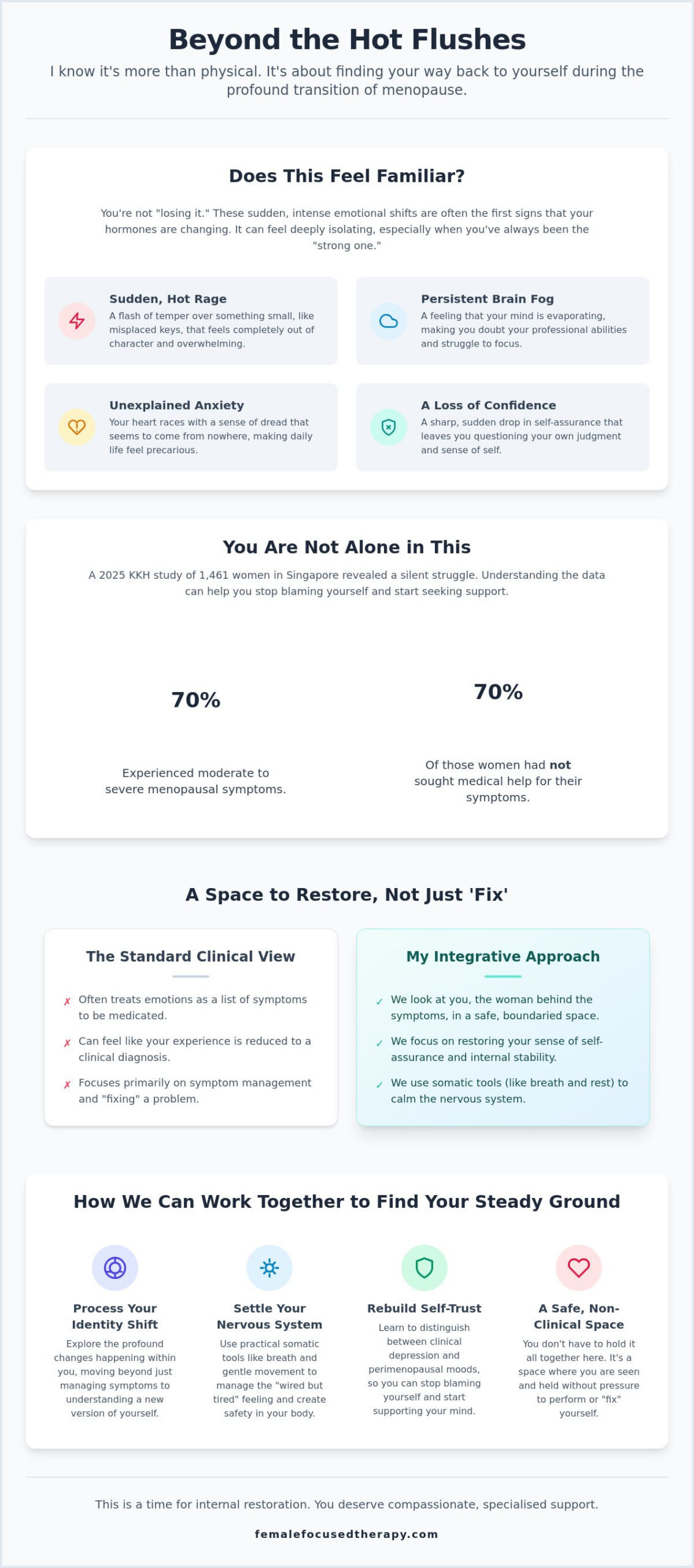
Many women I work with feel wary of clinical environments that treat their emotions as a list of symptoms to be medicated. I use UK-standard integrative techniques that bridge the gap between your mind and your body. This approach isn’t about a clinical diagnosis; it’s about restoration. We focus on understanding why you feel disconnected and how to rebuild that internal sense of self-assurance that feels so precarious right now. It’s about moving from a place of “fixing” a problem to understanding a new version of yourself.
By blending traditional talk therapy with a mind-body perspective, we address the nervous system directly. This is particularly helpful when you feel “wired but tired.” We use somatic themes like breath and rest to create a sense of safety in your body, allowing you to process the psychological weight of midlife without feeling overwhelmed by the clinical “patient” label.
To further support this mind-body connection, you may wish to discover Livelovelife Chiropractic and explore how gentle, transformative chiropractic care can help align your nervous system and promote a deeper sense of internal safety.
Recognising the Psychological Signs of Perimenopause
It’s common to feel a sense of existential dread or a sudden, sharp loss of confidence that feels completely out of character. A 2025 KKH study of 1,461 women found that almost all experienced at least one of 29 common menopausal symptoms. While 70% of these women experienced moderate to severe symptoms, 70% of them had not sought medical help. This silence often stems from not recognising that the “rage” or the “fog” is part of a larger hormonal shift.
You might find yourself gripped by a temper that seems to come from nowhere, or a persistent brain fog that makes you doubt your professional abilities. I help you distinguish between clinical depression and these perimenopausal mood shifts. Understanding this distinction is vital for rebuilding self-trust. When you realise your brain is reacting to a biological transition, you can stop blaming yourself for “losing your edge” and start learning how to support your mind through the change.
Why a Menopause-Informed Therapist is Essential in Singapore
Living in a fast-paced city like Singapore adds a unique layer of pressure to the midlife transition. As a woman and a therapist, I’ve seen how the expectation to remain “high-functioning” can collide painfully with the reality of hormonal depletion. You’re often juggling career peaks, ageing parents, and growing children, all while your internal compass feels like it’s spinning. Finding a menopause therapist singapore who understands this specific friction is about more than just finding a listener. It’s about finding someone who recognises that your environment and your biology are inextricably linked.
A one-size-fits-all approach to counselling often fails at this stage because it ignores the physiological drivers of your distress. Research into the psychiatric symptoms of menopause shows that these shifts are deeply biological, yet they manifest in highly personal ways. I don’t treat your experience as a generic “midlife crisis.” Instead, we look at the intersection of your hormones and your mental health, acknowledging that your brain is literally functioning differently than it did five years ago.
My own journey as a woman informs every session we have. I know that “holding it together” is often a survival mechanism, but it can also be the thing that prevents true restoration. We work together to peel back those layers of performance. This allows us to address the root causes of your overwhelm in a way that feels safe, boundaried, and deeply human. If you’re ready to start that process, you can reach out to me here to find a time that works for you.
When Menopause Meets ADHD: The Perfect Storm
For women with ADHD, the drop in oestrogen during perimenopause can feel like losing your last line of defence. Oestrogen helps regulate dopamine, so when those levels dip, your usual coping strategies might suddenly stop working. I often see women who have managed brilliantly for decades suddenly find themselves unable to focus or manage their emotions. This is frequently the point where women seek ADHD therapy for the first time, finally putting a name to the lifelong “fog” that menopause has intensified.
Navigating Trauma and Midlife Transitions
The hormonal instability of midlife can sometimes unearth old wounds that you thought were long healed. It isn’t uncommon for menopause to act as a catalyst, bringing past relationship trauma or patterns of narcissistic abuse back to the surface. When your internal world feels unstable, your ability to suppress these memories weakens. I use a trauma-informed lens to help you navigate these realisations, ensuring you have the tools to process the past while your body undergoes its own profound transformation.
Navigating Identity Shifts and Relationship Changes
The timing of the “empty nest” frequently coincides with the sharpest hormonal drops of perimenopause. It’s a double hit that can leave you feeling untethered. Just as your children are gaining independence, your body is undergoing a transformation that can make you feel like a stranger to yourself. As a menopause therapist singapore, I often see how this collision of events forces a deep re-evaluation of who you are when you aren’t “just” a mother or a high-achieving professional.
Your changing body can also deeply affect your sense of femininity and sexual identity. It isn’t just about physical changes like vaginal dryness or weight shifts; it’s about the psychological weight of feeling less visible or “desirable” in a society that prizes youth. We work together to process these feelings of loss. It’s about acknowledging the grief of what’s passing while making space for the wise, powerful woman you’re becoming.
This transition is a natural time to re-evaluate your life’s purpose. Many women I work with find that the “people-pleasing” habits of their 30s no longer serve them. You might feel a sudden, urgent need to pivot in your career or dedicate more time to your own creative needs. This isn’t a crisis; it’s a rebirth. It’s about learning to listen to your own intuition again after years of putting everyone else’s needs first.
Communicating with Your Partner During Midlife
Explaining your internal shifts to a partner can feel exhausting when you’re already struggling to understand them yourself. I offer gentle strategies to help you communicate your needs without feeling like you’re “complaining.” Sometimes, the shifts are so profound that couples therapy becomes a helpful way to navigate these changes together. Setting clear boundaries with your family becomes a vital survival skill in your 40s and 50s, allowing you the rest you need to stay grounded.
Rebuilding Self-Trust After the ‘Fog’
The path back to feeling like “you” again starts with small, compassionate steps. Even if that “you” has changed, you can still find a sense of internal steady ground. I use mindfulness and somatic awareness to help you stay present when the brain fog feels most intense. These tools help you reconnect with your body’s signals rather than fearing them. Internal restoration is the core goal of our work, focusing on reclaiming your agency and confidence as you move through this transition.
Somatic Support: Connecting Mind and Body
When your nervous system is dysregulated by hormonal shifts, simply talking about your feelings often isn’t enough to reach the root of the distress. You might find yourself in a therapy session explaining your anxiety while your heart is still racing and your chest feels tight. As a menopause therapist singapore, I recognise that your body is holding onto the stress that your mind is trying to process.
I weave somatic movement and breathwork into our sessions because I believe healing happens in both the mind and the body. These aren’t just physical exercises; they’re ways to communicate directly with your nervous system. When we address the physical sensations of perimenopause, we often unlock emotional breakthroughs that words alone couldn’t reach. It’s about noticing where you hold tension and what that tension is trying to tell you.
Rest is a radical act of self-care during this transition. In a city like Singapore that never seems to stop, choosing to slow down can feel like a failure. But your body is doing immense work behind the scenes to adapt to changing hormonal levels. Giving yourself permission to rest is essential for restoring your internal stability and self-trust, and you can discover TherapyMax to learn more about how professional massage and physiotherapy can further support your body through these changes.
Breath and Movement as Emotional Anchors
I share simple techniques you can use at home to calm those sudden moments of “menopause rage.” By using specific breathing patterns, you can signal to your brain that you are safe. This is where somatic movement and yoga become powerful tools for emotional stability.
The science is simple. Your hormones influence your neurotransmitters, which in turn affect how your body responds to stress. When oestrogen levels fluctuate, your nervous system can become more reactive. By moving with intention, you help regulate those responses and lower your cortisol. It’s about building a toolkit that works when you’re away from the therapy room.
Finding Stillness in a High-Pressure Life
Many Singaporean women I work with carry a heavy burden of guilt when they aren’t being “productive.” You might feel like you’re “falling behind” if you aren’t constantly “on” at work or at home. However, your body requires a different kind of movement and a deeper level of stillness during this life stage than it did in your twenties.
We work together to create a sustainable rest practice that fits into your life without adding more stress. This isn’t about adding another “to-do” item. It’s about learning to listen to your body’s need for quiet. It allows you to process the internal changes at a pace that feels manageable.
I’ve found that for many of my clients, finding a menopause therapist singapore who understands this somatic loop is the key to finally feeling like themselves again. If you’re ready to reconnect with your body in a safe, supportive way, you can book a session with me here.
Finding Your Safe Space with Female Focused Therapy
I invite you to step away from the sterile, fluorescent-lit clinical rooms and into a space designed for your comfort and safety. Choosing a menopause therapist singapore means finding someone who understands that your environment is just as important as the conversation itself. My practice provides a warm, boundaried container where you can let down the guard you’ve been carrying for years. Here, you don’t have to be the high-functioning professional or the tireless caregiver; you can simply be a woman navigating a significant life change.
In a menopause therapy session with me, we look at the whole picture of your life. We don’t just talk about symptoms; we explore the identity shifts and emotional threads that make this transition feel so heavy. I understand that life in Singapore is demanding, which is why I offer both in-person sessions in a grounded setting and the flexibility of online therapy. This allows you to access support in a way that fits your schedule without adding to your mental load.
You don’t need a formal medical diagnosis to seek my support. Many women wait until they’re in a full-blown crisis before reaching out, but you deserve help long before that point. If you feel like your sense of self is slipping or your emotions are becoming unmanageable, that is reason enough to start. In my role as a menopause therapist singapore, I’m here to help you rebuild your internal steady ground before the fog becomes overwhelming.
Your First Step Toward Emotional Restoration
Booking a consultation is a simple, low-pressure way to see if we’re a good fit for each other. It’s a chance for you to share what’s been happening and for me to explain how we can work together to restore your confidence. Taking this step is an investment in the next 30 years of your life. It’s about ensuring the second half of your journey is met with clarity and self-trust. I want to offer you one final word of calm reassurance: you aren’t losing your mind, you’re simply evolving into a new version of yourself.
Contact and Practical Details
If you’re ready to reclaim your emotional stability, you can book now through my secure platform. For those who aren’t quite ready for a full session but want to start exploring their internal world, I’ve made several free therapy resources available on my website. Whether we meet in person or online, I provide a warm but boundaried professional space where you’re fully supported. You don’t have to navigate this transition alone; I’m here to walk alongside you as you find your way back to yourself.
Stepping Into Your Next Chapter with Clarity
I know how the fog of midlife can make you feel like you’re losing your footing. This transition is a profound invitation to reclaim your identity and build a life that truly fits the woman you’re becoming. We’ve explored how menopause is more than a medical phase; it’s a psychological rebirth that deserves a specialised, woman-focused space.
As a registered integrative psychotherapist, I’m here to help you bridge the gap between your mind and body. We use a trauma-informed lens and somatic tools to steady your nervous system, especially if you’re navigating the extra layers of ADHD or complex relationship shifts. Finding the right menopause therapist singapore is about finding a guide who sees your humanity, not just your symptoms.
Internal restoration is possible, even when things feel most precarious. You can book a calm, confidential consultation with me today to begin this journey of finding your steady ground. You aren’t alone in this. I’m here to hold that safe, boundaried space for you whenever you’re ready to take that first step.
Frequently Asked Questions
Can therapy actually help with the physical symptoms of menopause?
Yes, therapy helps by calming your nervous system, which directly impacts how you experience physical discomfort. I use somatic tools and breathwork to help you manage the “wired but tired” feeling that often accompanies hormonal shifts. When your stress levels drop, symptoms like sleep disturbances and heart palpitations often become less intense and more manageable in your daily life.
How do I know if I need a menopause therapist or just a doctor?
Most women find that a combination of both provides the most complete support. A doctor manages your biological needs and hormone levels, while a menopause therapist singapore helps you navigate the profound identity shifts and emotional fallout. If you feel like you are “losing your edge” or struggling to recognise yourself, my specialised psychological support is essential.
Is menopause therapy in Singapore covered by insurance?
Coverage for psychotherapy varies significantly depending on your specific insurance provider and policy. I recommend checking with your insurer to see if they cover “outpatient mental health” or sessions with a registered integrative psychotherapist. I can provide the necessary receipts and registration details for you to submit a claim for reimbursement after our sessions together.
What is the difference between menopause therapy and general counselling?
Menopause therapy focuses specifically on the intersection of your hormonal transitions and your emotional landscape. While general counselling is helpful, it may not account for how declining oestrogen impacts your brain function or unearths old trauma. My approach is tailored to these unique gender-centric challenges, helping you rebuild internal confidence during this specific stage of life.
Can I do menopause therapy alongside Hormone Replacement Therapy (HRT)?
Absolutely, and many women find that these two approaches are deeply complementary. HRT can help stabilise your physical foundation and biological symptoms, while therapy gives you a safe space to process the psychological changes. Together, they allow you to address both the mind and the body, leading to a more stable and empowered transition.
How long does it usually take to feel ‘better’ in therapy during midlife?
Every woman’s journey is unique, but many of my clients feel a sense of relief after their very first session. Simply being seen and validated can significantly lower your anxiety. Long-term internal restoration and the process of rebuilding self-trust usually take place over several months of consistent, gentle work as we navigate your evolving identity.
Do you offer online therapy sessions for women outside of Singapore?
Yes, I provide online therapy for women regardless of their geographical location. My practice is designed to be worldly and adaptable, acknowledging the specific challenges of international transitions and lifestyle changes. We can connect virtually from the safety and comfort of your own home, ensuring you receive the same level of compassionate, professional support.
What if I’m not sure if I’m in perimenopause yet?
You don’t need a medical diagnosis or a blood test to begin our work. If you are experiencing unexplained rage, brain fog, or a sense of disconnection from your body, those feelings are valid reasons to seek support. As a menopause therapist singapore, I focus on your current lived experience and help you find steady ground, whatever stage you are in.

Article by
Cheryl Kennedy MacDonald MA BA (Hons) Pg. Dip. SAC BACP
Cheryl Kennedy MacDonald is a psychotherapist specialising in women’s mental health, relationships, and life transitions. She works with women navigating trauma, relationship breakdown, identity shifts, and midlife change, helping them rebuild self-trust, emotional stability, and a clear sense of who they are and what they want.
With over 20 years’ experience working with women internationally, Cheryl is the founder of YogaBellies, a global women’s yoga school, and the creator of the Birth ROCKS method. Her work sits at the intersection of psychotherapy and embodiment, integrating evidence-based therapeutic approaches with somatic, body-based practices that support deep, lasting change.
Known for her grounded and direct approach, Cheryl moves beyond surface-level insight to address the patterns held in the body and nervous system. Her work supports women to regulate, reconnect, and respond to their lives from a place of clarity, strength, and self-respect.
She is a published author in academic journals and has written multiple books on women’s health, pregnancy, and midlife wellbeing, available on Amazon and leading book retailers worldwide.