
You have likely spent the last few days rehearsing what you might say, wondering if you will be judged or if you will have to dive straight into your heaviest memories. It is a vulnerable feeling, standing on the threshold of change while worrying if you might “do therapy wrong” or feel overwhelmed by a clinical intake process.
I understand that the unknown can feel daunting, but I want to reassure you that this space is yours to lead. Knowing what to expect in a first therapy session can quiet that inner noise and help you arrive feeling grounded rather than guarded. My goal is to make our first hour together feel like a gentle conversation rather than an interrogation.
I will guide you through exactly what happens during our first hour together so you can feel calm, safe, and prepared. We will explore how I hold space for your story, the practical steps of our initial meeting, and how we determine if I am the right person to walk alongside you on your healing journey.
Key Takeaways
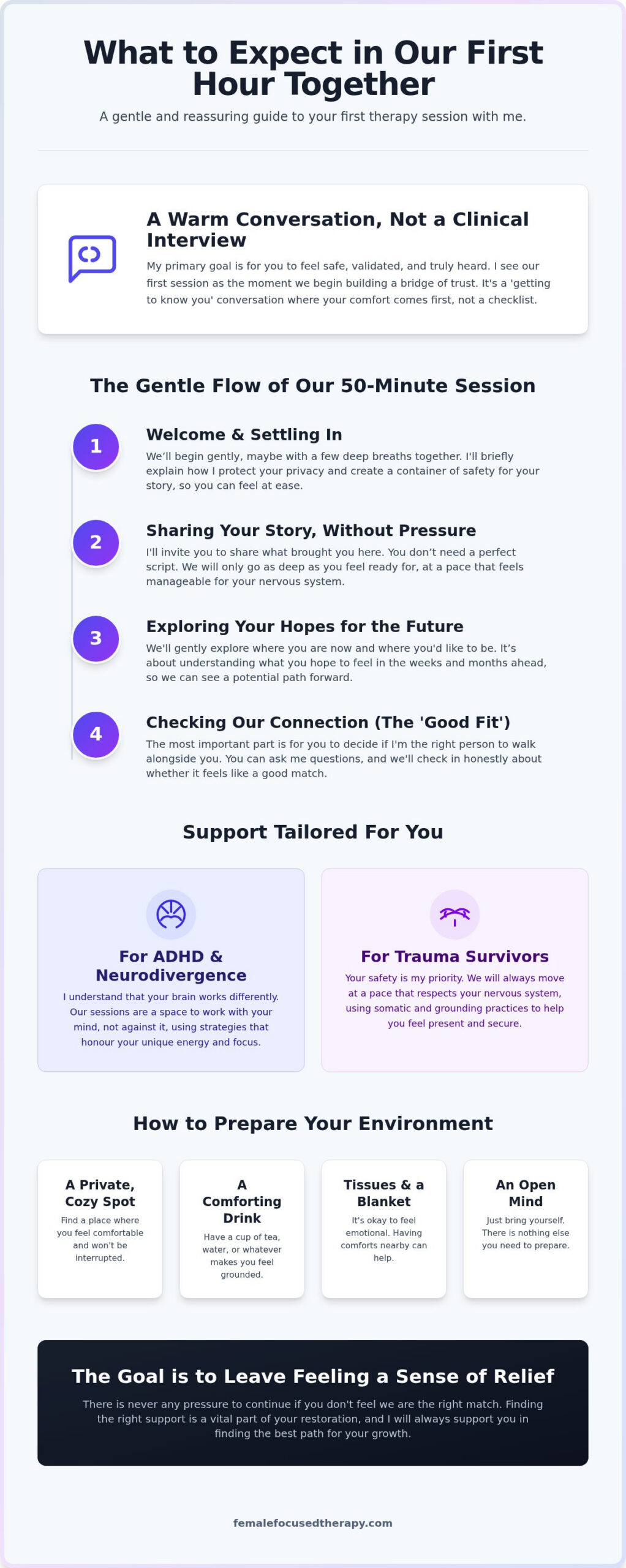
- Learn why I treat our first hour as a gentle ‘getting to know you’ conversation, prioritising your sense of safety over a clinical checklist.
- Understand exactly what to expect in a first therapy session, including the calm pace we will use to explore your history without feeling overwhelmed.
- Discover how I tailor my approach for ADHD and trauma survivors, using somatic practices to keep you grounded when things feel heavy.
- Find out how to prepare your environment for our 50-minute session to ensure you feel comfortable, hydrated, and uninterrupted.
- Realise that the goal is to leave feeling a sense of relief, with no pressure to continue if you don’t feel we are the right match.
Understanding the Heart of Our First Meeting Together
I see our first session as a warm, ‘getting to know you’ conversation rather than a rigid clinical interview. While some platforms describe this as a data-gathering intake, I prefer to think of it as the moment we begin building our bridge of trust. The primary goal is for you to see if you feel safe, validated, and truly heard in my presence.
We will gently touch on what brought you here today and, perhaps more importantly, what you hope to feel in the weeks and months ahead. It’s about looking at where you are now and where you want to be. Your initial consultation serves as a collaborative foundation for your healing journey, ensuring we are both aligned in our path forward. This first hour is the beginning of psychotherapy tailored specifically to your unique needs.
Is it Normal to Feel Nervous?
I want you to know that almost every woman I work with feels a flutter of anxiety before we start. Whether you are a high-functioning professional or a busy mother, sharing your inner world with a new person is a brave act of self-care. It’s perfectly okay to feel a bit exposed or uncertain as you step into this new space.
If your mind is racing, we can even start by talking about those very nerves until you feel settled. There is no “right” way to show up here. You don’t need to have a perfect script or a tidy summary of your life; you just need to be you. Sometimes, just taking a deep breath together is the best way to begin.
The ‘Good Fit’ Philosophy
Research suggests that the relationship between therapist and client is one of the biggest predictors of success. Therapy works best when you feel a genuine click, a sense that I “get” you. Understanding what to expect in a first therapy session means knowing that you have the power to decide if we are a match.
I encourage you to use this first hour to ‘interview’ me as much as I am learning about you. You can ask about my approach or how I support women in similar situations. You might want to check who I work with to see if our values and my specialisations align with your current needs.
This isn’t about me “fixing” you, but about us working together to restore your internal confidence. If at the end of the hour you feel that I’m not the right person for you, that is absolutely fine. Finding the right support is a vital part of your restoration—for instance, you may wish to discover Gender Identity Center for specialized gender-affirming care online—and I will always support you in finding the best path for your growth.
The Gentle Flow of Your Initial Therapy Session
While every conversation is unique, there is a natural rhythm to our time together that helps you feel anchored. I don’t follow a rigid checklist because I want to leave room for your humanity. Instead, we move through a gentle sequence that prioritises your comfort while ensuring we cover the essential ground.
I usually start with a few practicalities to ensure you feel fully informed about how we work. We will discuss a loose roadmap for how we might move forward together. Understanding what to expect in your first counseling session can help lower those initial barriers of uncertainty, allowing you to focus on your own internal experience.
The Practical ‘Paperwork’ Piece
I try to keep the administrative side of things brief so we can focus on the human connection. I will explain how I protect your privacy and what our professional boundaries look like. This is about creating a container of safety where you know your words are held in strict confidence.
Whether you are visiting me in Singapore or we are meeting for online therapy, the process is designed to be seamless. I use a secure platform called Carepatron to manage our bookings and intake forms. This means once we are in the session, the digital noise fades away and it’s just two people talking.
Exploring Your Story Without Pressure
You don’t have to have a perfect script for what is wrong. Many women arrive feeling a tangled knot of emotions, and my job is to help you gently unpick the threads. I might ask about your childhood or past relationships to see the patterns that shaped you, but we only go as deep as you feel ready for.
If you are struggling with ADHD overwhelm or the heavy weight of relationship trauma, we will acknowledge those challenges without forcing you to relive them. If something feels too heavy to talk about yet, we simply acknowledge its presence and move on. We move at a pace that feels manageable for your nervous system.
By the end of our hour, we will have a clearer sense of your goals and how my integrative approach can support you. If you feel ready to start this journey of restoration, you can book a session to begin our work together. We will finish by ensuring you feel grounded and ready to step back into your day.
Specific Support for ADHD and Trauma Survivors
Many women I work with worry that their mind is “too much” for a therapist to handle. If you have ADHD, you might fear that your thoughts will jump around or that you will lose your train of thought mid-sentence. I want you to know that is perfectly okay here. Your first hour isn’t a test of focus; it’s a space where we find the threads of your story together, even when they feel tangled.
For those recovering from relationship trauma and narcissistic abuse, the anxiety is often rooted in a fear of being judged or pushed too fast. I operate from a trauma-informed lens, which means I prioritise your safety above all else. We never push for details that might cause you to shut down. Understanding what to expect in a first therapy session is vital for ensuring you feel in control of your own narrative from the very start.
Holding Space for the ADHD Brain
As a woman with ADHD myself, I understand the emotional dysregulation that often accompanies a busy mind. Our first hour is a judgment-free zone for your overwhelm and “messy” thoughts. You don’t need to be “organised” to be here. I will help you stay anchored, using gentle prompts to keep us on track while allowing your mind the freedom it needs to express itself.
We might even incorporate small somatic elements, like noticing the rhythm of your breath, to help you stay present. This isn’t about fixing your brain, but about creating a environment where your neurodivergent experience is validated and understood. When you know first session with a therapist expectations are flexible, it becomes much easier to relax into the process.
Safety After Relationship Trauma
Rebuilding trust after an abusive relationship starts right here in our first hour. If you’ve been gaslit or controlled, you may have lost touch with your own intuition. I focus on creating a boundaried space where you are the expert on your own life. We won’t dive into the deepest wounds immediately; instead, we focus on creating the stability you need to feel secure.
We prioritise your internal restoration over simply managing the external situation. This means we look at how your body feels when we talk and ensure you never feel “flooded” by your history. My goal is to help you rebuild that vital sense of self-reliance, one steady step at a time, within a safe and grounded partnership.
Practical Steps to Prepare for Our First Conversation
Preparing for our time together isn’t about having all the answers or a perfectly polished story. Instead, it’s about creating a physical and emotional container where you feel safe to simply be. When you know what to expect in a first therapy session, you can focus less on the “how” and more on your own internal experience.
I suggest choosing a quiet, private space where you won’t be interrupted for our 50-minute session. Whether you are at home or in a private office, ensure you feel secure enough to speak freely. Having a glass of water or a warm cup of tea nearby can serve as a gentle sensory anchor to keep you grounded if the conversation feels heavy.
You might also want to have a notebook and pen ready to jot down any ‘aha’ moments or reflections we share. I suggest taking just two minutes before we begin to practice a simple breathing exercise, allowing your nervous system to settle into a state of receptive calm. This small act of preparation helps transition your mind from the busyness of the day into our shared space.
Questions You Might Want to Ask Me
Our first meeting is a two-way street, and I welcome your curiosity. You are encouraged to ask questions that help you feel confident in our partnership. Here are a few things you might want to explore:
- How do you typically work with women facing my specific challenges, such as ADHD or relationship trauma?
- What does an ‘integrative approach’ actually look like in our weekly practice?
- How will we know when I am starting to make tangible progress in my healing journey?
Setting the Somatic Scene
Before we log on, take a moment to check in with your body. Are your shoulders tight? Is your breath feeling shallow or held in your chest? I often weave in somatic movement and yoga for women if you are open to it, as healing happens in both the body and the mind.
By noticing these physical cues, we can use gentle breathwork or movement to help you feel more present. This mind-body connection is a vital part of what to expect in a first therapy session with me. It ensures that we aren’t just talking about change, but actually feeling it within your nervous system.
If you feel ready to create this restorative space for yourself, you can book your initial consultation today. We will move at your pace, ensuring you feel supported every step of the way.
Taking Your First Step Toward Restoration
By the end of our first hour together, my hope is that you leave feeling a sense of ‘I can do this.’ The heavy weight of the unknown often makes the first step the hardest one to take. Once you have navigated what to expect in a first therapy session, that initial mountain of anxiety usually begins to crumble, revealing a clearer path toward your internal restoration.
I am here to hold space for the real, authentic you. You don’t need to have a tidy plan or a list of solutions before we meet. We will work at a pace that respects your nervous system, ensuring you feel grounded as we unpick the patterns that no longer serve you. Taking this step is a profound act of self-kindness, and I am honoured to be part of that process with you.
What Happens After the First Session?
After we finish our first conversation, I encourage you to give yourself some quiet space to reflect on how it felt. Notice how your body feels—do you feel a sense of relief, or perhaps a new sense of hope? If you choose to move forward, we will look at scheduling a regular time that fits seamlessly into your lifestyle and commitments.
In the days following our meeting, you might find that new thoughts or feelings bubble to the surface. You can access my free therapy resources in the meantime to support your reflection and keep you anchored. This time between sessions is just as important as the hour we spend together, as it allows your insights to settle and grow.
Ready to Begin?
I invite you to take one realistic next step today: check my availability for an initial consultation. You don’t need to have everything figured out or have your story perfectly organised to start. We will find the threads together, moving from overwhelm toward a renewed sense of self-assurance and stability.
I truly look forward to meeting you and hearing your story. Whenever you feel ready to step into the room, I will be here to welcome you with warmth, insight, and a safe space to begin your healing journey.
Your Path to Restoration Starts Here
Now that you know what to expect in a first therapy session, I hope that initial mountain of anxiety feels a little smaller. We have explored how our first hour is a gentle conversation focused on your safety, how we move at a pace that respects your nervous system, and why finding the right “click” is the most important part of our work together.
As a Registered Integrative Psychotherapist specialising in trauma-informed and ADHD-specialist care, I provide a warm, female-focused environment where the real you is always welcome. You don’t need to have every answer ready to begin your healing journey. My goal is to help you rebuild your internal confidence at a pace that feels sustainable for your life.
Book your initial consultation with me here to take that first brave step toward internal stability and self-reliance. I am here to walk alongside you whenever you feel ready to begin.
Common Questions About Our First Meeting
What exactly should I say in my first therapy session?
You can say whatever feels most pressing, even if your thoughts feel messy or unorganised. There is no requirement to have a prepared speech or a perfect summary of your history. Knowing what to expect in a first therapy session means understanding that you don’t need to lead the way; I will help you gently unpick the threads of your story as we go.
Is it okay if I don’t know what my ‘goals’ are yet?
It is completely normal to arrive without a clear list of goals for our work together. Many women I support simply know they feel overwhelmed or “not themselves” and need help figuring out why. We can spend our first hour exploring what you want to feel instead of just what you want to fix, allowing your true intentions to surface naturally.
How long does the first therapy appointment usually last?
Our initial meeting will last for 50 minutes, which is the standard length for all my individual sessions. This timeframe is carefully chosen to give us enough space for a meaningful connection without leaving you feeling emotionally drained. It provides a calm, measured rhythm that allows us to cover the essentials while ensuring you feel grounded by the time we finish.
Will I have to talk about my childhood right away?
You are never forced to talk about your childhood or past trauma until you feel ready to do so. While understanding your history can help us see the patterns that shaped you, our first priority is your current sense of safety. If a topic feels too heavy or “too much” for our first hour, we simply acknowledge it and move on at your pace.
What if I feel like I’m going to cry the whole time?
Please know that crying is a perfectly natural and welcome somatic release in this space. Many women find that once they sit down in a safe, non-judgmental environment, the tears they’ve been holding back finally start to flow. I am here to hold that space for you with kindness, ensuring you feel supported as your body lets go of its stored tension.
How do I know if you are the right therapist for me?
You will know I am the right fit by how you feel in your body during our conversation. As a Registered Integrative Psychotherapist, I prioritise your sense of safety above all else. I encourage you to trust your own intuition during our first hour; if you feel truly heard and not judged, those are wonderful signs of a good therapeutic “click”.
Can I do my first session online if I’m not in Singapore?
Yes, I offer online therapy to women all over the world through a secure and private digital platform. Whether you are based in Singapore or joining me from another country, the experience is designed to be just as warm and personal. You can book your session from wherever you feel most comfortable, ensuring your environment supports your sense of calm and privacy.
What is the difference between a first session and a regular one?
The main difference is that your first session is a “vibe check” focused on building our collaborative foundation. While a regular session dives deeper into restorative work, this initial hour is about ensuring you understand what to expect in a first therapy session and feel safe in my presence. It is a gentle introduction where we decide together how to best support your unique journey.

Article by
Cheryl Kennedy MacDonald MA BA (Hons) Pg. Dip. SAC BACP
Cheryl Kennedy MacDonald is a psychotherapist specialising in women’s mental health, relationships, and life transitions. She works with women navigating trauma, relationship breakdown, identity shifts, and midlife change, helping them rebuild self-trust, emotional stability, and a clear sense of who they are and what they want.
With over 20 years’ experience working with women internationally, Cheryl is the founder of YogaBellies, a global women’s yoga school, and the creator of the Birth ROCKS method. Her work sits at the intersection of psychotherapy and embodiment, integrating evidence-based therapeutic approaches with somatic, body-based practices that support deep, lasting change.
Known for her grounded and direct approach, Cheryl moves beyond surface-level insight to address the patterns held in the body and nervous system. Her work supports women to regulate, reconnect, and respond to their lives from a place of clarity, strength, and self-respect.
She is a published author in academic journals and has written multiple books on women’s health, pregnancy, and midlife wellbeing, available on Amazon and leading book retailers worldwide.