
If you’re asking, “is online therapy effective for trauma?”, it’s understandable to wonder whether a screen can offer meaningful support. Talking about painful experiences online may feel exposing, and you might question whether trust and emotional safety can grow at a distance. For some people, meeting from home feels more manageable than travelling to a therapy room. The right format depends on your needs and circumstances.
I’m Cheryl Kennedy MacDonald, a registered integrative psychotherapist supporting women with trauma and relationship difficulties. Online sessions are one way to begin, but they aren’t the right fit for everyone. Your privacy, comfort with video and how you feel during and after a session all matter. I also offer in-person sessions in Singapore.
In this article, I’ll explain what online therapy may offer for trauma and what it can’t promise. You’ll find practical ways to consider whether remote sessions might suit you, signs that another format may feel more workable, and questions to ask before getting started. You don’t have to tell your whole story at once. You can take time to find a pace that feels manageable and safe for you.
Key Takeaways
- Online therapy may support trauma work, but whether it feels right depends on your needs, surroundings and sense of safety.
- Consider whether you have enough privacy, a steady internet connection and space to focus during sessions.
- Ask how a therapist builds trust online and what you can do if a session feels overwhelming.
- Before beginning, find out how the therapist approaches pacing and what experience they have supporting trauma.
- When asking “is online therapy effective for trauma?”, consider the therapist and format, not just the screen.
Is online therapy effective for trauma? A careful, honest answer
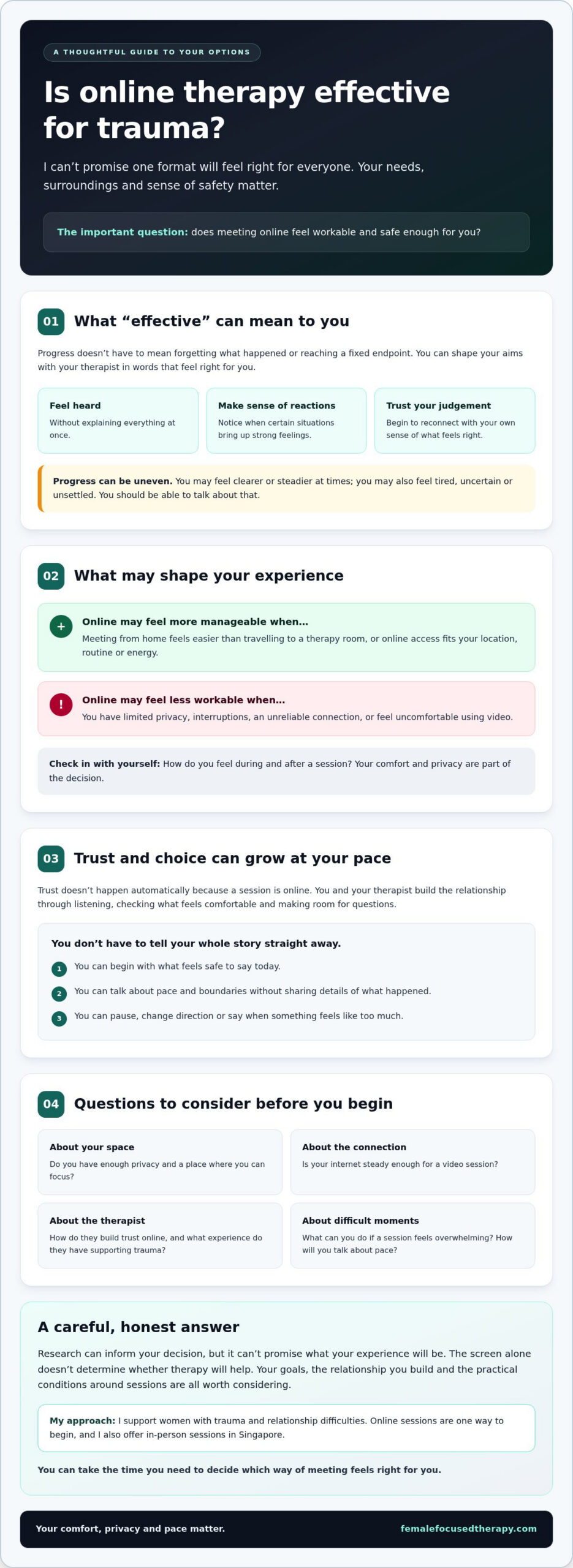
If you’re unsure whether talking about trauma through a screen can help, that hesitation makes sense. Online therapy may support trauma work, but no format suits everyone. When you ask, “is online therapy effective for trauma?”, it can help to consider what you need from therapy and whether meeting online feels workable and safe enough for you.
Online therapy usually means meeting through communication technology, often by video. Telepsychology is a term for psychological support provided through these technologies. The screen alone doesn’t determine whether therapy will help. Your goals, the relationship you build with your therapist and the practical conditions around sessions are all worth considering.
What does ‘effective’ mean when you’re healing from trauma?
Progress doesn’t have to mean forgetting what happened or reaching a fixed endpoint. You might hope to feel heard without explaining everything at once, make sense of why certain situations bring up strong reactions, or begin to trust your own judgement again. You can shape those aims with your therapist in words that feel right for you.
Progress can be quiet and uneven. You may find that you can name a feeling more clearly, pause before blaming yourself, or feel steadier after a difficult conversation. You may also have sessions when you feel tired, uncertain or unsettled. You should be able to talk about that rather than feel you have to prove therapy is working.
What research can, and cannot, tell you about online therapy
Research can inform a decision, but it can’t promise what your experience will be. A study may look at a particular treatment delivered online to a particular group of people. That isn’t proof that every kind of online therapy will suit every trauma history, need or circumstance.
Research also can’t promise that online therapy will be equal to in-person support for every trauma experience. It’s one consideration alongside what matters to you and how sessions feel as you work together. If relationship trauma is part of what you’re carrying, you can read more about my work with relationship trauma.
An effective start is one where you can speak honestly about what feels manageable and revisit your goals as you go. Online sessions may offer that possibility, but you can take the time you need to decide whether this way of meeting feels right for you.
How online trauma therapy can make room for trust and choice
Trust doesn’t happen automatically because a session is online, and no particular method can guarantee it. The relationship is something you and your therapist build together, through listening, checking what feels comfortable and making room for questions. Over time, you can notice whether you feel respected and able to speak in your own way.
You don’t have to earn support by telling the whole story. You can talk about pace and boundaries without sharing the details of what happened. In an early conversation, you might simply say you’re unsure where to begin or would like to understand how sessions work first. Your therapist can then check what feels manageable. There isn’t one pace that’s right for everyone.
You don’t have to tell the whole story straight away
You can begin with what feels safe to say today. Perhaps you want to talk about how a difficult memory affects your sleep or relationships without going into the memory itself. Your therapist can ask what you’d like to focus on and whether the conversation feels comfortable enough to continue. You can pause, change direction or say that something feels like too much.
What a video session may feel like
You might settle somewhere private, check that your connection is steady and take a moment to arrive. You and your therapist could agree on a manageable focus, such as understanding a reaction that has been troubling you, rather than trying to cover everything. If you notice tension in your body as you talk, that can become part of the conversation if you want it to. Your therapist shouldn’t assume you need to do anything with those sensations.
Online access may make sessions easier to fit around your location, daily routine or energy. It can also bring practical challenges, including interruptions, limited privacy or an unreliable connection. These details matter. The American Psychological Association’s Guidelines for the Practice of Telepsychology offer a professional framework for providing psychological services remotely. They don’t mean online sessions will feel suitable for every person or situation.
If you’re asking, “is online therapy effective for trauma?”, consider whether you can build trust and have a say in the pace, as well as how the screen feels. You can raise these questions before deciding whether to begin. If a first conversation would help you explore the fit, you can book an appointment and start by discussing what feels manageable.
When online therapy may feel less safe or suitable for you
Online therapy may not feel right or workable for everyone, and you don’t have to persuade yourself otherwise. A video call can make support easier to fit around your location or routine, but convenience isn’t the only consideration. Your privacy, comfort with technology and sense of connection all matter.
When wondering, “is online therapy effective for trauma?”, include the setting in your decision. Can you speak without being overheard? Might a family member, flatmate or work responsibility interrupt? If you share a home, finding a private room at a regular time may be difficult. If you’re holding back or watching the door instead of being present, those practical details can affect how comfortable it feels to talk.
Privacy, connection and interruptions matter
Before starting, consider whether you have a private place to talk, a reliable internet connection and a device you’re comfortable using. You might prefer a laptop on a table to holding a phone throughout the session. If these details are uncertain, raise them with your therapist and discuss what might make online sessions more workable. You don’t have to resolve everything on your own before talking it through.
It’s also worth being precise about what research can tell you. The US National Center for PTSD says research has found that evidence-based psychotherapy for PTSD delivered by telehealth can be as good as that delivered in-person. This isn’t a promise about every form of therapy, every trauma experience or your individual response. Evidence about particular PTSD treatments can inform a conversation, but it can’t decide what feels safe and helpful for you.
How to notice whether the format feels workable
After a session, you might notice whether you could speak in your own words, ask for a pause and tell your therapist if the pace felt too quick. You may feel unsettled after discussing something difficult. That feeling alone doesn’t prove online therapy can’t help. It’s something you can bring into the next conversation so you and your therapist can consider what needs to change.
If you feel cut off behind the screen, can’t speak privately or find that interruptions repeatedly break your focus, in-person support may feel more containing, where it’s available. Choosing it isn’t a failure. I offer in-person sessions in Singapore, though access depends on your circumstances. You can also read about relationship trauma and narcissistic abuse if that feels relevant to the support you’re considering.
You’re allowed to reassess. A useful next step could be telling your therapist one practical or emotional concern and seeing whether you can work through it together.
Questions to ask before beginning online therapy for trauma
You don’t need to arrive with a perfect list of questions. A few honest ones can help you understand how online sessions might feel and whether you’re comfortable taking the next step. If you’re asking, “is online therapy effective for trauma?”, ask not only about the therapist’s experience but also how you’ll make decisions together.
Questions about approach, boundaries and pacing
You might ask:
- “What experience do you have supporting women with trauma?”
- “How do you help me feel involved in decisions about the pace of sessions?”
- “Can I pause, change the subject or say I’m not ready to talk about something?”
- “What would you do if I started to feel overwhelmed during a video session?”
- “Can we review whether online sessions still feel right for me as we go?”
You should feel able to ask about the therapist’s approach and receive a clear answer, without feeling pushed to share more than you’re ready to. You don’t need to describe every detail of your experience before discussing what support might look like.
Questions about practical arrangements
It’s also reasonable to ask practical questions before you decide:
- “What do I need for a private video session, and what can I do if someone interrupts?”
- “What should I do if my internet connection drops or the video doesn’t feel comfortable?”
- “How do scheduling and communication between sessions work?”
- “Are there other ways we can meet if video isn’t a good fit for me?”
Check whether you can use a quiet room, whether your device stays steady and whether the time works around your responsibilities. Asking how a therapist handles technical difficulties can make the practical side feel less uncertain. You can also explore my free therapy resources for additional reading. They’re optional support, not a replacement for therapy.
You don’t have to decide everything before speaking with a therapist. A first conversation can be a chance to ask questions and notice how it feels to be heard. If you’d like to explore whether working together feels like a fit, you can book an appointment with me.
How I approach online therapy when you’re carrying trauma
I’m Cheryl Kennedy MacDonald, a registered integrative psychotherapist supporting women with trauma, relationship difficulties and life changes. Beginning therapy can bring questions of its own, especially if you’re carrying experiences that have been hard to put into words. You don’t need to arrive knowing exactly what to say or what you want to change.
A whole-person approach, at a pace we discuss together
In my work, I’m interested in what you’re thinking and feeling, and what you notice in your body as we talk. You might notice tension when a subject comes up, or find that a particular thought keeps returning. You don’t have to focus on your body or your breath if that doesn’t feel comfortable. I’ll follow your lead, and we can discuss what feels manageable from session to session.
My integrative approach may draw on CBT to explore links between thoughts, feelings and everyday experiences, and mindfulness, which can involve noticing what’s happening in the present moment. Neither is a promise of a particular result, and I don’t assume one approach will suit you. I want to understand what you need and make space for your questions, preferences and boundaries.
You can begin with a question, not a full account
You can ask me about fit before deciding whether to continue. You might want to know how I’ll check in about pace, what you can do if a conversation feels overwhelming, or how we can revisit whether online sessions still work for you. You can ask without sharing the details of your trauma.
I offer online therapy to women globally, and in-person sessions in Singapore. Which option is available and suitable can depend on your circumstances. If you’re wondering, “is online therapy effective for trauma?”, consider whether you feel able to speak, ask for a pause and take part in decisions about the work. These are useful questions for an initial conversation, not standards you have to meet before seeking support.
You can find more about my therapy approach if you’d like to understand a little more about my work. For now, one small step could be writing down a question you’d want to ask me. You can begin there, without pressure to tell your whole story or decide everything at once.
Choose a pace and format that feels right for you
If you’re still asking, “is online therapy effective for trauma?”, my honest answer is that it may help, but its value depends on your needs, circumstances and how safe the format feels to you. A screen doesn’t guarantee trust. Ask about a therapist’s experience, how you’ll agree on the pace and what happens if you need to pause or change direction.
Privacy and practical comfort matter too. If video sessions make it hard to speak freely, discuss that. Choosing another format, where available, isn’t a failure. You’re allowed to take time, ask questions and reassess what feels workable.
I’m Cheryl Kennedy MacDonald, a registered psychotherapist. My integrative work supports women navigating trauma and relationship difficulties, with space for your questions and choices. If you’d like to explore whether working together feels like a fit, book an appointment with me. You don’t need to have everything figured out before you begin. A first step can simply be asking what feels manageable.
Frequently Asked Questions
Is online therapy effective for trauma?
Online therapy may support trauma work, but I can’t promise it will suit you or lead to a particular result. Consider what you hope to work towards, whether you can speak privately and how comfortable you feel connecting by video. Your goals might include feeling heard, understanding your reactions or rebuilding self-trust. You and your therapist can review how the format feels as you go.
Can you talk about trauma in online therapy without feeling overwhelmed?
You can begin without describing the painful experience itself. Share only what feels manageable, such as how you’re feeling now or what you’d like support with. You can ask to pause, change the subject or slow down. If you start to feel overwhelmed, tell your therapist if you can. You can discuss what might make the session more manageable without assuming one pace suits everyone.
How do I know whether online therapy is right for me?
Consider whether you have enough privacy to speak freely, a steady internet connection and a device you’re comfortable using. Notice whether you feel able to talk, ask for a pause and feel connected during sessions. If something feels uncomfortable, tell your therapist. It doesn’t prove therapy can’t help. You can discuss practical changes or whether another format feels more suitable.
What should I ask an online trauma therapist before starting?
Ask about the therapist’s experience supporting women with trauma, how you’ll agree on the pace and what you can do if a conversation feels overwhelming. You can also ask whether you may pause or change topics, how to protect your privacy during video sessions, and what happens if the connection drops. It’s reasonable to ask how scheduling and communication work before deciding whether you feel comfortable beginning.
Is online therapy as effective as in-person therapy for trauma?
Online and in-person therapy won’t necessarily work in the same way for you. Research on particular evidence-based PTSD treatments delivered by telehealth can inform a conversation, but it can’t tell your therapist exactly how you’ll respond or whether video feels right for your needs. Consider your goals, comfort, privacy and connection with your therapist, then discuss together whether the format seems workable.
What happens if I don’t feel safe during an online therapy session?
If you can, tell your therapist you need to pause, slow down or change the subject. You don’t need to explain everything in that moment. It may help to discuss beforehand how you can signal discomfort and what might help if a session becomes difficult. Afterwards, you can talk about what happened and whether the pace or format needs to change. You should be able to raise discomfort without judgement.

Article by
Cheryl Kennedy MacDonald MA BA (Hons) Pg. Dip. SAC BACP
Cheryl Kennedy MacDonald is a psychotherapist specialising in women’s mental health, relationships, and life transitions. She works with women navigating trauma, relationship breakdown, identity shifts, and midlife change, helping them rebuild self-trust, emotional stability, and a clear sense of who they are and what they want.
With over 20 years’ experience working with women internationally, Cheryl is the founder of YogaBellies, a global women’s yoga school, and the creator of the Birth ROCKS method. Her work sits at the intersection of psychotherapy and embodiment, integrating evidence-based therapeutic approaches with somatic, body-based practices that support deep, lasting change.
Known for her grounded and direct approach, Cheryl moves beyond surface-level insight to address the patterns held in the body and nervous system. Her work supports women to regulate, reconnect, and respond to their lives from a place of clarity, strength, and self-respect.
She is a published author in academic journals and has written multiple books on women’s health, pregnancy, and midlife wellbeing, available on Amazon and leading book retailers worldwide.