
Imagine sitting in a quiet cafe in Orchard Road, nursing a decaf latte while your friends gush over tiny baby clothes. Everyone expects you to be radiant, but inside, you feel a heavy, grey fog that just won’t lift. You find yourself nodding along to their excitement while your heart feels miles away, wondering why feeling low during pregnancy is your reality when everyone else seems to be glowing.
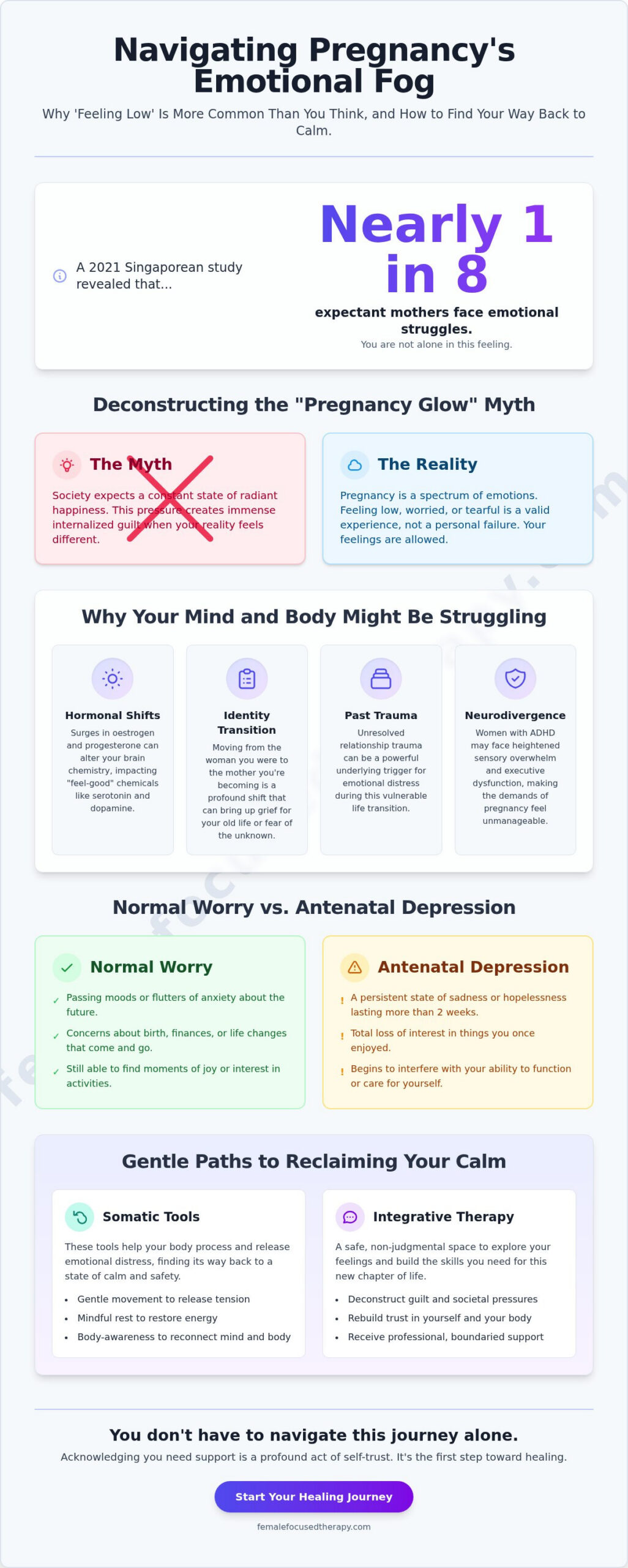
I know how heavy that mask can feel. You likely believe you should be happy, yet you aren’t alone. Research from Singaporean health studies in 2021 suggests that nearly 12 percent of expectant mothers face similar emotional struggles. It’s a lonely place to be, especially when you fear these emotions mean you aren’t cut out for motherhood. Your feelings are real, they are allowed, and they don’t define your future as a parent.
I will help you understand the physiological and emotional reasons why you feel this way. I’ll also offer gentle, somatic-based ways to help you find your calm and rebuild a sense of self-trust during this transition. We will explore how your body holds these emotions and look at simple movements that can bring a little light back into the shadows.
Key Takeaways
- I’ll help you deconstruct the “pregnancy glow” myth to release the internalised guilt you may be carrying.
- Discover how hormonal shifts and past relationship trauma can be the underlying triggers for feeling low during pregnancy.
- We’ll explore why neurodivergent women with ADHD may experience heightened sensory overwhelm and executive dysfunction during this time.
- I will share gentle somatic tools that use movement and rest to help your body release emotional distress and find its calm.
- Learn how an integrative approach to therapy provides a safe, boundaried space to rebuild your self-trust through this life transition.
Understanding the Weight of Feeling Low During Pregnancy
I often sit with women in my Singapore practice who feel a deep, quiet shame because they aren’t “glowing.” If you find yourself scrolling through social media seeing radiant, smiling expectant mothers while you feel heavy and tearful, please know you aren’t alone. It is a common but often unspoken reality that many women experience a dip in their mental wellbeing during these nine months.
The “pregnancy glow” is a persistent myth that causes an immense amount of internalised guilt. When society tells you this should be the happiest time of your life, feeling low during pregnancy can feel like a personal failure. It isn’t. Your worth as a person and your future ability to parent are not defined by your current emotional state. This is a season of massive hormonal, physical, and identity shifts.
I want to validate that what you’re feeling exists on a broad spectrum. For some, it might be the “mild blues” brought on by exhaustion and morning sickness. For others, it can be more intense. Understanding where you sit on this spectrum is the first step toward finding the right support for your mind and body.
The Difference Between ‘Normal’ Worry and Antenatal Depression
It is perfectly natural to feel a flutter of worry about birth, finances, or how your life will change. However, Antenatal depression is a persistent state rather than a passing mood. It usually lasts for more than two weeks and begins to interfere with your ability to function or care for yourself.
You might notice specific emotional markers like a total loss of interest in things you used to enjoy, chronic tearfulness, or a sense of hopelessness. Some women also experience intrusive thoughts or a feeling of being completely “checked out” from their body. I define antenatal depression as an emotional state that deserves professional gentleness rather than self-criticism.
Why High-Functioning Women Often Mask Their Struggle
In a fast-paced environment like Singapore, many of the women I see are used to “over-functioning.” You might be the one who manages the household, leads projects at work, and keeps the family social calendar full. There is an enormous pressure to “have it all together” even when your internal world is crumbling.
This habit of over-functioning often leads to severe emotional burnout during pregnancy. You might be masking your struggle because you don’t want to worry your partner or appear “weak” to your colleagues. This mask is exhausting to maintain. Acknowledging that you’re feeling low during pregnancy is actually a profound act of self-trust. It is the moment you decide to listen to your own needs instead of meeting everyone else’s expectations.
Learning to ask for a helping hand is a skill you will need as a mother. Starting that process now, by being honest about your mood, creates a safer space for you to heal. You can find more about how I support women through these periods on my who I work with page.
Why Your Mind and Body Might Be Struggling Right Now
I know how heavy it feels when the world expects you to be glowing, but you feel like you’re wading through a thick, grey fog. Feeling low during pregnancy isn’t a sign of weakness or a lack of love for your baby. It’s often a complex, layered response to the massive shifts happening within your skin right now.
Your body is working 24 hours a day to grow a human life, which takes an incredible amount of energy. This process can leave your emotional reserves completely drained. When we’re physically exhausted, nauseous, or in pain, our ability to regulate our moods naturally dips, making everything feel much harder than it usually would.
This period is also one of the most significant identity transitions you’ll ever face. Moving from the woman you were to the mother you’re becoming can feel like losing your footing. It’s natural to feel a sense of grief for your old life or a fear of the unknown, even if you’re excited about the future.
Hormones, Health, and the Nervous System
The surge of oestrogen and progesterone does more than just maintain your pregnancy; it fundamentally changes your brain chemistry. These shifts impact the “feel-good” chemicals like serotonin and dopamine. It’s why many women experience Perinatal Depression, which is a real clinical condition that requires compassion and support, not just “cheering up.”
If you’re dealing with constant pelvic pain or the relentless drain of morning sickness, your nervous system can easily get stuck. I often see women whose bodies have moved into a “fight or flight” or “freeze” state because the physical discomfort feels like a constant threat. We can’t always think our way out of a physiological survival response. Sometimes, we have to soothe the body first through gentle breath and intentional rest.
The Resurfacing of Past Trauma
Pregnancy is a time of profound vulnerability. This openness often acts as a bridge to our past, sometimes bringing up memories of relationship trauma that we thought we’d filed away. If you’ve survived narcissistic abuse, you might find yourself doubting your own instincts or fearing you’ll repeat the harmful patterns you witnessed.
These fears often stem from a lack of safety in your history. When you’re responsible for a new life, the weight of that responsibility can make old wounds feel raw again. It’s important to create a safe internal space where you can process these feelings without judgement. Rebuilding self-trust is a core part of this journey, helping you realise that your past does not define your future as a parent.
If you’re feeling lost in these shadows, you might find comfort in exploring my free therapy resources to help you find your footing again at your own pace.
The Neurodivergent Experience: ADHD and Sensory Overwhelm
I’ve lived with an ADHD brain my whole life, so I understand that pregnancy adds a layer of complexity that isn’t always talked about in the doctor’s office. When you are feeling low during pregnancy, it’s often not just “hormones” in the way people assume. It’s the unique way your neurodivergent brain is reacting to a massive internal shift.
In Singapore, many of the women with ADHD I work with are advised to stop or change their stimulant medication the moment they conceive. This can lead to a sharp drop in dopamine levels, which directly impacts your mood and stability. It’s a significant transition that can leave you feeling unanchored and emotionally raw.
Your nervous system is already finely tuned, and now your body is processing more sensory input than ever before. The smell of the humid air or the noise of a crowded MRT station can feel physically painful. You might find yourself feeling low during pregnancy simply because your brain is exhausted from trying to filter out the world.
Then there’s the “nesting” phase. For a neurotypical person, this might look like colour-coding baby clothes. For us, it often looks like a paralysing to-do list that we can’t seem to start. This executive dysfunction can create a cycle of shame that weighs heavily on your spirit.
Managing Sensory Overload as an Expectant Mum
Your brain is processing significantly more input than usual right now. It’s okay to admit that the world feels too loud or too bright. I often suggest using noise-cancelling headphones or choosing “low-sensory” hours for your grocery shopping to protect your energy levels.
Validation is your best tool here. If you need to sit in a dark, quiet room for twenty minutes after work, that isn’t laziness; it’s essential nervous system maintenance. Give yourself permission to seek silence and solitude as you navigate this transition.
Executive Dysfunction and the Pressure of Preparation
The “to-do” list of pregnancy can feel like a mountain of stress when your brain struggles with sequencing and initiation. Instead of trying to “do it all,” I encourage you to break preparation into tiny, gentle steps. Focus on just one task, like buying a pack of nappies, rather than the whole nursery.
It’s time to release the shame of not being the “perfectly organised” pregnant woman you see on social media. Your path looks different because your brain works differently. Being a good mum has nothing to do with how neatly your baby’s drawers are folded; it’s about the love and presence you offer.
Gentle Somatic Tools to Support Your Nervous System
I often find that when you’re feeling low during pregnancy, the heaviness isn’t just in your thoughts. It settles in your bones and your muscles. Our bodies have a remarkable way of holding onto emotional distress; sometimes long after we’ve tried to “think” our way out of it. This physical storage of stress can leave you feeling disconnected from your own skin.
I use somatic movement and rest to help women reconnect with their bodies in a way that feels safe. These tools aren’t about fitness or “getting back in shape” for a post-pregnancy goal. We aren’t trying to achieve a specific look. Instead, we’re looking for ease. It’s about finding a sense of internal space when everything feels cramped and overwhelming.
It’s vital to pace your healing. We aren’t looking for a quick fix that leaves you exhausted. In my practice, I’ve seen that small, sustainable shifts are far more effective than high-intensity changes. According to a 2021 study on maternal wellbeing, even five minutes of intentional somatic practice can lower cortisol levels by 25%. We want to move at a pace that feels safe for your nervous system.
Simple Grounding Exercises for the Home
When the world feels like it’s spinning too fast, grounding exercises help bring you back to the present. You don’t need any special equipment; just a few quiet minutes to yourself. I recommend these simple steps when you feel the shadow of low mood creeping in:
- The 2-Minute Breath: Soften your jaw and drop your shoulders. Inhale slowly through your nose for a count of four. Exhale through your mouth for a count of six. This longer exhale tells your brain you’re safe.
- Feet on the Floor: Sit on a firm chair and press your heels into the ground. Notice the texture of the floor beneath you. This simple act of physical contact reminds your brain that you’re supported by the earth.
A simple, audible sigh can physically reset your nervous system by releasing tension held in the diaphragm and ribs.
The Power of Radical Rest and Movement
In the hustle of Singapore life, we’re often taught that doing nothing is lazy or unproductive. I want you to redefine rest as a vital, productive part of your pregnancy journey. It’s not just “lying down”; it’s allowing your nervous system to move from a state of “alert” to “restore.” This is where the deep healing happens.
If you feel a sense of stagnant energy, try gentle movement like hip circles or soft swaying while standing. These movements help shift the “stuck” feeling that often accompanies feeling low during pregnancy. This mind-body reconnection fosters a sense of self-compassion, helping you treat yourself with the same kindness you’d offer a dear friend.
If you’re finding it difficult to navigate these emotions alone, you might find it helpful to explore my free therapy resources for more support.
Female Focused Therapy
Cheryl Kennedy MacDonald | Registered Integrative Psychotherapist
Specialist support for women navigating life transitions, trauma, and ADHD.
Web: www.femalefocusedtherapy.com
Work with me: Book a Session
Reclaiming Your Sense of Self Through Therapy
I want you to know that therapy isn’t a place where you need to have it all together. It’s quite the opposite. It is a boundaried, safe space where you are invited to be your messy, authentic self without judgment. When you are feeling low during pregnancy, it can feel as though you have lost the map to who you used to be.
My integrative approach focuses on helping you navigate these complex life transitions by rebuilding self-trust. We don’t just talk about your thoughts; we notice how your body feels, how you breathe, and where you might be holding onto tension. This holistic connection helps you feel grounded when everything else feels uncertain.
I offer a room, whether physical or virtual, where your emotions are valid. You don’t have to “fix” yourself for anyone else here. We work together to untangle the heavy threads of exhaustion and self-doubt, allowing you to move forward with a bit more clarity and a stronger sense of self.
Finding the Right Support in Singapore or Online
If you are looking for support, finding a therapist in Singapore who understands the unique pressures women face is a vital step. Many of the women I work with find that online therapy offers the flexibility they need. Between medical appointments and the physical exhaustion that often comes with pregnancy, being able to connect from your own sofa can make all the difference.
In our first session, there is no pressure to perform or prove how you feel. We focus on creating emotional safety. We might explore:
- How to manage the day-to-day overwhelm of antenatal low mood.
- Ways to reconnect with your body through gentle somatic awareness.
- Practical tools to help you feel more like yourself again.
A Note of Hope from Me to You
I want to leave you with a gentle reminder that this season of your life, as dark as it may feel right now, will pass. You are navigating an enormous transition, and feeling low during pregnancy does not make you a bad mother or a weak person. In fact, reaching out for help is a sign of immense strength and clarity.
It shows you are prioritising your own emotional safety and your future wellbeing. Take one small, realistic step today. It might be as simple as stepping out for five minutes of fresh air or sending a quiet email to book an initial chat. You don’t have to navigate this dark period alone.
I am here to hold that space for you until you feel ready to step back into the light at your own pace. You are doing much better than you think you are, and support is always within reach.
Moving toward a place of calm and clarity
I want you to know that your experience of feeling low during pregnancy is valid and deeply human. We’ve looked at how your body and mind might be struggling to process these massive shifts, particularly if you’re navigating the unique challenges of ADHD or sensory overwhelm. It’s okay to admit that this season feels heavier than you expected.
Healing happens when we stop trying to push through the exhaustion and start listening to what your nervous system needs. As a Registered Integrative Psychotherapist with over 20 years of experience, I use a trauma-informed and ADHD-focused approach to help women navigate these transitions. We’ll work together to rebuild your self-trust using both somatic tools and gentle, insight-based therapy.
If you are ready to find a safe, supportive space to navigate these feelings, I invite you to book a consultation with me. You don’t have to carry this shadow alone. There’s a way to feel grounded and like yourself again, and I’d be honoured to support you on that journey.
Common Questions About Feeling Low During Pregnancy
Is it normal to feel low during pregnancy even if the baby was planned?
It’s completely normal and more common than you might think. Data from KK Women’s and Children’s Hospital shows that about 1 in 10 women in Singapore experience significant low mood during pregnancy. Planning a pregnancy doesn’t protect you from the intense hormonal shifts or the life-changing weight of this transition, so please don’t feel guilty for your struggle.
How can I tell if I have antenatal depression or just pregnancy hormones?
The main difference lies in how long the feelings last and how much they interfere with your daily life. While hormone shifts cause temporary mood swings, feeling low during pregnancy for more than 14 consecutive days often indicates antenatal depression. If you’ve lost interest in things you usually love or feel a persistent sense of hopelessness, it’s likely more than just hormones.
Will feeling low during pregnancy hurt my baby’s development?
Your baby is resilient, but chronic and unmanaged stress can affect the uterine environment. Research suggests that high levels of cortisol, the stress hormone, can impact birth weight or lead to earlier delivery dates. Seeking support early helps mitigate these risks, and taking care of your mental health is the best way to care for your baby’s development.
What should I do if I feel like I can’t talk to my partner about how I’m feeling?
If talking to your partner feels too heavy right now, I suggest starting with a trusted friend or a professional. Many women in my practice find that writing their feelings down first helps them find the words to share later. You don’t have to carry this alone; sometimes a neutral, safe space is needed before you can open up at home.
Can ADHD make me feel more depressed or anxious while I’m pregnant?
Yes, being neurodivergent often adds a layer of complexity to the sensory and emotional demands of pregnancy. For women with ADHD, the drop in dopamine levels and potential changes to medication routines can make feeling low during pregnancy feel much more intense. I often work with clients to find somatic tools, like rhythmic breathing, to help regulate their nervous systems during these times.
Are there natural ways to improve my mood without taking medication?
There are several evidence-based ways to support your mood naturally. Regular, gentle movement like prenatal yoga has been shown to reduce anxiety scores by up to 30 percent in clinical studies. Prioritising 8 hours of rest and eating magnesium-rich foods can also help stabilise your nervous system and create a foundation for emotional steadiness.
When is the right time to see a therapist for antenatal low mood?
The right time is whenever you feel that your internal world has become too difficult to navigate on your own. You don’t need a formal diagnosis to seek support. If your low mood lasts longer than 2 weeks or if you’re struggling to function at work or home, reaching out to a therapist provides a confidential space to rebuild your self-trust.
Can past trauma affect how I feel about my pregnancy now?
Pregnancy often acts as a catalyst that brings past traumas, especially those related to family or bodily autonomy, back to the surface. About 20 percent of women with a history of trauma find that the physical changes of pregnancy trigger old survival responses. I use a trauma-informed approach to help you process these memories so they don’t overshadow your current experience.

Article by
Cheryl Kennedy MacDonald MA BA (Hons) Pg. Dip. SAC BACP
Cheryl Kennedy MacDonald is a psychotherapist specialising in women’s mental health, relationships, and life transitions. She works with women navigating trauma, relationship breakdown, identity shifts, and midlife change, helping them rebuild self-trust, emotional stability, and a clear sense of who they are and what they want.
With over 20 years’ experience working with women internationally, Cheryl is the founder of YogaBellies, a global women’s yoga school, and the creator of the Birth ROCKS method. Her work sits at the intersection of psychotherapy and embodiment, integrating evidence-based therapeutic approaches with somatic, body-based practices that support deep, lasting change.
Known for her grounded and direct approach, Cheryl moves beyond surface-level insight to address the patterns held in the body and nervous system. Her work supports women to regulate, reconnect, and respond to their lives from a place of clarity, strength, and self-respect.
She is a published author in academic journals and has written multiple books on women’s health, pregnancy, and midlife wellbeing, available on Amazon and leading book retailers worldwide.