
Does it feel like you and your partner are having the same argument on a loop, a frustrating cycle that leaves you both feeling unheard and exhausted? Perhaps a quiet distance has grown between you, replacing intimacy with a sense of loneliness, even when you’re in the same room. If you’re wondering whether your problems are ‘serious enough’ or feel apprehensive about opening up, please know those feelings are valid. Seeking support is a courageous step towards healing, and exploring professional relationship counselling in Singapore can provide a safe, non-judgmental space to navigate these challenges.
This guide was created with warmth and understanding to help you find clarity. Together, we will explore how counselling can help you and your partner break free from damaging patterns, learn practical tools for healthier communication, and begin the important work of reconnection. Our goal is to empower you with the understanding and confidence needed to rebuild a stronger, more secure, and deeply fulfilling partnership, one conversation at a time.
When Is It Time for Relationship Counselling? 8 Signs You Shouldn’t Ignore
Deciding to seek support for your relationship is a sign of strength, not failure. It’s a proactive step towards nurturing its health, much like tending to a garden before it wilts. Many of us wonder if our struggles are ‘normal’ or if they signal a deeper issue needing attention. If you’re feeling this uncertainty, know that you are not alone. The journey to reconnection often begins with acknowledging that something feels off, whether you are dating, in a long-term partnership, or married. Understanding the principles of What is Couples Therapy can demystify the process, and for many, seeking relationship counselling singapore is a structured way to navigate challenges. Noticing these signs is the first courageous step toward positive change.
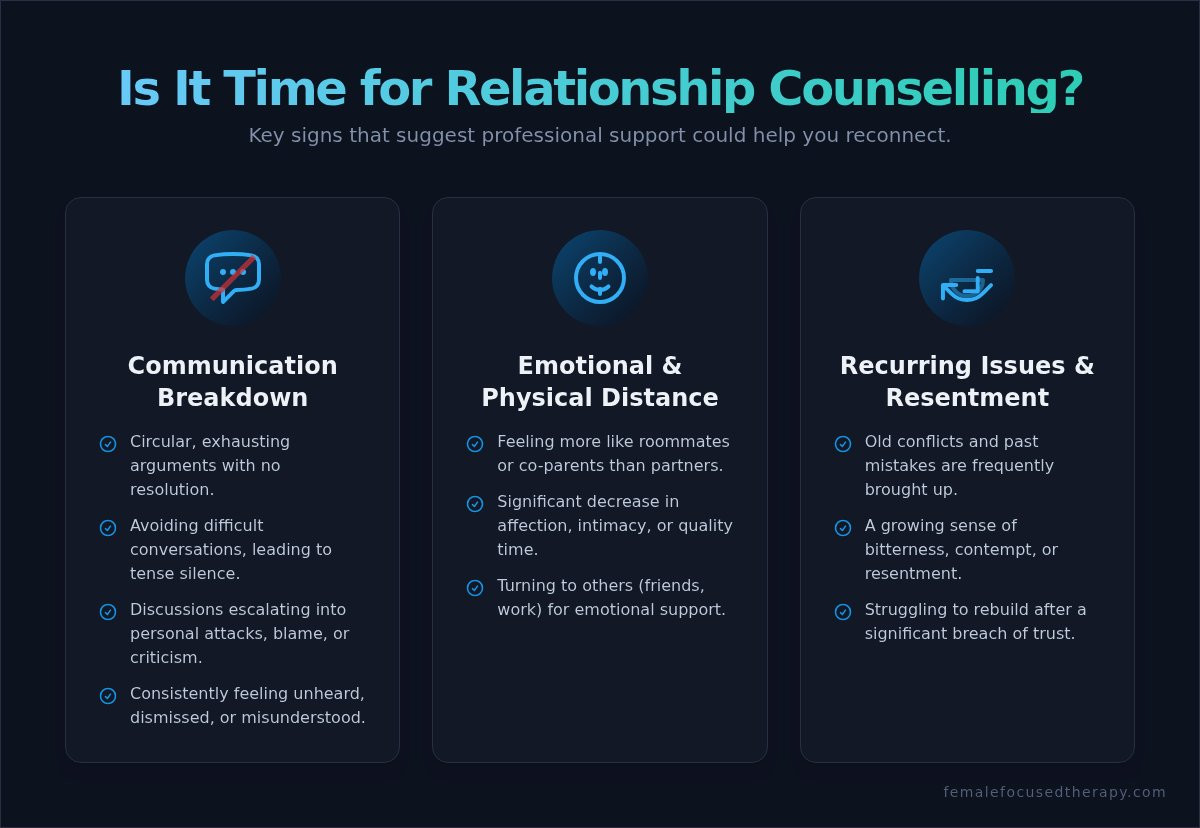
Communication Breakdown
When communication falters, the very foundation of a partnership can feel unstable. This often goes beyond simple disagreements and is a common reason couples explore relationship counselling singapore. You may be experiencing a breakdown if:
-
Arguments have become circular and exhausting, with no resolution in sight.
-
You find yourselves avoiding difficult conversations altogether, leading to a tense silence.
-
Discussions quickly escalate into personal attacks, blame, or criticism.
-
You consistently feel unheard, dismissed, or misunderstood by your partner.
Emotional and Physical Distance
A growing gap between partners can be quiet but deeply painful. This emotional and physical drift can leave you feeling lonely even when you’re together. This is a key reason many people seek relationship counselling in Singapore. Signs include:
-
You feel more like roommates or co-parents than intimate partners.
-
There’s a significant decrease in affection, physical intimacy, or shared quality time.
-
One or both of you are turning to friends, family, or even work to find the emotional support you once shared.
Recurring Issues and Resentment
When past hurts are not fully resolved, they can fester, creating a backdrop of resentment that taints daily interactions. This cycle can be incredibly difficult to break without the professional guidance offered through relationship counselling singapore. You might notice:
-
Old conflicts and past mistakes are frequently brought up in new arguments.
-
A growing sense of bitterness, contempt, or resentment is poisoning your connection.
-
You are struggling to rebuild after a significant breach of trust, such as infidelity or financial dishonesty.
What to Expect from Your First Relationship Counselling Sessions
Taking the first step towards therapy can feel daunting, but knowing what to expect can ease your anxieties. The process of relationship counselling in Singapore is designed to be a supportive journey, not an interrogation. It takes place in a safe, neutral, and confidential space where you can speak openly without fear of judgment. Your counsellor is not a referee who decides who is right or wrong; they are a skilled facilitator, here to help you navigate conversations, understand each other better, and find a constructive path forward. Real, lasting change is a process that requires patience, honesty, and commitment from everyone involved.
The Initial Consultation
Think of your first meeting as a gentle introduction. This session is an opportunity for you to meet your therapist, share the concerns that brought you here, and get a feel for their approach. The most important goal is to determine if you feel comfortable, safe, and understood. It’s also your chance to ask questions, such as "What is your therapeutic approach?" or "How do you help clients set and achieve their goals?"
Your First Few Sessions: Setting the Foundation
The first one or two sessions are dedicated to building a foundation for our work together. We will explore your relationship’s history-the story of how you came together, the strengths you share, and the challenges that have emerged. Together, we will gently identify the recurring patterns of interaction and conflict that leave you feeling stuck. This phase is crucial for collaboratively setting clear, meaningful goals for what you hope to achieve through counselling.
The Therapeutic Process: What Happens in a Typical Session?
Once we have a shared understanding of your goals, our sessions will become more active and focused on creating change. The work is dynamic and tailored to your unique needs, but it often involves:
-
Learning new skills: We will practice healthier communication and conflict-resolution techniques in real-time. Much of our work is guided by evidence-based methods, and extensive research on the effectiveness of couple therapy shows how structured approaches can rebuild connection and satisfaction.
-
Exploring deeper needs: We move beyond the surface-level arguments to uncover the underlying emotions, unmet needs, and past experiences that fuel current conflicts.
-
Building momentum: You may be given ‘homework’-small, manageable exercises or reflections to work on between sessions. This helps integrate what you learn into your daily life and accelerates your progress.
This structured yet compassionate process is designed to help you not just solve problems, but to build a more resilient and connected relationship. Ready to take the first step in a safe space? Book a consultation.
Types of Relationship Support: Finding the Right Fit for You
When you decide to seek support for your relationship, it’s a courageous step toward healing and growth. However, it’s important to know that professional support isn’t a one-size-fits-all solution. The path that’s right for you depends entirely on your unique circumstances and goals. Whether you’re attending with your partner or navigating these challenges on your own, understanding your options is the first step towards finding clarity.
Couples Therapy
This is the most traditional form of relationship support, where both partners attend sessions together in a safe, neutral space to address shared goals. The focus is on rebuilding connection by improving communication, learning healthier ways to resolve conflict, and restoring emotional and physical intimacy. A therapist facilitates these conversations, helping you navigate the common issues marriage counselors are trained to help with, from financial stress to infidelity. This approach is most effective when both partners are open and committed to the process.
Individual Counselling for Relationship Issues
What if your partner is unwilling to attend? This is a common and valid concern, and it does not close the door to change. Individual therapy is an incredibly powerful alternative, providing you with a confidential space to explore your own feelings, patterns, and reactions within the relationship. The goal is not to ‘fix’ your partner, but to empower you. Through this focused work, you can gain profound clarity on your needs, strengthen your boundaries, and rebuild self-trust. This is a core focus of my work in relationship counselling singapore, helping women navigate their dynamics with confidence, regardless of their partner’s participation.
Specialised Counselling (Premarital & Discernment)
Sometimes, relationships are at a specific crossroads that requires a more tailored approach. These specialised forms of counselling are designed for distinct life stages:
-
Premarital Counselling: For couples preparing for marriage, this proactive therapy helps build a strong foundation by openly discussing values, expectations, and communication styles before you say "I do."
-
Discernment Counselling: Designed for couples on the brink of separation, this short-term process helps partners gain clarity and confidence in their decision about the future, whether it’s reconciliation or an amicable separation.
No matter where you are in your journey, there is a form of support designed to meet you there. Understanding these options can help you make an informed, empowered decision for your wellbeing. If you are a woman seeking to navigate your relationship challenges with greater clarity, you can learn more at femalefocusedtherapy.com.
Choosing the Right Relationship Counsellor in Singapore
Beginning your journey with relationship counselling is a powerful step, and finding the right person to guide you is perhaps the most critical part of the process. Research consistently shows that the quality of the therapeutic relationship-that sense of trust and connection you feel with your counsellor-is a primary predictor of success. As you search for professional relationship counselling Singapore has many qualified practitioners, but your focus should be on finding the best fit for you.
This is an empowering process of choosing a partner for your personal growth. Here is a practical guide to help you navigate your options with clarity and confidence.
Credentials and Qualifications
First, ensure your potential counsellor has the right professional foundation. Look for registration with established bodies like the Singapore Association for Counselling (SAC), which ensures adherence to a strict code of ethics. While the titles counsellor, psychotherapist, and psychologist have different training paths, the key is finding a professional with specialised, postgraduate training in relational dynamics and couples therapy.
Therapeutic Approach and Specialisation
Different therapists use different evidence-based tools. You might encounter approaches like the Gottman Method, which focuses on building friendship and managing conflict, or Emotionally Focused Therapy (EFT), which helps you understand and reshape your attachment bonds. If you are navigating specific challenges like infidelity, trauma, or narcissistic abuse, it is vital to find a therapist who specialises in these areas and explicitly offers a trauma-informed approach to create a genuinely safe space for healing.
The Importance of a Good Fit
Ultimately, your intuition is your most reliable guide. The initial consultation is more than an information session; it’s a ‘chemistry check’ to see if you feel comfortable and understood. During and after that first conversation, ask yourself:
-
Do I feel safe, respected, and truly heard by this person?
-
Is their communication style clear, warm, and non-judgmental?
-
Do I feel a sense of hope and collaboration after speaking with them?
Trusting yourself in this choice is the first step toward rebuilding trust within your relationships and, most importantly, within yourself. If my perspective resonates with you, I invite you to learn more about my integrative, female-focused approach to therapy.
Begin Your Journey Towards Reconnection and Healing
Navigating the complexities of a partnership is a shared human experience, and seeking support is a profound act of strength. As we’ve explored, recognizing the signs for intervention, understanding what to expect from therapy, and finding the right counsellor are foundational steps. The journey of relationship counselling in Singapore is not about assigning blame, but about creating a shared space for rebuilding intimacy, fostering healthier communication, and rediscovering the connection that first brought you together.
If you are ready to move forward with clarity and compassion, I offer a safe, confidential space for both individuals and couples. As a Registered Psychotherapist with the SAC and a specialist in relationship trauma and women’s issues, my approach is designed to help you navigate your challenges with professional, non-judgmental guidance.
Your relationship is worth the investment in its future. Taking the first step, however small it may feel, is a powerful move towards lasting healing and growth.
Book a confidential consultation to discuss your relationship needs.
Frequently Asked Questions About Relationship Counselling
What is the cost of relationship counselling in Singapore?
The cost of relationship counselling in Singapore typically ranges from S$295 to S$550 per session. The sessions tend to be a minimum of 90 minutes so that both partners have the opportunity to speak. This price can vary depending on the therapist’s experience, the clinic’s location, and the session duration. Some practices may offer packages for multiple sessions, which can provide better value. It is always best to inquire directly with the clinic for their specific rates and to see if they offer an initial consultation to ensure it’s the right fit for you.
What if my partner refuses to come to counselling with me?
It is a common and valid concern when a partner is hesitant to join therapy. However, you can absolutely begin the journey alone. Individual counselling focused on relationship dynamics can be incredibly powerful. It provides a supportive space for you to gain clarity, develop healthier coping mechanisms, and learn new communication skills. Often, when one person in the relationship begins to make positive changes, it can inspire a shift in the entire dynamic.
How long does relationship counselling usually take to see results?
The timeline for seeing results is unique to every individual and couple. Some may notice positive shifts in communication and understanding within just a few sessions. For deeper, more complex issues, the process may take several months. The goal is to support change at a pace that feels safe and sustainable. Your commitment to applying what you learn outside of sessions plays a significant role in how quickly you progress on your journey toward reconnection and growth.
Is everything I say in relationship counselling confidential?
Yes, confidentiality is a cornerstone of therapy. Professional counsellors in Singapore are bound by a strict code of ethics to protect your privacy and create a safe, non-judgmental space. Everything you share is kept confidential, with rare exceptions required by law, such as if there is a risk of serious harm to yourself or others. This commitment to privacy allows you to speak openly and honestly, which is essential for the healing process.
What is the difference between relationship counselling and marriage counselling?
While often used interchangeably, there is a subtle difference. Marriage counselling specifically addresses challenges within a legal marriage. Relationship counselling is a broader term that supports couples at any stage, whether they are dating, engaged, cohabiting, or in a long-term partnership. It can also help individuals navigate family or platonic relationship dynamics. The core principles of improving communication, resolving conflict, and fostering connection are central to both practices.
Can counselling help us decide whether we should break up?
A counsellor will not make the decision for you, but they can provide the support and clarity needed to make your own informed choice. Therapy offers a neutral space to explore your feelings, understand core issues, and improve communication. This process helps you and your partner gain a deeper understanding of your needs and whether they can be met within the relationship. The goal is to empower you to decide on a path forward, whether that is together or apart, with confidence and peace.

Article by
Cheryl Kennedy MacDonald MA BA (Hons) Pg. Dip. SAC BACP
Cheryl Kennedy MacDonald is a psychotherapist specialising in women’s mental health, relationships, and life transitions. She works with women navigating trauma, relationship breakdown, identity shifts, and midlife change, helping them rebuild self-trust, emotional stability, and a clear sense of who they are and what they want.
With over 20 years’ experience working with women internationally, Cheryl is the founder of YogaBellies, a global women’s yoga school, and the creator of the Birth ROCKS method. Her work sits at the intersection of psychotherapy and embodiment, integrating evidence-based therapeutic approaches with somatic, body-based practices that support deep, lasting change.
Known for her grounded and direct approach, Cheryl moves beyond surface-level insight to address the patterns held in the body and nervous system. Her work supports women to regulate, reconnect, and respond to their lives from a place of clarity, strength, and self-respect.
She is a published author in academic journals and has written multiple books on women’s health, pregnancy, and midlife wellbeing, available on Amazon and leading book retailers worldwide.