
You may be here because the exhaustion runs deeper than just feeling tired. It’s a bone-deep weariness that a good night’s sleep no longer seems to fix. Perhaps the joy you once found in your career, hobbies, or even time with loved ones feels distant, replaced by a sense of just getting through the day. You might be wondering if this is simply stress, or if it’s something more. What you’re experiencing could very well be the subtle yet significant signs of burnout-a state of emotional, physical, and mental exhaustion that can feel all-consuming.
If you feel as though you’re failing or wonder if you’re imagining things, please know you are not alone. This guide is a safe space created for you. Together, we will gently navigate the common signs of burnout, explore why this experience can feel so unique for women, and uncover clear, supportive first steps you can take on your journey of reconnection back to your own wellbeing and clarity.
What is Burnout, Really? And How It Differs From Stress
If you’re reading this, you may be feeling stretched thin, emotionally exhausted, and as if you’re running on fumes. It’s a deeply draining experience, and it’s completely understandable to wonder if what you’re feeling is just a period of high stress or something more profound. Acknowledging that something isn’t right is the first courageous step toward finding clarity and support.
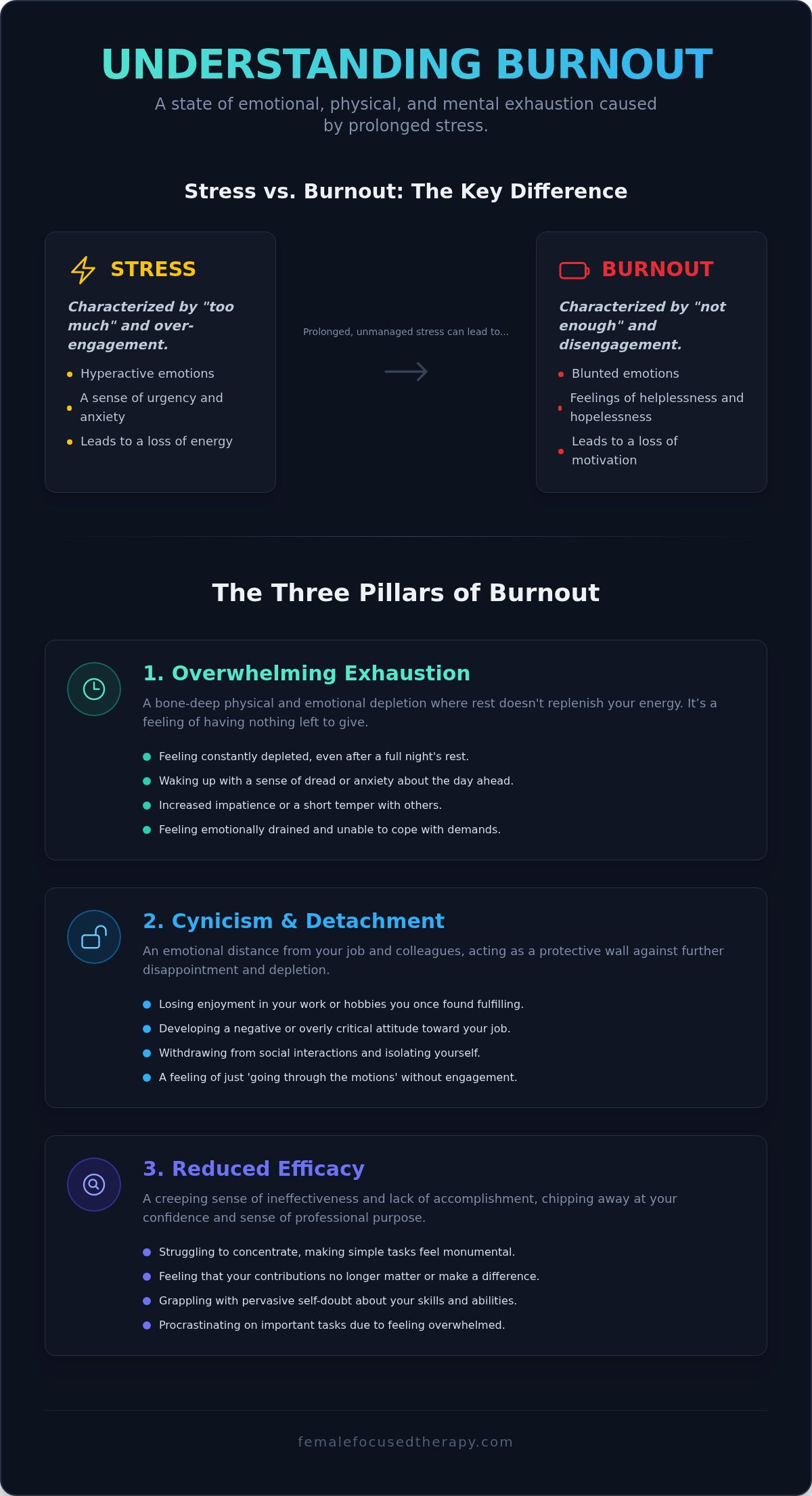
While we often use the terms interchangeably, stress and burnout are distinct experiences. Burnout is not simply having a bad week; it’s a state of prolonged emotional, physical, and mental exhaustion caused by excessive and prolonged stress. A helpful way to frame the difference is to think of stress as a state of ‘too much’-too many pressures, too many demands, too much urgency. In contrast, burnout is a state of ‘not enough’-not enough energy, not enough motivation, and a feeling of being completely depleted. Understanding the formal definition of What is Burnout helps clarify that it’s a specific occupational phenomenon resulting from chronic workplace stress that has not been successfully managed.
The Three Pillars of Burnout
Experts identify three core dimensions that are key signs of burnout. See if any of these resonate with your own experience:
- Overwhelming Exhaustion: This is more than just feeling tired. It’s a bone-deep physical and emotional depletion where rest doesn’t seem to replenish your energy. You may feel you have nothing left to give to your work, your family, or yourself.
- Cynicism & Detachment: You might feel increasingly negative, critical, or distant from your job and the people connected to it. This can manifest as a loss of enjoyment or a sense of dread about the workday ahead.
- Reduced Efficacy: This is a creeping sense of ineffectiveness and a lack of accomplishment. You may doubt your abilities, feel that your contributions don’t matter, and struggle to see a positive future in your role.
Stress vs. Burnout: A Quick Comparison
Thinking about how you feel on an emotional and engagement level can help you distinguish between the two:
- Stress is often characterized by over-engagement. Your emotions are hyperactive, you may feel anxious, and there’s a sense of urgency driving you.
- Burnout, conversely, involves disengagement. Emotions become blunted, and you may feel helpless, hopeless, and detached from your work and your own feelings.
- Crucially, chronic and unmanaged stress is the pathway to burnout. Think of stress as the precursor; if left unresolved, it can erode your resources until you are left in a state of burnout.
The Core Emotional & Mental Signs of Burnout
Unlike a single bad day or a stressful week, burnout is a slow and quiet erosion of your inner resources. It doesn’t arrive overnight; it creeps in over an extended period, which can make it difficult to pinpoint exactly when it began. We invite you to see the following points not as a rigid diagnosis, but as a gentle checklist for self-reflection. The key emotional and mental signs of burnout often fall into three core areas, which align with the World Health Organization definition of burnout: profound exhaustion, increasing mental distance from one’s job, and a reduced sense of professional accomplishment. At its heart is a deep loss of motivation and enjoyment, leaving you feeling emotionally empty and disconnected from your own life.
Pervasive Emotional Exhaustion
This is more than just feeling tired; it’s a bone-deep weariness that sleep doesn’t seem to fix. When you’re experiencing burnout, this exhaustion isn’t just physical-it’s profoundly emotional. It’s a feeling of having nothing left to give to your work, your family, or even yourself. You may recognise this as:
- Feeling constantly depleted, even after a full night’s rest.
- Waking up with a sense of dread or anxiety about the day ahead.
- Noticing a short temper or increased impatience with colleagues or loved ones.
- A persistent feeling of being emotionally drained and unable to cope with demands.
Growing Cynicism and Detachment
As your internal resources dwindle, it’s a natural coping mechanism to build a protective wall. This emotional distance can manifest as cynicism, negativity, or a sense of detachment as you try to shield yourself from further depletion and disappointment. This might look like:
- Losing enjoyment in your work or hobbies you once found fulfilling.
- Developing a negative or overly critical attitude toward your job and coworkers.
- Withdrawing from others and isolating yourself emotionally.
- A feeling of just ‘going through the motions’ without genuine engagement.
A Fading Sense of Accomplishment
Burnout systematically chips away at your confidence and sense of purpose. The mental energy required for focus, problem-solving, and creativity is gone, leaving behind a fog of ineffectiveness and self-doubt. You may begin to question your own value and competence. These are common signs of burnout related to performance:
- Struggling to concentrate, making even simple tasks feel monumental.
- Feeling that your contributions no longer matter or make a difference.
- Grappling with pervasive self-doubt about your skills and abilities.
- Procrastinating on important tasks because you feel overwhelmed or apathetic.
The Physical and Behavioral Signs You Might Be Ignoring
If you’ve been telling yourself that the exhaustion is “all in your head,” it might be time to listen more closely to your body. Burnout is not just an emotional state; it is a full mind-body experience. The chronic, unrelenting stress that leads to burnout puts immense strain on your nervous and immune systems, and your body will eventually send signals that it can no longer keep up. These physical feelings are deeply connected to the mental and emotional exhaustion you’re navigating.
Learning to recognise these physical and behavioral signs of burnout is a crucial step toward healing. It’s an invitation to treat yourself with the compassion you deserve, acknowledging that these symptoms are not a sign of weakness, but a genuine call for rest and support.
How Burnout Shows Up in Your Body
When your internal resources are depleted, your physical health is often the first to show visible cracks. You might notice your body trying to communicate its distress through persistent and unwelcome symptoms. Do any of these feel familiar?
- Persistent Aches and Pains: Frequent, unexplained headaches, persistent muscle tension in your neck and shoulders, or a constant lower backache can all be physical manifestations of chronic stress.
- Changes in Sleep: You may find yourself unable to fall asleep or stay asleep, no matter how tired you are (insomnia). Alternatively, you might feel like you can never get enough sleep, feeling groggy and lethargic even after a full night’s rest.
- Lowered Immunity: If you seem to be catching every cold or flu that goes around, it could be a sign that your immune system is compromised from prolonged stress.
- Digestive Issues: Your gut is highly sensitive to your emotional state. Burnout can lead to changes in appetite, stomach pain, or other digestive problems as your body struggles to cope.
Changes in Your Daily Habits
Burnout doesn’t just change how you feel; it changes how you act. The profound exhaustion can make it feel impossible to show up for your life in the way you used to. These shifts in behavior are often coping mechanisms-attempts to conserve energy or numb the feelings of being overwhelmed.
- Social Withdrawal: You may find yourself cancelling plans, avoiding calls from friends, and isolating yourself from the people and activities you once enjoyed.
- Increased Reliance on Coping Mechanisms: This could look like having an extra glass of wine at night, emotional eating, or using other substances to numb out and escape the pressure.
- Neglect of Self-Care: Basic routines like preparing healthy meals, exercising, or even personal hygiene can start to feel like monumental tasks that you no longer have the energy for.
- Disengagement from Responsibilities: At work, this might mean showing up late, leaving early, or finding it difficult to concentrate. At home, it could be letting chores pile up.
Why Burnout Can Look Different in Women
While burnout can affect anyone, the path to exhaustion is often shaped by a unique combination of societal pressures, biological shifts, and invisible work that women disproportionately carry. You may be feeling depleted, but your experience doesn’t neatly fit the classic descriptions you’ve read online. This is because the signs of burnout for women are frequently layered with complexities that deserve to be seen and understood.
The Weight of Emotional Labor
Emotional labor is the often-unseen work of managing your own and others’ feelings to meet role expectations-at work, at home, and in your community. For many women, this extends into a ‘second shift’ of managing household logistics, children’s schedules, and family wellbeing. Being the default planner and caregiver is a constant, draining cognitive load that can quietly erode your emotional and mental resources, leading to profound exhaustion.
Burnout and Neurodivergence
For neurodivergent women, particularly those with ADHD, the risk of burnout is magnified. Years of masking symptoms to fit into a neurotypical world requires immense energy. The constant effort to appear organised, focused, and calm can lead to deep-seated fatigue. Compounded by the intense emotional pain of rejection sensitivity, this chronic stress is a powerful catalyst for burnout. We offer specialized support for ADHD designed to help you understand and work with your unique brain.
Hormonal Shifts and Life Transitions
A woman’s life is marked by significant biological and personal transitions. The hormonal fluctuations of perimenopause and menopause can dramatically impact mood, sleep, and energy levels, making you more vulnerable to feeling overwhelmed. Navigating these changes alongside major life events-like a career shift, an empty nest, or relationship changes-can feel incredibly isolating. Therapy provides a safe space to navigate major life transitions with clarity and self-compassion.
Recognising how these factors contribute to your exhaustion is a crucial step. If these experiences resonate with you, know that support tailored to your unique journey is available at femalefocusedtherapy.com.
Taking the First Gentle Steps Toward Recovery
If you’ve recognized yourself in the descriptions of burnout, please know this: the hardest part is over. Acknowledging the depth of your exhaustion is a courageous first step. Recovery isn’t about a quick fix or pushing harder; it’s a gentle process of unlearning, healing, and rebuilding. The goal now is to stop the cycle and create the space you need to breathe again. These next steps are acts of profound self-compassion, and asking for help is a sign of incredible strength.
Acknowledge and Validate Your Experience
The first and most vital step is to give yourself permission to feel what you are feeling, without judgment. Admitting to yourself that this is more than stress is a powerful act of self-awareness. The persistent signs of burnout are not a personal failing; they are a signal that your mind and body have been carrying too much for too long. Sharing your experience with a trusted partner, friend, or family member can break the cycle of isolation and remind you that you are not alone.
Seek Professional, Compassionate Support
Navigating the path out of burnout can feel overwhelming, but you don’t have to do it by yourself. Therapy offers a confidential, professional space to unpack the root causes of your exhaustion, learn practical strategies for setting boundaries, and begin to rebuild your sense of self. It’s a space where you can be heard and supported without fear of judgment. You can start by exploring therapy with a professional who understands the unique pressures women in Singapore often face.
Prioritize Rest and Reconnection
Healing begins with small, intentional acts of rest. This isn’t about a drastic life overhaul, but about finding pockets of peace in your daily life. Consider these gentle starting points:
- Disconnect consciously: Put your phone away for 15 minutes and listen to a piece of music or simply look out the window.
- Rediscover joy: Think of a hobby you once loved before it felt like another item on your to-do list. Could you spend 20 minutes on it this week, just for fun?
- Re-introduce self-care: Gently bring back small rituals that soothe you, whether it’s a warm cup of tea before bed or a short walk in one of Singapore’s beautiful parks.
- Build new confidence: Reclaiming your sense of efficacy can come from learning a tangible, empowering skill. Engaging in something completely different from your work, such as a certification course from a provider like Aspire First Aid Guide Training Corp, can help you build practical skills and regain a feeling of accomplishment.
These small steps create the foundation for lasting recovery. When you are ready to talk and take the next step toward reclaiming your wellbeing, you can book a confidential consultation today.
Your Gentle Path from Burnout to Balance
Recognizing burnout is a profound act of self-awareness and self-compassion. As we’ve explored, what you’re feeling is more than just stress-it’s a state of deep emotional, physical, and mental exhaustion. For many women, these signs of burnout can be subtle, often masked by the pressure to over-function. Simply acknowledging them is the most crucial first step toward reclaiming your energy and wellbeing.
You do not have to navigate this path to recovery alone. At Female Focused Therapy, we create a safe, non-judgmental space specifically for women to heal and grow. Led by a registered, trauma-informed psychotherapist, we provide specialized, integrative support for ADHD, trauma, and major life transitions. Together, we can work to rebuild your self-trust and find clarity at a pace that feels right for you.
If you feel seen in these words and are ready for dedicated support, I warmly invite you to book a confidential consultation to start your recovery journey.
Your wellbeing is not a luxury; it is essential. Taking this step is a powerful way to honour yourself and your needs.
Frequently Asked Questions About Burnout
Is burnout a medical diagnosis?
While burnout isn’t classified as a formal medical diagnosis, the World Health Organization (WHO) recognises it as an “occupational phenomenon” resulting from unmanaged workplace stress. In Singapore, a GP can acknowledge its severe impact and may issue a medical certificate for related symptoms like exhaustion or anxiety. It’s a serious condition with validated health consequences, and seeking professional support is a vital step toward rebuilding your wellbeing.
What’s the difference between burnout and depression?
It’s easy to confuse the two, but there are key differences. Burnout is specifically tied to your work, characterised by emotional exhaustion, cynicism towards your job, and a feeling of reduced professional ability. Depression is a broader mood disorder that impacts all areas of your life with persistent feelings of sadness and loss of interest in activities you once enjoyed. While they can co-exist, understanding the source of your feelings is crucial for finding the right support.
Can you recover from burnout without quitting your job?
Yes, it is often possible to recover without leaving your job, though it requires intentional changes. Recovery involves learning to set firm boundaries, reclaiming your non-work time, and communicating your needs more effectively. It might also mean delegating tasks or adjusting your role. Therapy provides a confidential space to navigate these changes, helping you rebuild a healthier and more sustainable relationship with your career and yourself, fostering clarity and confidence.
How long does it take to recover from burnout?
Recovery from burnout is a deeply personal journey without a fixed timeline. For some, it may take a few months of dedicated change, while for others, it could be a year or more, especially if the stress has been chronic. The duration depends on the severity of your symptoms and the support you have. Recognising the early signs of burnout and seeking help can help you navigate the path to recovery more smoothly and sustainably.
What kind of therapy is best for treating burnout?
An integrative approach is often most effective as it addresses both mind and body. Cognitive Behavioural Therapy (CBT) can help you challenge unhelpful thought patterns related to work and perfectionism. At the same time, somatic or mindfulness-based therapies support your nervous system’s recovery from chronic stress. This holistic combination helps you not only manage symptoms but also rebuild self-trust and develop lasting strategies for your wellbeing.
Can burnout affect my physical health in the long term?
Absolutely. The chronic stress that causes burnout can have significant long-term effects on your physical health. Prolonged exposure to stress hormones can weaken your immune system, making you more susceptible to illness. It is also linked to an increased risk of cardiovascular issues, chronic fatigue, persistent headaches, and sleep disorders. Addressing the emotional signs of burnout is a crucial step in protecting your long-term physical wellbeing.

Article by
Cheryl Kennedy MacDonald MA BA (Hons) Pg. Dip. SAC BACP
Cheryl Kennedy MacDonald is a psychotherapist specialising in women’s mental health, relationships, and life transitions. She works with women navigating trauma, relationship breakdown, identity shifts, and midlife change, helping them rebuild self-trust, emotional stability, and a clear sense of who they are and what they want.
With over 20 years’ experience working with women internationally, Cheryl is the founder of YogaBellies, a global women’s yoga school, and the creator of the Birth ROCKS method. Her work sits at the intersection of psychotherapy and embodiment, integrating evidence-based therapeutic approaches with somatic, body-based practices that support deep, lasting change.
Known for her grounded and direct approach, Cheryl moves beyond surface-level insight to address the patterns held in the body and nervous system. Her work supports women to regulate, reconnect, and respond to their lives from a place of clarity, strength, and self-respect.
She is a published author in academic journals and has written multiple books on women’s health, pregnancy, and midlife wellbeing, available on Amazon and leading book retailers worldwide.