
Is there anything more isolating than feeling alone while lying next to the person you promised your life to? The silence can feel deafening, conversations seem to drift on the surface, and the emotional and physical intimacy you once shared feels like a distant memory. This experience of a lonely marriage is a quiet and profound pain, often leaving you feeling invisible, unheard, and wondering if you’re the only one who feels this way. It can make you question everything, including yourself.
If this sounds familiar, please know you are not to blame, and you are certainly not alone. This guide offers a compassionate space to understand the drift that can happen in a partnership. Together, we will gently navigate the signs and causes of marital loneliness. More importantly, we will explore kind, actionable steps you can take to begin the journey of reconnection-both with your partner and with your own sense of self. The path to feeling seen, heard, and connected again starts here.
What is a Lonely Marriage? Understanding the Silent Disconnect
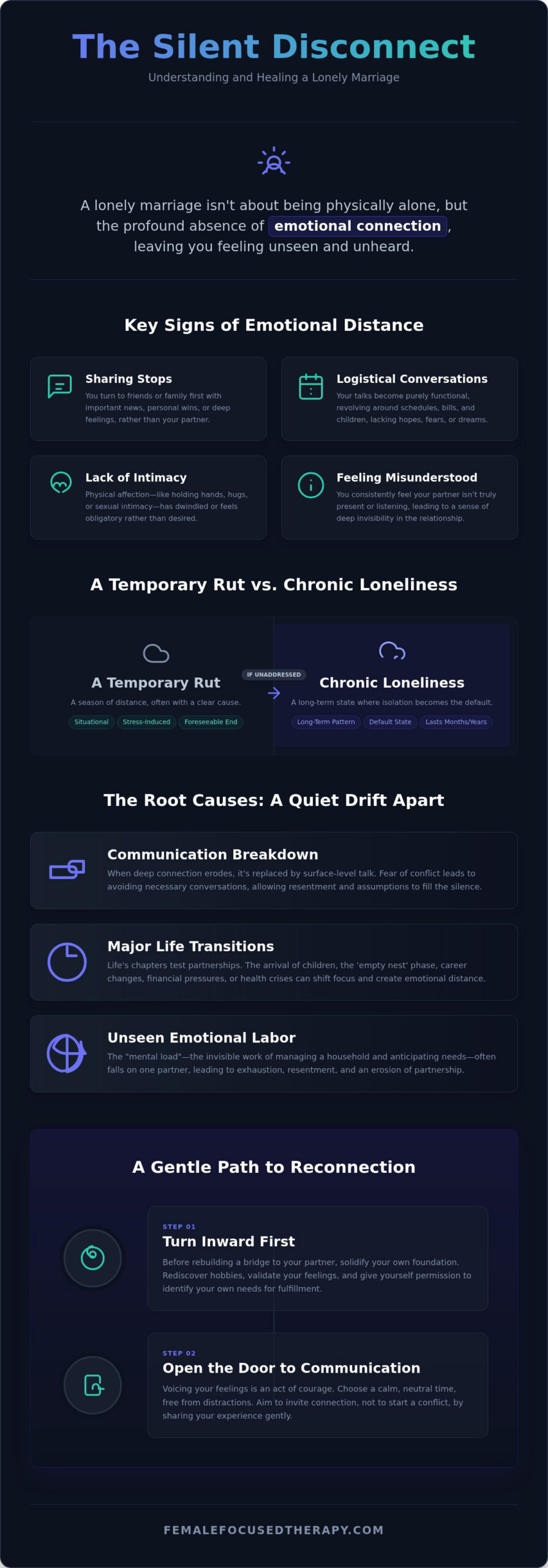
It’s a strange and quiet ache-sitting next to the person you love, yet feeling a million miles away. A lonely marriage isn’t about the absence of a partner, but the absence of connection. It’s the profound emotional distance that can grow between two people, leaving you feeling unseen, unheard, and deeply isolated within your own home. If you’re navigating this confusion and sadness, please know you are not alone in this experience. Many women find themselves in this painful space, questioning how a relationship once filled with warmth could now feel so empty. This disconnect often stems from a lack of emotional intimacy, the very foundation of a fulfilling partnership. A deeper understanding of loneliness reveals it as a distressing feeling that comes from a gap between desired and actual social relationships.
Key Signs You’re in a Lonely Marriage
This emotional drift doesn’t happen overnight. It often reveals itself through subtle shifts in your daily interactions. You may recognize some of these signs in your own relationship:
- You’ve stopped sharing important news, personal wins, or deep feelings with your partner, perhaps turning to friends or family first.
- Your conversations have become purely logistical, revolving around schedules, bills, and the children, rather than hopes, fears, or dreams.
- Physical affection-like holding hands, hugs, or sexual intimacy-has dwindled or feels like an obligation.
- You consistently feel misunderstood or as though your partner isn’t truly present or listening when you speak.
The Difference Between a Rut and Chronic Loneliness
It’s important to distinguish between a temporary rut and a more persistent pattern of disconnection. A rut is often situational-triggered by external stressors like a demanding job in Singapore, a new baby, or a difficult family matter. It’s a season of distance that has a clear cause and, often, a foreseeable end. Chronic loneliness, however, is a long-term state where the feeling of isolation has become the default in your relationship. A short-term rut, if left unaddressed, can slowly evolve into this chronic state. Gently ask yourself: has this feeling of distance lasted for months, or even years? Acknowledging the duration is a crucial first step toward reconnection.
The Root Causes: Why Do Marriages Become Lonely?
A feeling of deep loneliness in a marriage rarely happens overnight. It is often a slow, quiet drift, a gradual accumulation of small disconnections that eventually form a vast emotional distance. Understanding the root causes is not about placing blame; it’s about gently untangling the complex dynamics that have led you here. The goal is to build awareness and compassion, both for yourself and your partner, as you navigate this challenging season.
Often, the journey into a lonely marriage is paved with external pressures-demanding careers in a fast-paced city like Singapore, family obligations, financial stress, or unresolved issues from the past that cast a long shadow over the present. By exploring these catalysts, we can begin to see a path toward reconnection.
Communication Breakdown: When You Stop Speaking the Same Language
Do you remember when your conversations were filled with dreams, fears, and laughter? For many couples, this deep connection slowly erodes, replaced by surface-level talk about logistics-schedules, bills, and children’s activities. The fear of conflict can lead to avoiding difficult but necessary conversations. When this happens, assumptions and resentment fill the silence. This avoidance of vulnerability is a common pattern, and as research on marital conflict highlights, this unresolved tension can lead directly to feelings of loneliness and even impact physical health.
The Impact of Major Life Transitions
Life is a series of chapters, and each one can test a partnership in new ways. The arrival of children often shifts the focus from the couple to the family unit, leaving little energy for each other. Later, the ‘empty nest’ phase can leave you and your partner wondering who you are outside of your parental roles. Other significant changes can also create distance:
- Career advancements or job loss
- Financial pressures or health crises
- For many women, hormonal and emotional changes during menopause and other midlife transitions can profoundly impact intimacy and connection.
Unseen Emotional Labor and Resentment
Do you ever feel less like a partner and more like a household project manager? This is the weight of the “mental load”-the invisible work of remembering birthdays, scheduling appointments, and anticipating everyone’s needs. When this responsibility falls heavily on one partner, it leads to exhaustion and deep-seated resentment. This dynamic of emotional over-functioning erodes feelings of partnership and desire, making it incredibly difficult to feel connected to the person you are managing life for.
First Steps Toward Reconnection: A Gentle Approach
When you’re feeling adrift in a lonely marriage, the idea of reconnection can feel monumental. But healing doesn’t start with a grand gesture; it begins with a single, gentle step. This approach is about nurturing self-compassion, not assigning blame. It’s about slowly opening a door for your partner to walk through, not forcing them across a threshold. These small, manageable actions are designed to empower you and begin the quiet work of rebuilding.
Turning Inward: Reconnecting with Yourself First
Before you can rebuild a bridge to your partner, you must first ensure your own foundation is solid. Over time, loneliness can make us forget who we are outside of the relationship. This is your invitation to turn inward and reconnect with your own essence. Rediscover a hobby that once brought you joy, practice validating your own feelings of sadness or frustration, and give yourself permission to identify your needs. This process is about understanding who you are and what you need to feel fulfilled, independent of your partner’s actions.
Opening the Door to Communication
Voicing your feelings is an act of courage. The key is to do so in a way that invites connection, not conflict. Choose a calm, neutral time when you are both free from distractions. Instead of starting with an accusation, try an “I feel” statement. For example, “I feel lonely lately, and I miss feeling close to you.” As one leading researcher on lonely marriages highlights, expressing vulnerability can shift the dynamic from opposition to partnership. When your partner responds, listen with genuine curiosity. Your goal isn’t to win an argument, but to understand their perspective.
Small Actions to Rebuild Intimacy
Intimacy isn’t just about grand romantic moments; it’s rebuilt in the small, consistent efforts of daily life. These actions are low-pressure ways to signal that you want to close the distance between you. Try incorporating one or two into your routine:
- Schedule ‘Us’ Time: Put away your phones for 10-15 minutes each evening to simply talk about your day, with no other agenda.
- Reintroduce Gentle Touch: A simple hug before leaving for work, holding hands while walking, or a touch on the arm can re-establish physical connection.
- Share Appreciation: Make a point to tell your partner one thing you appreciate about them each day, no matter how small.
- Revisit a Shared Joy: Plan a low-stakes activity you once both loved, like a walk in the Singapore Botanic Gardens or visiting a favourite neighbourhood café.
When to Seek Support: The Role of Therapy in Healing
You have taken courageous steps to understand and address the distance in your relationship. But sometimes, despite our best efforts, the path to reconnection feels blocked. If conversations go in circles or the emotional gap feels too wide to bridge alone, seeking professional support is not a sign of failure-it is a profound act of strength and commitment to your wellbeing.
Therapy offers a confidential, neutral space where you and your partner can explore the challenging dynamics of a lonely marriage without blame or judgment. A skilled therapist acts as a gentle guide, facilitating communication that has become stuck and helping you both feel seen and heard again.
How Individual Therapy Can Empower You
Even within a partnership, your individual healing journey is vital. Individual therapy provides a space to rebuild your sense of self-worth and refine your communication skills. It allows you to safely explore how past experiences, such as relationship trauma, may be influencing your current dynamics. This focused work helps you gain clarity on your needs, develop coping strategies for the pain of loneliness, and feel more grounded within yourself and your marriage.
The Benefits of Couples Therapy
When you attend therapy together, you create a dedicated time to focus solely on your relationship’s health. A therapist can help you both uncover the root causes of your disconnection in a structured, supportive environment. You will learn healthier communication tools to break old, painful patterns and build new rituals of intimacy and connection. For many in Singapore, couples therapy provides a clear, collaborative roadmap back to one another.
Finding a Safe Space to Heal
The most important step is finding a therapist who is a good fit-someone you and your partner both feel comfortable with and who specialises in relationship issues. Therapy is an investment in the future of your relationship and, most importantly, in your own emotional health. It is a commitment to moving from a place of loneliness to one of meaningful connection.
If you are ready to explore how therapy can support you, we are here to help. Book a confidential consultation to discuss your options and take the next step toward healing.
Your Path from Loneliness to Reconnection
Feeling disconnected within your partnership is a deeply personal and often silent struggle. Acknowledging these feelings is a courageous first step toward healing. As we’ve explored, understanding the root causes-from unspoken expectations to major life transitions-is key to finding a way forward. Remember that reconnection isn’t about a single grand gesture; it begins with small, intentional actions aimed at rebuilding emotional intimacy and trust.
You do not have to navigate the complexities of a lonely marriage by yourself. If you’re seeking a compassionate guide, Female Focused Therapy offers specialised support for women facing relationship challenges. With a warm, non-judgmental, and trauma-informed approach, we provide a safe space to heal and grow, available online worldwide and in-person here in Singapore. Book a confidential consultation to find clarity and support.
Your journey toward a more fulfilling connection can begin today.
Frequently Asked Questions About Loneliness in Marriage
Can a marriage survive without intimacy?
While some marriages exist with limited physical intimacy, they struggle to survive without emotional intimacy-the feeling of being seen, heard, and supported. A partnership thrives on both forms of connection. When intimacy fades, couples can begin to feel more like roommates, which often leads to deep resentment and loneliness. Rebuilding this bond, in a way that feels safe for both partners, is crucial for the long-term health and happiness of the relationship.
What if my partner refuses to talk about the loneliness or go to therapy?
This can feel incredibly disheartening, but you cannot force your partner to engage. It is important to focus on what you can control. Seeking individual therapy for yourself is a powerful step. It provides a confidential space to navigate your feelings, develop new coping strategies, and gain clarity on your own needs. Sometimes, when one partner begins this journey of growth, it can positively shift the dynamic within the marriage.
How do I know if this is just a phase or if my marriage is truly over?
Phases are often tied to external stressors like work, finances, or raising children, but the underlying respect and care for one another remain. A more serious sign is a consistent, long-term pattern of contempt, criticism, or emotional withdrawal. If there is no longer a mutual willingness to try or a shared vision for the future, it may be more than a phase. A therapist can help you navigate these complex feelings and find clarity.
I feel guilty for being unhappy. Is the loneliness my fault?
It is very common to carry guilt when you feel unhappy in your marriage, but your feelings are valid. Loneliness in a relationship is a dynamic created between two people over time; it is rarely one person’s fault. Your feelings are important signals that your needs for connection, validation, and affection are not being met. Acknowledging your unhappiness without blame is the first step toward understanding the issue and seeking change.
How can I cope with the feeling of loneliness on a day-to-day basis?
While you navigate your relationship challenges, it’s essential to nurture your own wellbeing. Reconnect with supportive friends, rediscover hobbies that bring you joy, and invest time in your own personal growth. Building a strong sense of self and a reliable support system outside of your relationship can make coping with a lonely marriage more manageable. Practices like journaling or mindfulness can also provide a safe outlet for your emotions.
Can we ever get the spark back after years of feeling disconnected?
Yes, it is absolutely possible to rebuild connection and find the spark again. It requires intentional and consistent effort from both partners to break old patterns and create new ways of relating to each other. This journey often involves learning to communicate more vulnerably, prioritising quality time, and making a conscious choice to turn towards one another again. With commitment, a couple can move from disconnection to a deeper, more mature intimacy.

Article by
Cheryl Kennedy MacDonald MA BA (Hons) Pg. Dip. SAC BACP
Cheryl Kennedy MacDonald is a psychotherapist specialising in women’s mental health, relationships, and life transitions. She works with women navigating trauma, relationship breakdown, identity shifts, and midlife change, helping them rebuild self-trust, emotional stability, and a clear sense of who they are and what they want.
With over 20 years’ experience working with women internationally, Cheryl is the founder of YogaBellies, a global women’s yoga school, and the creator of the Birth ROCKS method. Her work sits at the intersection of psychotherapy and embodiment, integrating evidence-based therapeutic approaches with somatic, body-based practices that support deep, lasting change.
Known for her grounded and direct approach, Cheryl moves beyond surface-level insight to address the patterns held in the body and nervous system. Her work supports women to regulate, reconnect, and respond to their lives from a place of clarity, strength, and self-respect.
She is a published author in academic journals and has written multiple books on women’s health, pregnancy, and midlife wellbeing, available on Amazon and leading book retailers worldwide.