
You land at Changi with a suitcase full of hope, but six months later, you’re sitting in a clinical office feeling more “othered” than ever. It’s that jarring moment when you realise your international therapist in Singapore needs to be more than just a name on a directory; they need to understand the unique weight of expat life and the way your ADHD brain whirs in this high-pressure city.
Labels like “trailing spouse” or “expat professional” rarely capture the depth of who you are. These terms flatten your identity, ignoring the complex woman who is trying to rebuild her life in a new landscape. As someone born in Scotland and now based in Asia, I understand the dissonance of feeling like a local and a stranger all at once. The mental health landscape in Singapore is evolving, and finding inclusive Individual Therapy at The Connection Ground that understands the specific nuances of international life is a vital part of that journey.
I know how exhausting it is to explain your cultural context or your trauma to someone who views you through a purely clinical lens. You deserve a space where you don’t have to translate your soul or justify your struggles with narcissistic abuse while living away from your support system. We both know that keeping up appearances in a new country takes a toll on your spirit.
I’ve learned that true healing starts when you finally feel “at home” in the therapy room, even if you’re thousands of miles from where you grew up. In this post, I’ll share my journey of creating a female-focused practice and how we can work together to rebuild your self-trust and find practical ways to regulate your emotions in this fast-paced environment.
Key Takeaways
- I’ll help you understand the weight of the “high-functioning” mask and how to navigate life transitions in Singapore when you are far from your original support network.
- Discover what to look for in an international therapist singapore, focusing on the importance of cultural humility and a trauma-informed lens over simple language skills.
- I share why a female-focused approach is vital for managing the intersection of hormonal changes, such as menopause, and the stress of international relocation.
- Learn why many high-achieving women only recognize their ADHD burnout after moving to a high-pressure environment and how to finally break that cycle.
- Explore how we can work together to rebuild your self-trust, moving you from feeling “lost in transition” to a place of grounded, calm self-awareness.
The Unique Weight of Being an International Woman in Singapore
Living in Singapore often means wearing a mask of effortless competence. You manage the moves, the school runs, and the career shifts with a smile, but underneath that “high-functioning” exterior, you might feel like you’re barely holding it together. I see you. You’re the woman who seems to have it all together in the Lion City, while privately struggling with a sense of isolation that no luxury condo or brunch invitation can quite fill.
Labels like “trailing spouse” or “expat professional” rarely capture the depth of who you are. These terms flatten your identity, ignoring the complex woman who is trying to rebuild her life in a new landscape. As someone born in Scotland and now based in Asia, I understand the dissonance of feeling like a local and a stranger all at once. The mental health landscape in Singapore is evolving, but finding support that understands the specific nuances of international life is still a challenge.
Finding an international therapist singapore is about more than just convenience. It’s about finding a professional who recognizes that your “over-functioning” isn’t just a personality trait; it’s often a survival mechanism. When you are thousands of miles from your original support network, the pressure to be perfect becomes a heavy burden to carry alone.
When “Home” Feels Like a Moving Target
Relocation is more than just logistics; it’s a profound experience of grief. When you lose your familiar anchors, such as your childhood best friend or even your favourite local park, existing anxieties often amplify. If you’ve experienced previous relationship trauma, the isolation of international life can make those wounds feel fresh again. I believe it’s vital to work with a therapist who shares a global, mobile perspective. We need to acknowledge the specific grief of leaving a life behind while trying to plant seeds in new soil. This is a core part of the life transitions support I offer to women in our community.
The Pressure to “Have It All” in the Lion City
Singapore’s expat circles can feel like a pressure cooker. There’s a silent, persistent expectation to be constantly thriving, whether in your career or your social life. You might notice yourself falling into patterns of:
- Chronic people-pleasing to fit into new social groups.
- Ignoring physical signs of burnout, like shallow breath or tension.
- Feeling “guilty” for being unhappy in a city many consider a paradise.
I want to offer you a gentle reminder: it is okay to not be “thriving” every single day. Your value isn’t tied to how well you’ve adapted or how busy your social calendar looks. Seeking an international therapist singapore is a courageous step toward reclaiming your authentic self, away from the expectations of others. You deserve a space where you can take off the mask and simply be heard.
What to Look for in an International Therapist Beyond Language
Living in Singapore as an expat often feels like a balancing act. You’re managing a career, perhaps a family, and the unique pressures of a high-paced city, all while being far from your original support systems. When you search for an international therapist singapore, it’s natural to look for someone who speaks your language. But true connection goes much deeper than a shared mother tongue.
An international therapist should offer cultural humility rather than just clinical distance. This means I don’t sit behind a desk and observe you as a case study. Instead, I bring a professional warmth that acknowledges the “third culture” experience. It’s the specific feeling of belonging everywhere and nowhere at once, a nuance that’s hard to explain to someone who hasn’t lived it.
My own journey from Scotland to Asia, coupled with my experience as a woman with ADHD, informs every session. I know what it’s like to navigate a new culture while managing a brain that sometimes feels like it has too many tabs open. This shared experience allows us to skip the explanations of why relocation is hard and get straight to the heart of how you’re feeling.
The Importance of Cultural Humility and Shared Experience
Cultural humility is about more than just being “well-travelled.” It’s about recognizing that your background, your heritage, and your current life in Singapore all intersect in complex ways. Research into the challenges in seeking mental health support suggests that many people in our international community feel hesitant to reach out because they fear their specific situation won’t be understood.
I aim to bridge that gap by creating a safe, grounded space where your expat identity is validated. Whether you’re dealing with the isolation of being a trailing spouse or the burnout of a corporate role, I understand the stakes. We’ll work together to rebuild your self-trust in a way that feels sustainable for your life here.
Integrative Therapy: Moving Beyond Talk
Healing relationship trauma or navigating major life transitions like menopause requires more than just “talking it out.” Your body often remembers what your mind tries to push away. That’s why I use an integrative approach. We combine the structure of CBT and the depth of psychodynamic therapy with somatic movement and breathwork.
This “Female Focused” lens is essential because women’s lives are punctuated by specific hormonal and life-stage transitions that are often overlooked in traditional settings. By integrating the mind and body, we can address the physical tension of anxiety alongside the thoughts that trigger it. You can see the breadth of this specialized care by looking at who I work with in my practice.
If you’re feeling emotionally exhausted or disconnected from yourself, please know that you don’t have to carry that weight alone. You’re welcome to reach out for a chat whenever you feel ready to start your journey back to clarity.
Why a Female-Focused Approach Matters for Expat Mental Health
Living as an expat in Singapore brings its own set of pressures, but for women, these challenges often layer on top of complex biological and social roles. When you work with an international therapist singapore, you shouldn’t have to spend your first three sessions explaining what it feels like to be the emotional glue of your family. I provide a space where your experience as a woman is already understood. This allows us to get straight to the heart of your healing without you having to translate your reality.
Many women I see find that the stress of a move to Southeast Asia coincides exactly with perimenopause. It’s a heavy combination. You might feel a sudden loss of confidence or a spike in irritability that feels like it came from nowhere. According to the 2021 Singapore Mental Health Study, women reported higher levels of psychological distress than men, often linked to the heavy lifting of caregiving and domestic management. I see this daily in my practice.
I also support many women in the “sandwich generation.” You’re likely managing the school runs and social calendars of children in Singapore while simultaneously worrying about aging parents who are 6,000 miles away. This dual burden can lead to a specific type of burnout. It’s a lonely place to be when you’re away from your original support networks. In our sessions, we look at how to set boundaries that protect your energy while still honoring your commitments to those you love.
Navigating Menopause and Midlife Transitions Abroad
It’s common for the emotional weight of midlife to be dismissed as just stress from the move. This is why specialized support is so vital. Through life transitions and menopause therapy, I help you identify what’s hormonal and what’s situational. We work together to reclaim your sense of self. We ensure you don’t lose your identity to the roles of mother, wife, or professional during these transformative years.
Rebuilding Self-Trust After Relationship Trauma
The expat community in Singapore can feel quite small, which makes leaving a difficult partner feel incredibly risky. If you’ve experienced relationship trauma and narcissistic abuse, the isolation is magnified. You might fear losing your Dependant’s Pass, your home, or your entire social circle. I offer a safe, confidential environment to help you untangle the confusion. We focus on the rebuilding of self-trust so you can begin to rely on your own instincts again.
Navigating Neurodivergence and ADHD as an International Woman
I know what it feels like when the systems you’ve relied on for years suddenly stop working. For many high-achieving women, a move to a fast-paced environment like Singapore is the catalyst that finally unmasks ADHD. You might have spent decades “white-knuckling” your way through life, using sheer intelligence and anxiety to stay organized. When you land in a new country without your usual support networks, that internal structure often collapses.
I see this cycle frequently in my practice as an international therapist singapore. The “ADHD burnout” isn’t just about being tired. It is a profound, soul-deep exhaustion that happens when your brain can no longer keep up with the demands of a high-pressure expat career and a complex transition. You aren’t failing; your brain is simply processing a massive amount of new data without its familiar anchors.
In our work together, I don’t focus on “fixing” you. I don’t believe your neurodivergent brain is broken. Instead, we look at how emotional intensity and overwhelm manifest for you specifically. We move away from the shame of “not doing enough” and toward a compassionate understanding of how your unique mind functions in a world that wasn’t necessarily built for it.
The Intersection of ADHD and Expat Transitions
International moves strip away the external routines that many neurodivergent women use to stay regulated. Without the familiar grocery store, the known commute, or the established social circle, ADHD paralysis can set in. You might find yourself staring at a to-do list for hours, unable to choose where to start. Managing the sensory overwhelm of Singapore, from the humidity to the constant bustle, requires a specific kind of support. We can explore practical strategies through ADHD-focused therapy to help you regain your footing and rebuild a life that feels sustainable.
Somatic Support for the Neurodivergent Mind
For many of us with ADHD, the body holds the stress of Rejection Sensitivity Dysphoria (RSD) and the constant “buzz” of an overactive nervous system. I’ve found that traditional talk therapy is often more effective when we include the body. Simple tools like intentional breath and gentle movement can help regulate a system that feels permanently stuck in “on” mode. Rest is not a reward for finishing your work; it’s a physiological necessity for your brain to function. Incorporating somatic movement and yoga for women allows you to process the overwhelm physically, giving your mind the space it needs to settle.
If you feel like you’re constantly underwater, please know that there is a way to live that doesn’t involve permanent burnout. You can find clarity and move forward at a pace that feels safe for you. If you’re ready to explore how your brain works, you can book a session with me here.

Finding Your Way Back to Self-Trust in Singapore
Moving to a new country often triggers a subtle shift in how we see ourselves. I’ve noticed that for many women in Singapore, the pressure to “have it all together” while navigating a new culture can lead to a profound loss of self-trust. Finding an international therapist singapore women can truly trust means finding a space where you can drop the mask of being high-functioning. It’s about reconnecting with the woman you were before the move, while honouring the woman you are becoming now.
I understand the unique weight of rebuilding a life far from home. My sessions are a blend of traditional psychotherapy and somatic awareness, meaning we work with both the mind and the body. We don’t just talk about your anxiety; we notice where it sits in your breath and your shoulders. Whether we meet in person or online, my goal is to provide the stability you need in a life that often feels transient and demanding.
Choosing an international therapist singapore allows you to work with someone who understands the global lifestyle. My work is designed around the reality of your life, offering the flexibility that international life requires. This ensures your healing doesn’t have to stop when you travel or when work gets busy. This grounded approach helps you move from feeling “lost in transition” to a place of quiet, confident self-awareness.
Choosing the Right Path for Your Healing
Sometimes, the standard weekly hour isn’t enough to break through years of emotional over-functioning or relationship trauma. I offer focused intensive therapy options for women who want to dive deeper into their healing over a shorter, more concentrated period. These intensives allow us to process complex emotions without the constant interruption of the weekly grind, providing a dedicated container for growth.
You might be ready to start this work if you feel a persistent pull toward change, even if it feels scary. If you are still exploring your options and want to understand the local landscape better, my Finding a Therapist in Singapore guide for 2026 provides a compassionate roadmap for what to look for. It’s about finding a professional who feels like a safe harbor for your most difficult days.
Taking the First Step Toward Support
I invite you to take one small, realistic step today for your own wellbeing. You don’t need to have all the answers before we begin. You could book a consultation with me to see if we are a good fit for your journey. If you aren’t quite ready for a one-on-one session, you can browse my free therapy resources at your own pace to start your reflection.
Therapy with me is a collaborative, unhurried process. We’ll work at a pace that respects your nervous system and your unique story. You don’t have to navigate the complexities of life as an expat or the weight of your past alone. I’m here to hold that space for you as you find your way back to yourself, one breath and one session at a time.
With warmth,
Cheryl
Finding Your Way Back to You in Singapore
Living in Singapore as an international woman brings a specific set of challenges that often go unseen. You might feel like you’re performing a role or struggling to keep your head above water while everyone else seems to be thriving. My journey has taught me that healing isn’t about being fixed. It’s about finding a space where you can finally set down the heavy weight of expectation. Whether you’re navigating the complexities of ADHD, recovering from narcissistic abuse, or simply trying to remember who you were before the move, your experience is valid.
I’ve spent my career supporting women through these exact transitions. As a registered integrative psychotherapist and specialist in trauma and ADHD recovery, I bring my Scottish-born perspective and global experience to our sessions. We’ll work together at a pace that feels safe for your mind and your body. If you’re looking for an international therapist singapore who understands the nuances of expat life and female neurodivergence, I’m here to walk that path with you.
You don’t have to carry this alone anymore. When you’re ready to start your journey toward clarity and confidence, I invite you to book your consultation with Cheryl Kennedy MacDonald. Let’s create a space where you feel truly seen and supported.
Frequently Asked Questions
What exactly is an international therapist and how can they help me in Singapore?
An international therapist is a professional who specialises in the unique psychological pressures of living outside your home country. In Singapore, I help you navigate the “trailing spouse” dynamic, the isolation of being away from your support network, and the specific cultural adjustments of life in the Lion City. I provide a grounded, confidential space to process these transitions so you don’t feel adrift in a foreign environment.
Is online therapy as effective as in-person sessions for expat women?
Yes, clinical research shows that online therapy is just as effective as in-person sessions for managing anxiety and depression. For expat women in Singapore, it offers the consistency you need when you’re travelling for work or balancing a hectic family schedule. I’ve found that being in your own comfortable, private space often helps you open up more quickly; it allows us to build a deep connection regardless of physical distance.
How do I know if I am experiencing expat burnout or clinical depression?
Expat burnout often feels like a temporary depletion tied directly to your environment, while clinical depression is usually more persistent and pervasive. If your exhaustion doesn’t lift after a quiet weekend or a trip back home, it might be something deeper. A 2022 study by Aetna International found that 46 percent of expats reported increased stress levels after moving, making it vital to distinguish between situational fatigue and clinical struggles.
Can you help with ADHD diagnosis and management for adult women in Singapore?
I support adult women through the emotional journey of an ADHD diagnosis and help you develop sustainable management strategies that actually work for your life. As a woman with ADHD myself, I understand that your brain functions differently; we’ll work on building self-trust rather than trying to fit into neurotypical moulds. While I don’t provide the formal medical assessment for medication, I offer the therapeutic support needed to navigate a late-in-life diagnosis.
What is a trauma-informed approach and why is it important for relationship recovery?
A trauma-informed approach means I prioritise your sense of safety and choice, acknowledging how past wounds shape your current reactions and nervous system. In relationship recovery, especially after narcissistic abuse, this is crucial because it prevents re-traumatisation during our sessions. I use an integrative method that includes somatic awareness; this helps you reconnect with your body’s signals so you can set healthy boundaries and trust your intuition again.
How long does the therapy process usually take for life transitions?
The length of therapy varies, but many women find a sense of clarity within 8 to 12 sessions when navigating a specific life transition. We always move at a pace that feels safe and sustainable for you. Some clients choose shorter-term support for a specific move, while others stay longer to work through deeper, long-standing patterns. My goal is to equip you with the tools to feel grounded and confident in your new reality.
Do you offer support for couples navigating the stress of international relocation?
I provide a supportive, non-judgmental space for couples to address the unique strains that moving to a new country places on a marriage. Relocation can highlight existing cracks or create new ones, especially if one partner moved for a career and the other feels lost. As an international therapist in Singapore, I help you both communicate your needs clearly so you can rebuild your partnership as a team in your new home.
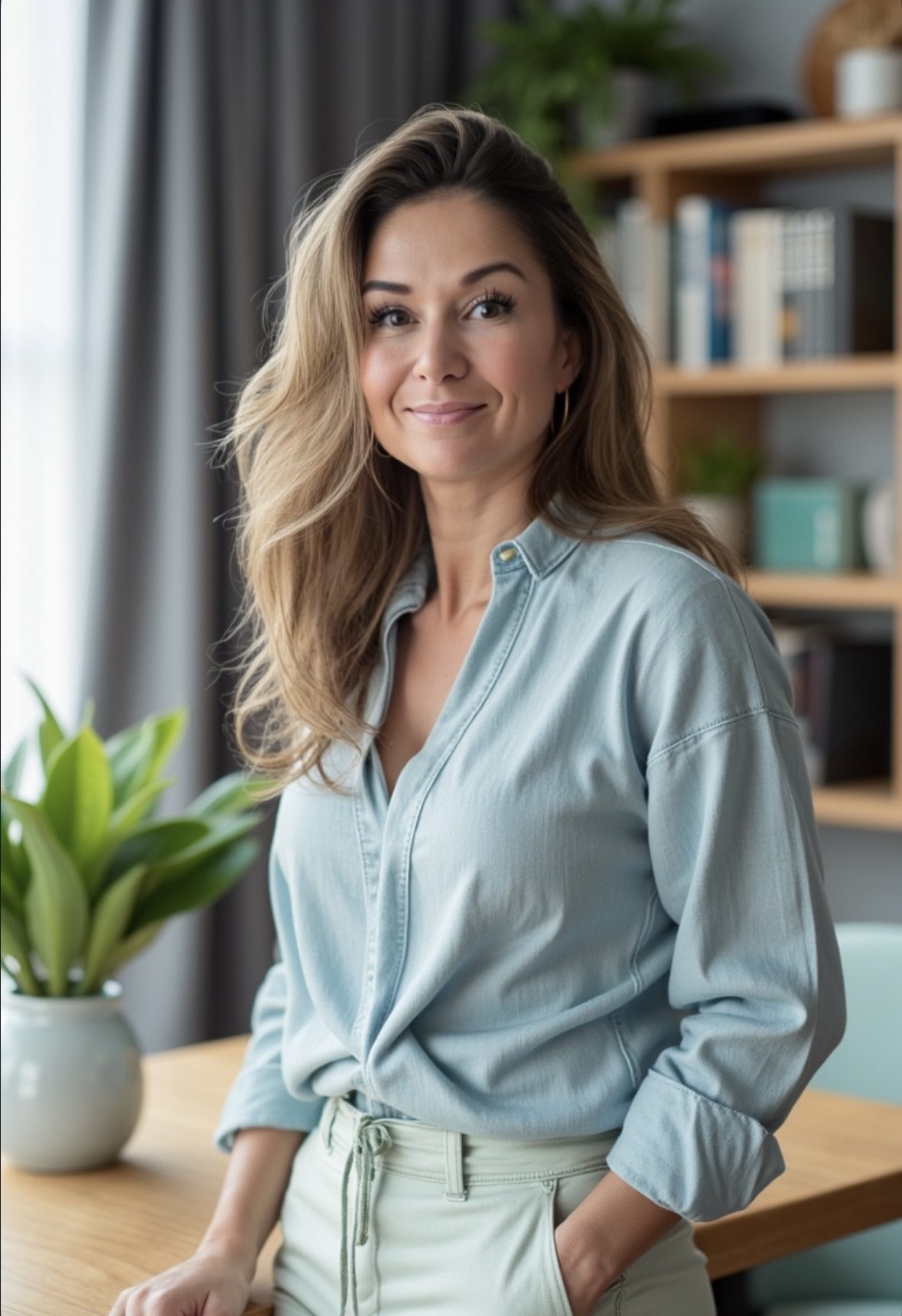
Article by
Cheryl Kennedy MacDonald MA BA (Hons) Pg. Dip. SAC BACP
Cheryl Kennedy MacDonald is a psychotherapist specialising in women’s mental health, relationships, and life transitions. She works with women navigating trauma, relationship breakdown, identity shifts, and midlife change, helping them rebuild self-trust, emotional stability, and a clear sense of who they are and what they want.
With over 20 years’ experience working with women internationally, Cheryl is the founder of YogaBellies, a global women’s yoga school, and the creator of the Birth ROCKS method. Her work sits at the intersection of psychotherapy and embodiment, integrating evidence-based therapeutic approaches with somatic, body-based practices that support deep, lasting change.
Known for her grounded and direct approach, Cheryl moves beyond surface-level insight to address the patterns held in the body and nervous system. Her work supports women to regulate, reconnect, and respond to their lives from a place of clarity, strength, and self-respect.
She is a published author in academic journals and has written multiple books on women’s health, pregnancy, and midlife wellbeing, available on Amazon and leading book retailers worldwide.