
You may be here because you’re tired of feeling misunderstood. Perhaps you’ve been told your struggles are ‘just anxiety,’ or you’re left wondering why the productivity hacks everyone swears by seem to make your life even more chaotic. The constant cycle of overwhelm, burnout, and self-doubt can be incredibly isolating, especially when you feel like no one truly understands the unique way your brain works. If this sounds painfully familiar, please know you are not alone, and there is a path toward feeling seen and supported.
Finding the right support is a crucial first step, and specialized ADHD therapy for women provides a safe space where your experiences are not just heard, but deeply understood. In this guide, we will navigate the specific challenges of ADHD as a woman. You’ll discover how a tailored therapeutic approach can help you heal from the emotional toll of a late or misdiagnosis, learn practical strategies that work with your brain, and begin to rebuild a foundation of self-trust and confidence. It’s time to move from simply coping to truly thriving.
Why ADHD in Women is Different (And Why Your Therapy Should Be Too)
If you’ve spent years feeling scattered, overwhelmed, or like you’re constantly falling short despite your best efforts, you are not alone. For decades, the model for ADHD was based on hyperactive young boys, causing generations of girls and women to be overlooked, misdiagnosed, or dismissed. You may have been told you were just “too sensitive,” “lazy,” or needed to “try harder.”
The truth is, ADHD in women often presents in a far more subtle, internalised way. This leads to late diagnoses, often in adulthood, after a lifetime of navigating a world not built for your brain. Understanding these differences is the first step toward finding support that truly works. Effective adhd therapy for women acknowledges that your experience is valid and requires a specialised approach.
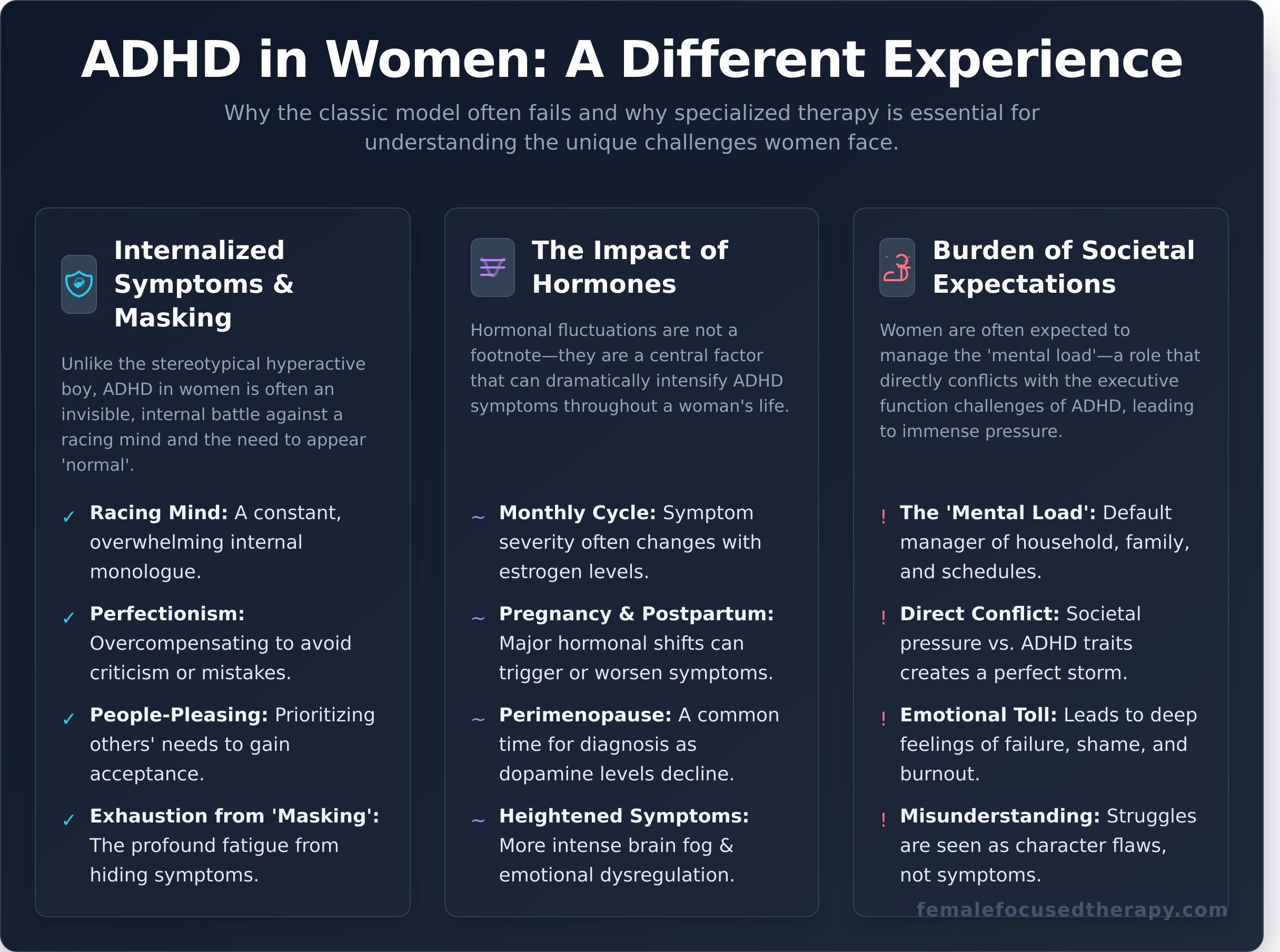
The Unique Presentation: Internalised Symptoms and Masking
Instead of outwardly disruptive behaviour, your hyperactivity may be a mind that never stops racing or a tendency towards verbal over-processing. For many, the most challenging symptoms are inattentive ones. This internalised experience is a key feature of Adult ADHD in women, and it often involves:
- Chronic feelings of overwhelm and disorganisation, even with simple tasks.
- A tendency to daydream or get lost in thought, appearing “spacey.”
- Developing coping mechanisms like perfectionism or people-pleasing to avoid criticism.
- The profound exhaustion that comes from constantly ‘masking’ symptoms to fit in.
The Impact of Hormones and Life Stages
Your biology plays a significant role in how you experience ADHD. Hormonal fluctuations throughout your monthly cycle, pregnancy, and perimenopause can dramatically impact dopamine levels, intensifying symptoms like brain fog, emotional dysregulation, and executive dysfunction. It’s no coincidence that many women first seek a diagnosis during these major life transitions, or when juggling the immense demands of motherhood or a challenging career.
The Burden of Societal Expectations
Women are often expected to be the default managers of the household and the emotional core of the family—the keepers of the ‘mental load.’ This societal pressure to be organised, nurturing, and on top of everything creates a direct conflict with the challenges of ADHD. When you struggle to meet these unspoken expectations, it can lead to deep feelings of failure, shame, and burnout, further compounding the emotional toll of the condition.
What Does ADHD Therapy for Women Actually Look Like?
Stepping into therapy for ADHD can feel daunting, especially if you’re used to feeling misunderstood. It’s important to know that this process is not about ‘fixing’ a broken part of you. Instead, it’s a warm, collaborative journey of discovery. The goal of effective ADHD therapy for women is to help you understand your unique neurotype and, together, build a life that truly supports it. It’s a confidential space to finally unmask, to explore your experiences without judgment, and to integrate practical, life-changing strategies with deep emotional healing.
Your First Sessions: Understanding Your Story
Our work together begins by moving beyond a simple checklist of symptoms. We’ll gently explore your life history through an ADHD lens, connecting the dots between past struggles and your present experience. This approach is supported by the expert consensus statement on ADHD in females, which highlights the need for a lifespan perspective to truly understand its impact. From this place of shared understanding, we co-create therapy goals that are meaningful to you, building the trusting relationship that is the foundation for all future growth.
Practical Strategies for Executive Function Challenges
A core part of our work involves developing compassionate, practical tools to navigate daily life. We don’t believe in one-size-fits-all solutions. Instead, we focus on creating systems that work with your brain, not against it. This can include:
- Personalised systems for organisation and time management that reduce overwhelm.
- Gentle strategies for task initiation, prioritisation, and moving through procrastination.
- Learning to tap into your brain’s unique motivation and reward pathways.
- Managing your energy to avoid the all-too-common cycle of burnout.
Exploring Your Inner World and Building Self-Awareness
Alongside practical skills, true change comes from within. So much of ADHD therapy for women is about rebuilding self-trust and self-awareness. We will identify and celebrate your unique neurodivergent strengths and talents. You will also learn to understand your sensory sensitivities and the intensity of your emotions, not as flaws, but as integral parts of who you are. A key outcome is learning to recognise your body’s signals for overwhelm or shutdown, empowering you to respond with kindness and support.
Beyond Time Management: Healing the Emotional Impact of ADHD
While practical strategies for focus are essential, they only address the surface. For many women, an ADHD diagnosis comes after years of feeling misunderstood, being called “too sensitive,” or internalising messages that they were somehow failing. This can leave deep emotional wounds, often intertwined with anxiety, depression, or trauma. A core part of effective adhd therapy for women is shifting the focus from the lifelong question of, “What’s wrong with me?” to the compassionate, empowering question, “What do I need to thrive?”
Rebuilding Self-Esteem and Overcoming Imposter Syndrome
The constant struggle to meet neurotypical expectations often creates a powerful inner critic. In therapy, we work together to challenge this negative self-talk, creating space to grieve the past and the person you might have been without this invisible burden. As detailed by leading resources on ADHD in Women and Girls, this experience is incredibly common. The process involves learning to celebrate your unique strengths and successes—no matter how small they seem—to rebuild a foundation of genuine self-worth and self-trust.
Managing Rejection Sensitive Dysphoria (RSD)
Rejection Sensitive Dysphoria (RSD) is an intense, painful emotional response to perceived criticism or rejection. It’s not just feeling sad; it’s an overwhelming wave of hurt that can feel unbearable. Specialised adhd therapy for women provides a safe space to understand these intense emotions. Together, we develop skills for emotional regulation and distress tolerance, helping you learn to separate your feelings from the facts in social situations and build resilience to navigate interpersonal challenges with more confidence.
Navigating Relationships and Setting Healthy Boundaries
ADHD can impact every relationship, from friendships and family to romantic partnerships. Executive function challenges can be misinterpreted as a lack of care, and emotional dysregulation can create friction. Therapy helps you understand these dynamics and provides tools to communicate your needs effectively. We focus on setting healthy boundaries that protect your energy and foster more authentic, supportive connections with the people you love.
Ready to start healing? Let’s navigate this together.
Finding the Right Therapist: What to Look For
Beginning the search for support is a significant step, but it can feel overwhelming. It’s important to know that not all therapists are trained in the nuances of adult ADHD, particularly how it presents in women. The connection you have with your therapist is the foundation for meaningful change, so finding the right fit is crucial for a successful therapeutic journey. The goal is to find a professional who is not only knowledgeable but also deeply empathetic—someone with whom you feel safe, seen, and truly understood.
Essential Qualities of an ADHD-Informed Therapist
When seeking effective adhd therapy for women, look for a professional who moves beyond outdated stereotypes. A truly supportive therapist will see your whole person, not just a diagnosis. Key qualities include:
- Specific Training: They have dedicated experience and training in adult ADHD, especially its unique presentation in women, including hormonal influences and the impact of social conditioning.
- A Strengths-Based Approach: They are neurodiversity-affirming, helping you identify and leverage your inherent strengths rather than focusing solely on deficits.
- Trauma-Informed Care: They understand the emotional toll of living with undiagnosed ADHD, including experiences of rejection sensitivity, anxiety, and low self-worth.
- Validation: Above all, they listen to and validate your lived experience, trusting that you are the expert on your own life.
Questions to Ask in a Consultation
An initial consultation is an opportunity for you to interview a potential therapist. Feeling empowered to ask questions helps ensure you find the right partner for your growth. Consider asking:
- What is your experience working with women with ADHD?
- How would you describe your therapeutic approach to navigating ADHD?
- How do you balance practical, skill-building strategies with deeper emotional work?
- What are your views on the role of medication alongside therapy?
The Benefits of a Female-Focused Practice
Choosing a practice dedicated to women’s mental health provides a unique container for healing. It is a space built on an inherent understanding of the intersection of gender and neurodivergence, acknowledging the societal pressures to mask symptoms, people-please, or over-function emotionally. This specialised focus ensures that your therapy addresses not just the ADHD, but the context in which you live your life as a woman. If you feel ready to explore this path, you can learn more about my female-focused approach to ADHD therapy.
Begin Your Journey to Clarity and Confidence
Navigating life with ADHD as a woman is a unique experience, one that goes far beyond challenges with focus. As we’ve explored, it often involves a history of feeling misunderstood and the emotional weight of masking your true self. The right support isn’t about simply managing tasks; it’s about healing from the inside out, rebuilding self-trust, and learning to work with your brilliant mind, not against it.
This is the heart of effective adhd therapy for women—a space where your experiences are not just acknowledged, but deeply understood. At Female Focused Therapy, our trauma-informed, integrative approach is designed to provide just that. We offer confidential online therapy available worldwide and in-person sessions here in Singapore, creating a safe, supportive space for your growth.
If you’re ready to feel seen and start thriving, we invite you to take the next gentle step. Book a confidential consultation to explore your path forward. Your journey to feeling understood and empowered begins here.
Frequently Asked Questions About ADHD Therapy
Do I need an official diagnosis to start ADHD therapy?
No, you do not need an official diagnosis to begin. Many women start therapy because they suspect they have ADHD or simply recognise the symptoms in themselves—like overwhelm, procrastination, or emotional intensity. Our initial focus is on understanding your unique challenges and providing immediate support and practical strategies. If a formal assessment feels right for you later, we can explore that process together at a pace that feels comfortable.
Is therapy enough, or will I need medication as well?
Therapy can be a powerful standalone treatment for managing ADHD. However, for many women, the most effective approach is a combination of therapy and medication. This is a deeply personal decision. In our sessions, we focus on building skills and self-understanding. If you are curious about medication, I can support you in navigating conversations with a qualified psychiatrist or doctor in Singapore to determine what is best for your overall wellbeing.
How is ADHD therapy different from life coaching or standard talk therapy?
While life coaching focuses on future goals and standard talk therapy explores broader emotional patterns, ADHD-focused therapy is different. It is a specialised, integrative approach that provides practical, evidence-based strategies for executive function challenges like time management and emotional regulation. We work to understand the ‘why’ behind your struggles, helping you rebuild self-trust and create systems that work with your unique brain, not against it.
Can online therapy be effective for treating ADHD in women?
Absolutely. Online therapy can be incredibly effective, especially for women juggling multiple responsibilities in a fast-paced environment like Singapore. It removes the stress of travel and scheduling, creating a consistent, safe space for you to show up as you are. Many find that effective online ADHD therapy for women provides the flexibility needed to build momentum and achieve lasting growth, all from the comfort and privacy of their own home.
How long does ADHD therapy usually take to see results?
The timeline for seeing results is unique to each person. Some women feel an immediate sense of relief and validation in the first few sessions, simply from being heard and understood. Building new skills and creating sustainable change, however, is a gentle process that often takes a few months of consistent work. We will move at a pace that feels safe for you, focusing on steady progress and celebrating small wins along the way.
What if I have anxiety or depression in addition to ADHD?
It is incredibly common for women with ADHD to also experience anxiety and depression, as these conditions are often deeply intertwined. My integrative and trauma-informed approach is designed to hold space for all of your experiences. We will work holistically to understand how these conditions influence each other, gently untangling the symptoms to support your overall mental health and help you find clarity, confidence, and a renewed sense of self.