
The end of a marriage can feel like the ground has given way beneath you. You may be here because you’re grappling with a storm of emotions-grief, anger, profound loneliness-while trying to figure out who you are now and what comes next. It’s a heavy burden to carry alone, especially when you’re worried about your children and struggling to communicate with your former partner. This is where the gentle, professional support of divorce therapy can provide a vital anchor in uncertain times.
In this guide, we will navigate what this process looks like. We’ll explore how therapy offers a safe, non-judgmental space to heal from the pain of separation, learn to co-parent with clarity, and begin the essential work of rebuilding your life. Our goal is to help you process your emotions in a healthy way, find closure, and rediscover your confidence, empowering you to step forward with a renewed sense of self-trust.
What is Divorce Therapy (And What It Isn’t)?
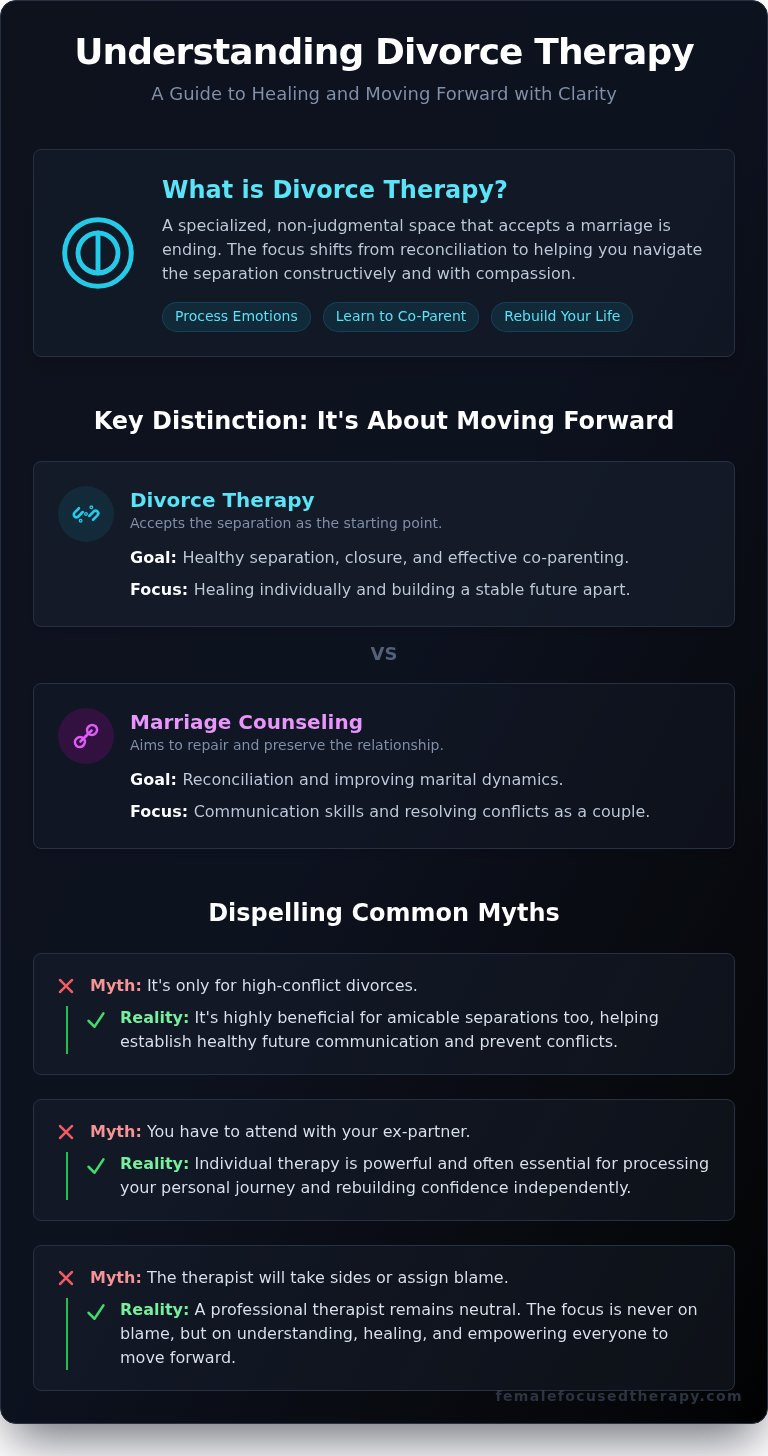
Navigating the end of a marriage is one of life’s most challenging transitions. You may feel lost, overwhelmed, or uncertain about what comes next. This is where divorce therapy offers a guiding hand. Unlike marriage counselling, which often aims to repair a relationship, this specialised support accepts that the marriage is ending. The focus shifts entirely towards helping you-as an individual, a couple, or a family-navigate this separation constructively and with compassion. It’s about processing the end of one chapter and mindfully preparing for the next, not about assigning blame for what is divorce and its complexities.
A Safe Space for Your Healing Journey
Therapy provides a confidential and non-judgmental space where all your feelings are welcome. Whether you are experiencing profound grief, anger, guilt, or even a sense of relief, your emotions are valid. Together, we can explore the complex psychological impact of the separation, helping you to understand your experience and begin the process of healing and rebuilding your sense of self-trust.
Divorce Therapy vs. Marriage Counselling: Understanding the Goal
It’s crucial to understand the different goals. Marriage counselling works to preserve the marital unit, focusing on communication and reconciliation. In contrast, divorce therapy accepts the decision to separate as the starting point. The objective is not to go back, but to move forward in the healthiest way possible. For those with children, the goal shifts from functioning as a married couple to collaborating effectively as co-parents, ensuring your children’s wellbeing remains a priority.
Dispelling Common Myths About Divorce Counselling
Misconceptions can prevent women from seeking the support they deserve. Let’s clarify a few common myths:
- Myth: It’s only for high-conflict, messy divorces. Reality: Therapy is incredibly beneficial for amicable separations too. It helps establish healthy communication patterns and boundaries for the future, preventing potential conflicts before they arise.
- Myth: You have to attend with your ex-partner. Reality: While co-counselling is an option, individual therapy is powerful and often essential. It provides a dedicated space for you to process your personal journey, rebuild your confidence, and define your future independently.
- Myth: The therapist will take sides or assign blame. Reality: A professional therapist’s role is to remain neutral and facilitate constructive dialogue. The focus is never on blame, but on understanding, healing, and empowering everyone involved to move forward with clarity and respect.
How Therapy Helps You Navigate the Emotional Storm
The end of a marriage is rarely a single event; it’s an emotional storm that can leave you feeling lost and overwhelmed. Feelings of anger, profound sadness, guilt, and confusion can surface all at once, making it difficult to find solid ground. This is where dedicated divorce therapy provides a structured, safe space to untangle these complex emotions. It’s not about “getting over it” quickly, but about navigating the process with support, clarity, and compassion for yourself.
Processing the Grief of a Relationship’s End
A divorce is a significant loss-not just of a partner, but of the future you envisioned together. In therapy, we acknowledge this grief and allow you to move through its stages at your own pace. Together, we create a space to honour the good parts of your past without letting the pain define your future, helping you find a sense of peace and closure.
Coping with Anger, Resentment, and Betrayal
It is completely normal to feel intense anger, resentment, or a deep sense of betrayal. These powerful emotions need a healthy outlet. A therapist can help you express and process this anger constructively, preventing it from turning into lasting bitterness. This is especially critical if you are co-parenting, as unresolved parental conflict is known to have a significant impact on children’s mental health. We work to transform that raw energy into motivation for positive change in your own life.
Rebuilding Self-Worth and a New Sense of Self
After years of being part of a couple, it’s common to wonder, “Who am I outside of this marriage?” A key goal of divorce therapy is to help you rediscover your identity. We explore your core values, reconnect with your personal strengths, and reignite forgotten passions. This journey is about more than just recovery; it’s about the intentional rebuilding of self-trust, laying a strong, confident foundation for your next chapter.
Practical Tools for a Healthier Separation and Co-Parenting
Navigating the end of a marriage involves more than just processing emotions; it requires developing a new set of practical skills. The goal is to move from a place of emotional reactivity to one of intentional action. This transition is challenging, but with the right support, you can build a foundation for a stable future for yourself and your children. Effective divorce therapy provides a safe, confidential space to learn and practice these essential tools, helping you manage the complex legal and financial stressors with greater clarity and confidence.
Learning to Communicate Effectively with Your Ex-Partner
Shifting your communication style is one of the most powerful steps you can take. The focus must move from personal history to practical logistics. Think of it as moving from a spousal relationship to a professional, co-parenting one. This involves using de-escalation techniques to prevent arguments and keeping conversations clear, concise, and centred on your children’s needs. Learning these skills in therapy can feel like having a practical guide for therapists and counselors at your disposal, helping you navigate difficult conversations constructively.
Creating a Stable and Consistent Co-Parenting Plan
For mothers in Singapore, creating stability for children amidst divorce is a primary concern. A successful co-parenting plan always puts your children’s emotional wellbeing first. This means working towards:
- Consistency: Establishing similar rules, routines, and expectations in both homes to provide a sense of security.
- Child-Focused Decisions: Making joint decisions about education, health, and extracurriculars based on what is best for your children, not on personal disagreements.
- A United Front: Presenting a united front on major issues and avoiding speaking negatively about your ex-partner in front of your children.
Setting Healthy Boundaries for Your New Life
Rebuilding your life requires creating and holding firm, respectful boundaries. This is not about building walls, but about protecting your energy and peace as you heal. In divorce therapy, we work together to define what these boundaries look like for you-emotionally, physically, and even digitally (such as on social media or messaging apps). Learning to say ‘no’ without guilt is an empowering act of self-care that allows you to step into your new chapter with a stronger sense of self.
Navigating separation is a journey of rebuilding. Let us help you build the tools for a peaceful transition.
The Divorce Therapy Process: What to Expect in Our Sessions
Stepping into therapy can feel daunting, especially during the emotional upheaval of a divorce. My goal is to make this process as clear and supportive as possible. Our sessions are a collaborative partnership, a dedicated space for you to heal, rediscover your strength, and navigate your path forward. Everything we do is paced to your comfort, ensuring you feel safe and in control of your journey.
Your First Session: Creating a Foundation of Trust
Your initial session is a confidential space for you to share your story-the challenges you’re facing and what you hope to gain from our time together. It is also an opportunity for you to ask me questions and get a feel for my approach. Together, we will establish clear, meaningful goals that will guide our work, creating a foundation of trust and a shared understanding of your path to healing.
Therapeutic Approaches for Healing and Growth
Because every woman’s experience of divorce is unique, I use an integrative approach tailored specifically to you. This means we draw from a range of evidence-based methods to support your growth, including:
- Cognitive Behavioural Therapy (CBT) to gently challenge and reframe the negative thought patterns, self-blame, or feelings of failure that often accompany a separation.
- Mindfulness Practices to help you manage overwhelming stress and anxiety, anchoring you in the present moment rather than being swept away by past hurts or future fears.
- Exploring Past Dynamics to understand relationship patterns, enabling you to rebuild self-trust and create healthier, more fulfilling connections in the future.
Individual vs. Co-Parenting Sessions: Which is Right for You?
The structure of your divorce therapy can be adapted to your primary needs. Individual therapy focuses entirely on your personal wellbeing-processing grief, rebuilding your identity, and empowering you to create a life you love. Co-parenting sessions, on the other hand, are highly structured and practical, aimed at improving communication and resolving child-rearing conflicts with your ex-partner for the benefit of your children. Many women in Singapore find that a combination of both provides the most comprehensive support.
Whatever path you choose, the focus remains on helping you move forward with clarity and confidence. If you are ready to begin, you can learn more about my approach and how we can work together.
Finding Your Path Forward: Creating a Fulfilling Life After Divorce
The end of a marriage, while painful, can also be an unexpected doorway to profound personal growth. It is a chance to pause, reflect, and consciously design a future that is authentically yours. This final, yet most empowering, stage of healing is about moving from coping to thriving, and therapy provides a supportive space to navigate this transition with clarity and confidence.
Embracing Personal Growth and New Opportunities
This new chapter is an invitation to reconnect with the person you are outside of your marriage. It’s an opportunity to rediscover hobbies, pursue career ambitions that were set aside, and invest in friendships that nourish your soul. With dedicated support, you can build deep resilience, learning to view challenges not as setbacks, but as stepping stones to a stronger sense of self. Together, we can work to redefine what happiness and success mean to you now.
Navigating New Relationships with Confidence
Stepping into new relationships, whether platonic or romantic, can feel daunting after a divorce. A core part of the therapeutic journey is rebuilding trust in your own intuition and judgment. You will learn to recognise the subtle differences between healthy, supportive dynamics and the familiar, unhealthy patterns you wish to leave behind. The goal is to help you enter future connections from a place of wholeness and self-assurance, not from a place of need.
How Therapy Supports Your Long-Term Wellbeing
The skills and insights gained in divorce therapy are not temporary fixes; they are lifelong tools for your emotional toolkit. Learning to set boundaries, communicate your needs effectively, and regulate your emotions are foundational skills for any healthy relationship, including the one you have with yourself. Investing in your emotional health is the most powerful step you can take towards building a sustainable, joyful, and fulfilling future.
Ready to write your next chapter? Book a consultation today.
Begin Your Next Chapter with Clarity and Confidence
Navigating a divorce is one of life’s most profound challenges, but you do not have to walk this path alone. Effective divorce therapy is more than a place to talk; it’s a dedicated space to process the storm of emotions, gain practical tools for a healthier separation, and consciously design a future that feels authentic and fulfilling. It is a powerful investment in your own wellbeing and the foundation for what comes next.
At Female Focused Therapy, we specialize in supporting women through major life transitions. Our trauma-informed, integrative therapeutic approach provides a safe, confidential foundation for your healing. In our sessions, available online or in-person here in Singapore, we will work together to help you rebuild self-trust and find your footing with renewed confidence.
Your story is far from over. If you are ready to take the first step towards a brighter, more empowered future, we invite you to connect with us. Begin your healing journey. Book a confidential consultation.
Frequently Asked Questions About Divorce Therapy
What if my ex-partner refuses to attend divorce therapy?
This is a common concern, and it’s important to know that you can still benefit greatly from attending alone. Individual divorce therapy provides a safe, confidential space for you to process your own emotions, develop powerful coping strategies, and navigate this transition with dedicated support. The focus will be on your wellbeing, helping you rebuild your sense of self and move forward with clarity and confidence, regardless of your ex-partner’s participation.
How can I tell if divorce therapy is actually working for me?
You will likely notice gradual but meaningful shifts in your wellbeing. Signs of progress include feeling less emotionally overwhelmed, thinking with more clarity, and having a renewed sense of hope for your future. You may also find yourself communicating more effectively in co-parenting situations. Ultimately, effective therapy helps you feel more grounded and confident in your ability to navigate your new life, rebuilding trust in yourself and your own decisions.
How do I talk to my children about the divorce in a healthy way?
When possible, present a united front with your ex-partner. Use simple, age-appropriate language to explain that the divorce is an adult decision and not their fault. It is vital to consistently reassure them that both parents will always love and be there for them. Create a safe space where they can ask questions and express their feelings, validating their emotions without assigning blame. Therapy can provide tailored guidance for these sensitive conversations.
Is it better to see a therapist alone or with my ex for divorce counselling?
This truly depends on your specific goals. If your primary aim is to improve co-parenting communication or navigate logistical separation issues, joint sessions can be very productive. However, if your focus is on processing your personal grief, healing from the relationship dynamic, and rebuilding your individual life with confidence, then individual therapy is often the most supportive and empowering path forward for women.
How long does divorce therapy usually take to see results?
The therapeutic journey is deeply personal and unique to each woman. While some begin to feel a sense of relief within a few sessions, deeper healing and the rebuilding of self-trust naturally take more time. There is no fixed timeline; our focus is on supporting you at a pace that feels safe and sustainable. Progress is measured by your growing capacity to handle challenges and embrace your future with a stronger sense of self.
How much does divorce therapy typically cost in Singapore?
In Singapore, the cost for a private therapy session with an experienced psychologist or counsellor typically ranges from S$180 to S$250+ per 50-minute session. Prices can vary based on the therapist’s qualifications and the clinic’s policies. It is helpful to view this as a vital investment in your long-term emotional wellbeing, providing you with the professional support needed to navigate this significant life transition with strength.

Article by
Cheryl Kennedy MacDonald MA BA (Hons) Pg. Dip. SAC BACP
Cheryl Kennedy MacDonald is a psychotherapist specialising in women’s mental health, relationships, and life transitions. She works with women navigating trauma, relationship breakdown, identity shifts, and midlife change, helping them rebuild self-trust, emotional stability, and a clear sense of who they are and what they want.
With over 20 years’ experience working with women internationally, Cheryl is the founder of YogaBellies, a global women’s yoga school, and the creator of the Birth ROCKS method. Her work sits at the intersection of psychotherapy and embodiment, integrating evidence-based therapeutic approaches with somatic, body-based practices that support deep, lasting change.
Known for her grounded and direct approach, Cheryl moves beyond surface-level insight to address the patterns held in the body and nervous system. Her work supports women to regulate, reconnect, and respond to their lives from a place of clarity, strength, and self-respect.
She is a published author in academic journals and has written multiple books on women’s health, pregnancy, and midlife wellbeing, available on Amazon and leading book retailers worldwide.