
Healing from Narcissistic Abuse: A Survivor’s Guide
Understanding the subtle signs of narcissistic abuse, validating your experience, and discovering the first steps toward rebuilding your self-trust and reclaiming your life.
What is Narcissistic Abuse? Understanding the Unseen Wounds
If you are feeling confused and in pain, know that you are not alone. Narcissistic abuse often manifests as psychological and emotional manipulation, making it challenging to recognize. Unlike typical conflicts or a partner with a strong ego, narcissistic abuse is characterized by a relentless desire for control and an insidious erosion of your self-worth.
Key Signs and Tactics of an Abusive Narcissist
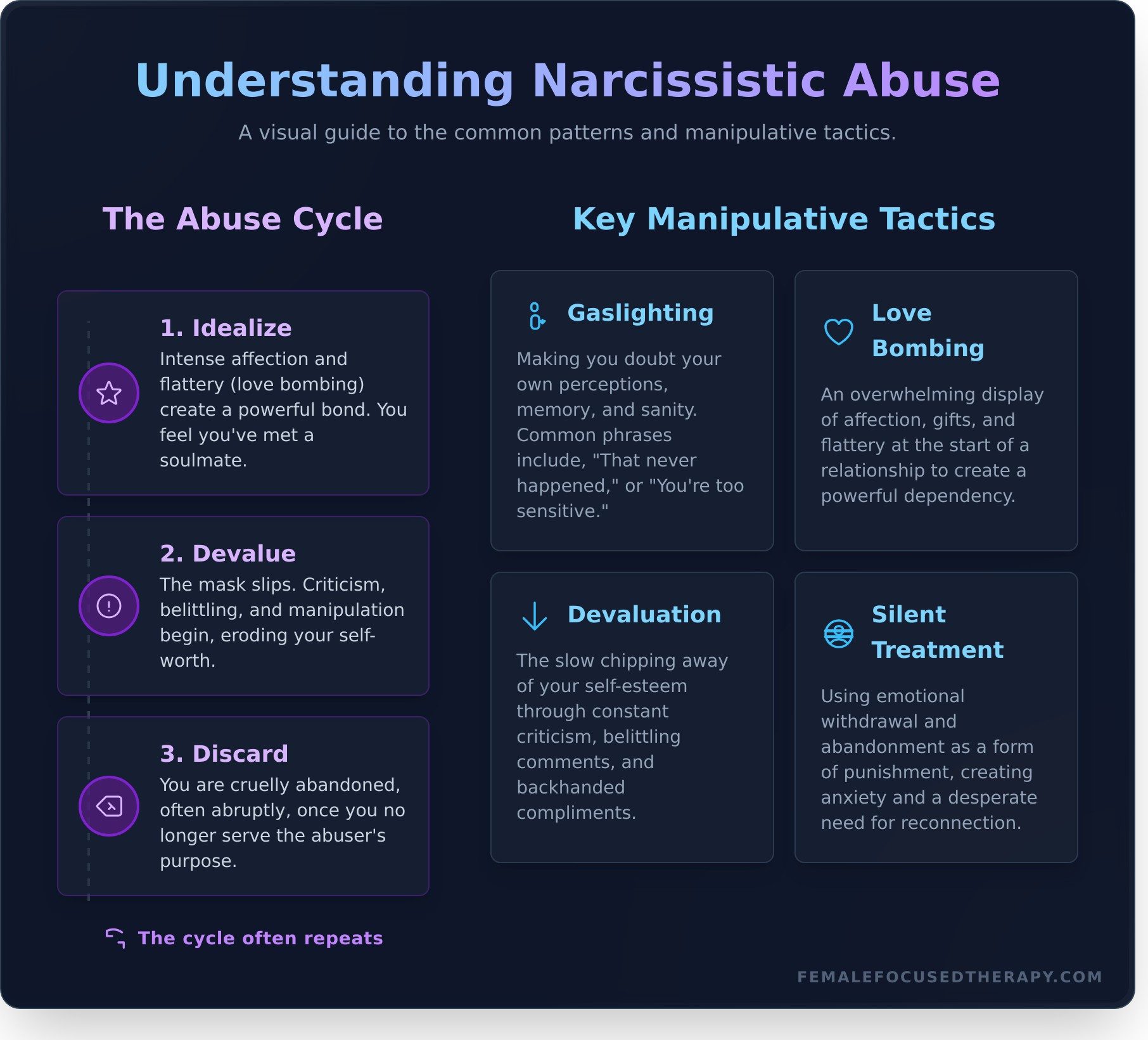
- Gaslighting: This tactic makes you question your own reality and sanity.
- Love Bombing: Initially, the relationship may feel like a fairytale, filled with overwhelming affection and attention.
- Devaluation: Over time, you may experience constant criticism, belittling, and dismissiveness.
- Silent Treatment: Emotional withdrawal is used as a punishment, leaving you feeling isolated and confused.
The Narcissistic Abuse Cycle: Idealize, Devalue, Discard
- Idealization Phase: You are placed on a pedestal; everything feels perfect.
- Devaluation Phase: The abuser’s mask slips, revealing manipulation and criticism.
- Discard Phase: Abruptly and often cruelly abandoned, especially once you no longer serve their purpose.
Narcissism vs. Narcissistic Personality Disorder (NPD)
It’s essential to understand that narcissistic traits exist on a spectrum. Not all individuals who exhibit abusive behaviors have a clinical diagnosis of NPD. The focus should remain on abusive actions rather than labeling the person.
The Deep Impact: How Narcissistic Abuse Affects Your Wellbeing
The effects of narcissistic abuse are profound and can linger long after the relationship has ended. It’s normal to feel broken, anxious, or unlike yourself in response to this trauma. The constant stress can affect both your mental and physical health, helping you connect your symptoms to the abuse you’ve endured.
The Toll on Your Mental Health: Anxiety, Depression, and C-PTSD
- Chronic stress often leads to heightened anxiety and hypervigilance.
- Feelings of hopelessness and worthlessness can spiral into depression.
- Complex PTSD (C-PTSD) is a common result of prolonged relational trauma, requiring compassionate understanding.
Losing Yourself: The Erosion of Self-Esteem and Identity
You may feel like you are walking on eggshells, struggling to find your voice. Many survivors give up hobbies, friendships, and interests, leading to a loss of self-trust and constant second-guessing of their decisions.
Physical Symptoms: How Trauma Lives in the Body
Trauma can manifest physically as chronic fatigue, brain fog, and various health issues. Symptoms like digestive problems, headaches, and weakened immunity are common, reflecting your body’s response to the ongoing state of stress.
Your Path to Recovery: Taking the First Steps to Heal
Healing from narcissistic abuse is possible, and it begins with hope and empowerment. Remember that recovery is a process that requires patience and self-compassion. Here are some gentle, actionable steps to help you move forward.
Step 1: Acknowledging and Grieving the Abuse
- Breaking the silence is crucial, even if it’s just to yourself.
- Allow yourself to grieve the relationship you thought you had.
- Let go of the hope that the abuser will change; acceptance is key.
Step 2: Setting Boundaries and Going Low or No-Contact
- "No Contact" can be one of the most effective tools for healing, providing space to recover.
- If children or other ties exist, consider strategies for "Low Contact."
- Be prepared for "hoovering," or attempts by the narcissist to draw you back in.
Step 3: Reconnecting with Your Support System
- Reach out to trusted friends or family members you may have been isolated from.
- Look for support groups (online or in-person) where others understand your experience.
- Surround yourself with people who validate and uplift you.
Rebuilding Self-Trust: How Therapy Can Guide Your Healing Journey
Therapy can offer a safe space for healing from the trauma of narcissistic abuse. A trauma-informed therapist can help you navigate your emotions and experiences.
Finding a Safe Space to Process Your Experience
Therapy provides a non-judgmental environment where you can share your story and be believed. A therapist can help untangle the confusion and gaslighting you’ve experienced, enabling you to identify and label the abusive tactics you endured.
Learning to Trust Your Intuition Again
After enduring abuse, you may doubt your perceptions and judgment. Therapy can guide you in reconnecting with your inner voice, empowering you to make small decisions and rebuild confidence in your choices.
Developing Healthy Coping Mechanisms and Relationship Skills
- Work on managing anxiety, triggers, and emotional flashbacks.
- Learn to recognize and implement healthy boundaries in your life.
- Establish a foundation for future relationships based on respect and safety.
FAQs
- Why is it so incredibly hard to leave a relationship with a narcissist?
- Can a narcissist ever change or be cured?
- What is ‘trauma bonding’ and how does it relate to narcissistic abuse?
- How can I explain what I’m going through to friends and family who don’t understand?
- What are the signs of ‘hoovering’ and how should I respond to them?
- Will I ever feel like my old self again after this experience?
Begin Your Healing Journey
You don’t have to heal alone. Start your journey in a safe, supportive space. Book a consultation today.
By prioritizing your wellbeing and engaging in therapy, you can reclaim your life, rebuild your self-trust, and move towards a brighter future. Remember, healing is a journey, and every step you take is a step towards empowerment and clarity.