
You may be here because the thought of finding help feels overwhelming. The endless search results, the confusing titles-psychologist, counsellor, psychotherapist-and the very real worry about finding someone you can truly connect with can make the first step feel like the hardest. Taking that step towards healing is a courageous act, and your journey to finding the right therapist in Singapore should bring clarity and confidence, not more confusion. We understand how vital it is to find a safe, supportive space where you feel genuinely seen and heard.
This compassionate guide for 2025 is designed to gently walk you through it all. We will demystify the process, from understanding different therapy approaches to navigating costs (in SGD), empowering you to find a professional who truly resonates with your unique needs. Consider this your warm, clear roadmap to beginning a healing journey in a supportive environment, equipped with the knowledge to make a choice that feels right for you.
When Is the Right Time to Seek Therapy?
The decision to seek support is a profound act of self-care. There is a common misconception that you must be at a breaking point or in the midst of a crisis to reach out. This is simply not the truth. Therapy is not just for emergencies; it is a powerful, proactive tool for personal growth, building resilience, and navigating life’s complexities. Many people find that working with a therapist singapore provides them with the support they need to thrive.
As the conversation around the Mental health landscape in Singapore continues to evolve, seeking support is increasingly, and rightly, viewed as a sign of strength and self-awareness. Recognising that you might benefit from a safe, confidential space to explore your thoughts and feelings is a courageous first step. If you are considering speaking with a therapist singapore, it’s a sign that you are ready to invest in your own wellbeing.
Common Signs It Might Be Time to Talk to Someone
While therapy can be beneficial at any time, certain feelings and experiences often signal that it’s the right moment to find a therapist singapore. You may recognise yourself in these points:
- Feeling persistently sad, anxious, or overwhelmed by the demands of daily life, making it difficult to function as you normally would.
- Navigating difficult life transitions such as relocation, a significant career change, the loss of a loved one, or the end of a relationship.
- Struggling with recurring relationship patterns, communication breakdowns with partners or family, or feeling isolated and disconnected.
- Feeling ‘stuck’ or empty, or noticing a loss of interest and joy in activities you once loved (a symptom known as anhedonia).
For Women Specifically: Unique Triggers for Seeking Support
Women often navigate unique life experiences that can benefit from specialised support, and finding a female therapist singapore who understands these nuances can be transformative. These can include:
- Managing the immense mental load of balancing family, work, and societal expectations, often leading to burnout and emotional exhaustion.
- Navigating the emotional and physical shifts of hormonal changes related to perimenopause, menopause, or postpartum adjustments.
- Healing from the complex aftermath of relationship trauma, emotional manipulation, or narcissistic abuse, and working to rebuild self-trust.
- Seeking to understand and adapt to a late diagnosis of ADHD or another form of neurodivergence, and learning how to work with your unique brain.
If any of these experiences resonate with you, know that you are not alone. Reaching out is a brave step towards healing and reconnection with yourself.
Understanding the Mental Health Landscape in Singapore
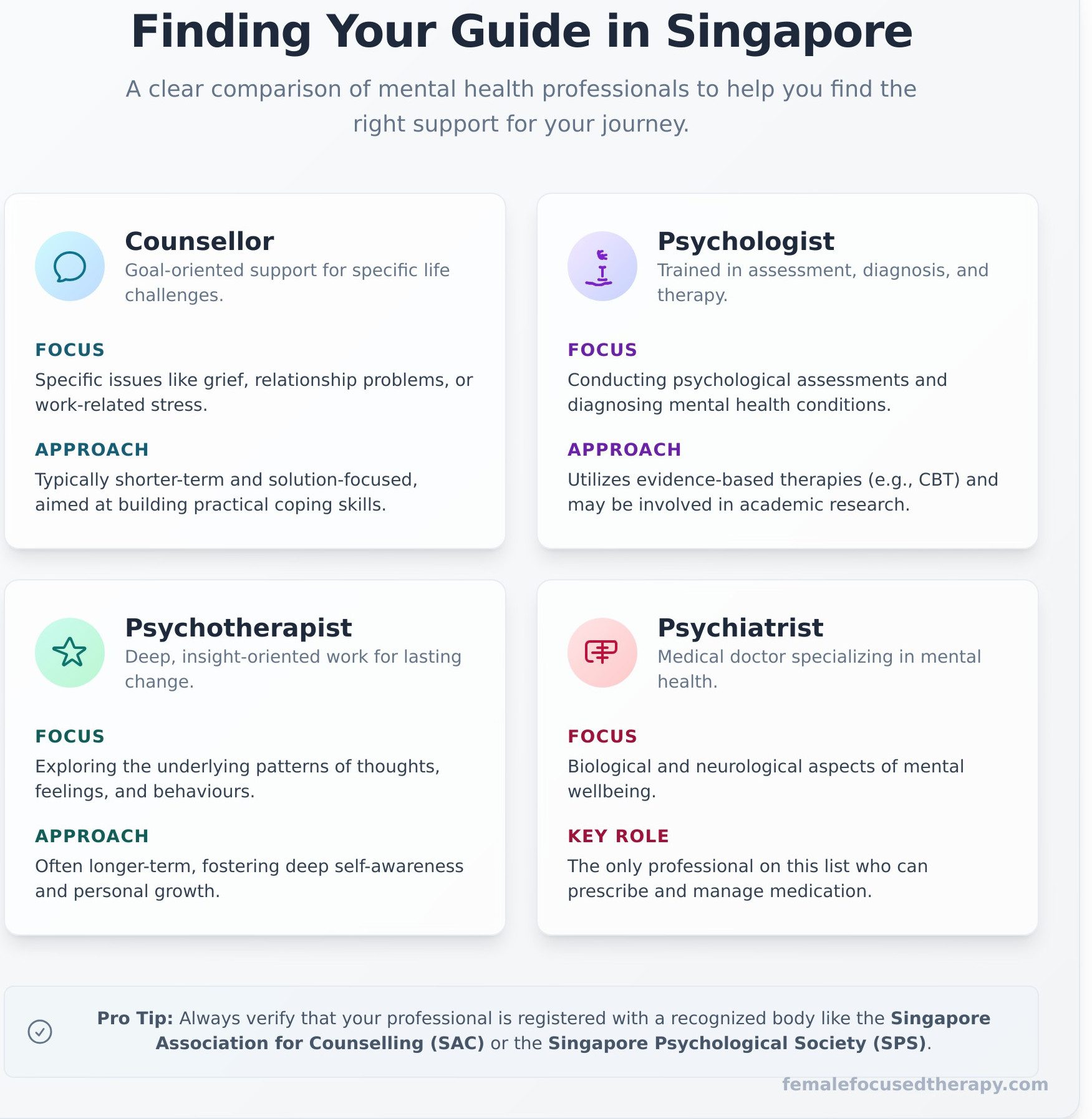
Taking the first step towards seeking support is a courageous one, but it can also feel confusing with the different professional titles and approaches available. It’s a hopeful time, as Singapore is actively transforming the mental health landscape to improve access and care for everyone. Understanding these roles is key to finding the right support for your unique journey. When searching for a therapist in Singapore, it’s crucial to ensure they are registered with a recognised professional body, such as the Singapore Association for Counselling (SAC) or the Singapore Psychological Society (SPS), which upholds professional and ethical standards.
Counsellor vs. Psychologist vs. Psychotherapist: What’s the Difference?
While these terms are sometimes used interchangeably, they represent different approaches to care. Finding clarity on their roles can help you make an informed choice that feels right for you.
- Counsellors often provide support for specific life challenges, such as grief, relationship issues, or work-related stress. Their work is typically shorter-term and goal-oriented, helping you navigate immediate difficulties and build coping skills.
- Psychologists hold advanced degrees in psychology and are trained in psychological assessment and diagnosis. They can diagnose mental health conditions and often use evidence-based therapies. Some are also involved in research.
- Psychotherapists, like myself, often engage in deeper, longer-term work. We support you in exploring the underlying patterns of your thoughts, feelings, and behaviours to foster lasting change, self-awareness, and personal growth.
The Role of a Psychiatrist
A psychiatrist is a medical doctor (M.D.) who has specialised in mental health. Their training allows them to diagnose mental health conditions and, most importantly, prescribe and manage medication. They primarily focus on the biological and neurological aspects of mental wellbeing. For many individuals, the most effective path to healing involves a collaborative approach, where a psychiatrist manages the medical aspects of care while you work with a therapist in Singapore to navigate the emotional and psychological journey towards recovery and self-trust.
How to Choose the Right Therapist for You: A 5-Step Framework
Beginning your search for a therapist is a hopeful and courageous step. The goal is not just to find any professional, but to find the right person to support your unique journey. The connection you build-the therapeutic relationship-is the most significant predictor of successful outcomes. This framework is designed to help you navigate the process with clarity and confidence.
Step 1: Clarify Your Needs and Goals
Before you begin your search, take a moment for gentle reflection. Ask yourself: What challenges are bringing me here now? What do I hope to feel, think, or do differently? Are you looking for practical tools to manage anxiety, or are you seeking a deeper understanding of past patterns? Knowing your ‘why’ will help you find a therapist whose approach aligns with your goals.
Step 2: Research Therapeutic Approaches
Therapists use various methods to support their clients. You don’t need to be an expert, but understanding the basics can be helpful. Common approaches include:
- Cognitive Behavioural Therapy (CBT): A structured approach focused on changing unhelpful thought and behaviour patterns.
- Psychodynamic Therapy: Explores how past experiences and unconscious patterns influence your present feelings.
- Integrative Therapy: A flexible approach where the therapist blends different modalities to fit your specific needs.
Many therapists also practice with a trauma-informed or mindfulness-based lens, ensuring a safe and grounded process.
Step 3: Verify Credentials and Specialization
When you look for a therapist in Singapore, it’s vital to ensure they are qualified. Look for registration with professional bodies like the Singapore Association for Counselling (SAC) or the Singapore Association of Clinical Psychology (SACP). Read their professional biography on their website to understand their background, experience, and areas of specialization, such as anxiety, relationship issues, or trauma.
Step 4: Prioritize the ‘Fit’ – The Consultation
Most therapists offer a brief, complimentary consultation call. This is your opportunity to ask questions and, more importantly, to gauge how you feel in their presence. Do you feel heard and respected? Is their energy warm and non-judgmental? Trust your intuition-feeling safe and comfortable is the foundation for rebuilding self-trust and healing.
Step 5: Consider the Practicalities
Finally, ensure the logistics support your commitment to therapy. Consider the session fees (which can range from S$150 to over S$300 in Singapore), whether they offer online or in-person sessions, and if their availability aligns with your schedule. Finding a sustainable arrangement is key to making therapy a consistent part of your self-care.
Key Therapy Specializations: Finding an Expert for Your Needs
While many counsellors and psychotherapists are skilled generalists, some dedicate their practice to specific areas, developing deep expertise. Understanding these specializations is a powerful step toward finding targeted support that truly resonates with your unique experiences. When you connect with a professional who understands the nuances of what you’re navigating, the therapeutic journey can feel more focused, safe, and effective.
Here are some common areas where finding a specialist therapist in Singapore can be particularly beneficial.
Support for Anxiety, Depression, and Burnout
These are among the most common reasons individuals seek support. A skilled therapist provides more than just a listening ear; they offer practical tools to manage overwhelming symptoms, explore the root causes of your distress, and develop sustainable strategies to cope with stress. This proactive approach is key to preventing burnout and fostering long-term emotional wellbeing, helping you feel more in control of your life again.
Relationship, Couples, and Intimacy Therapy
Whether you are attending as an individual or with a partner, this specialization focuses on improving connection and communication. Therapists in this field can help you navigate complex issues like recurring conflict cycles, infidelity, intimacy challenges, or the difficult process of separation. The goal is to move beyond old, unhelpful patterns and build a foundation for healthier, more fulfilling relationships.
Trauma, Narcissistic Abuse, and ADHD in Women
Navigating the aftermath of trauma or a psychologically damaging relationship requires a therapist with specialized, trauma-informed training. This ensures a safe, non-judgmental space for healing and the gentle rebuilding of self-trust. Similarly, many women are discovering an ADHD diagnosis in adulthood, and a knowledgeable therapist can provide essential support for navigating its unique challenges with clarity and self-compassion.
Recognizing your specific needs is the first step toward finding the right support. My practice focuses on creating a confidential and safe space for women to navigate these complex life experiences and reconnect with their inner strength. Learn about my approach.
Practical Considerations: Cost, Location, and Session Format
Taking the first step towards therapy is a significant act of self-care. To support your journey, it’s important to navigate the practical questions that can sometimes feel like barriers. Understanding the costs, session formats, and payment options helps you plan with confidence, allowing you to focus on what truly matters: your growth and wellbeing. Think of this not as an expense, but as one of the most valuable investments you can make in yourself.
How Much Does Therapy Cost in Singapore?
The cost for a private therapist in Singapore typically ranges from S$150 to over S$300 per session. This variation depends on several factors, including the therapist’s level of experience, their specific specialisations (such as trauma or couples counselling), and the clinic’s location. Some therapists may also offer a sliding scale rate based on your income to make their services more accessible. It is always a good idea to inquire about fees during your initial consultation.
Online vs. In-Person Therapy: Which is Right for You?
Choosing a session format that fits your life is key to creating a sustainable practice of self-care. In-person therapy offers a dedicated, neutral space away from the distractions of home or work, which many find grounding. In contrast, online therapy provides incredible convenience and accessibility, allowing you to connect from the comfort of your own environment. Both formats have been shown to be equally effective; the best choice is the one that feels most comfortable and supportive for you.
Navigating Insurance and Payment
Many corporate or personal health insurance plans in Singapore now offer coverage for mental health services. It is worthwhile to check your policy details to understand your entitlements. You may need to clarify if your plan allows for direct billing (where the clinic bills the insurer) or if you need to pay upfront and seek reimbursement. When you speak to your provider, consider asking:
- Does my plan cover psychotherapy or counselling services?
- Is there a limit on the number of sessions or a total claimable amount per year?
- Do I need a referral from a General Practitioner (GP)?
- What is the specific procedure for making a claim?
Feeling clear on these details can ease the process, allowing you to begin your therapeutic journey with peace of mind. If you are ready to explore how a female-focused approach can support you, we invite you to learn more at femalefocusedtherapy.com.
Your Journey Towards Clarity and Wellbeing
Embarking on the path to find support is a profound act of self-compassion. As we’ve explored, understanding when to seek help and how to choose the right professional are the foundational steps. Your search for a therapist singapore is a personal one, and it’s essential to find someone whose approach aligns with your unique needs, whether you prioritize a specific specialization or practical factors like session format and cost.
If you are a woman seeking a dedicated space to navigate life’s complexities, you don’t have to walk this path alone. As a Registered Psychotherapist specializing in women’s mental health, I provide safe, confidential support through a trauma-informed, integrative approach. We can work together online or in-person to help you rebuild self-trust and find your way forward with confidence.
Ready to take the next step? Book a complimentary consultation to see if we’re a good fit. Remember, choosing to begin therapy is a courageous investment in yourself. You deserve to be supported on your journey to healing and growth.
Frequently Asked Questions About Therapy in Singapore
What is the difference between a psychologist and a therapist in Singapore?
In Singapore, these terms are often used interchangeably, but there can be distinctions. A “psychologist,” particularly a clinical psychologist, often has advanced training in diagnosing mental health conditions and may use specific psychological assessments. The term “therapist” is a broader term for professionals, including counsellors and psychotherapists, who provide talk therapy to help you navigate life’s challenges. The most important factor is finding a qualified professional who feels right for you.
How much does a therapy session typically cost in Singapore?
The cost of a therapy session in Singapore can vary, but you can generally expect to invest between S$180 and S$300+ for a 50-60 minute session in a private practice. Rates depend on the therapist’s experience, qualifications, and the clinic’s location. While some subsidised services may offer lower rates, viewing this as a meaningful investment in your long-term emotional wellbeing and personal growth is a helpful perspective.
Is therapy in Singapore confidential?
Absolutely. Confidentiality is a cornerstone of the therapeutic relationship. Your therapist is bound by a strict code of ethics and professional standards to keep what you share private. This creates a safe, non-judgmental space for you to explore your thoughts and feelings freely. The only exceptions are rare situations where there is a serious risk of harm to yourself or others, which your therapist is legally required to report.
How do I know if a therapist is qualified and registered?
It’s vital to ensure your therapist is professionally accredited. In Singapore, you can check if a psychologist is registered with the Singapore Psychological Society (SPS) or if a counsellor is a registered member of the Singapore Association for Counselling (SAC). Reputable therapists will be transparent about their credentials and affiliations on their websites or during an initial consultation. Don’t hesitate to ask; it’s an important part of building trust and safety.
How many therapy sessions will I need?
The therapeutic journey is deeply personal, so there isn’t a set number of sessions that works for everyone. Some people find clarity and relief for a specific issue in a few months, while others may benefit from longer-term support to navigate more complex patterns or experiences. This is something you and your therapist will discuss together, creating a plan that moves at a pace that feels safe and sustainable for you.
Is online therapy as effective as meeting a therapist in person?
Research and experience show that online therapy can be just as effective as in-person sessions for many individuals. It offers wonderful flexibility and accessibility, allowing you to connect from a space where you feel most comfortable. For many women seeking a therapist in Singapore, the convenience of online sessions is invaluable. Ultimately, the best choice depends on your personal preference, comfort level, and what allows you to feel the most supported and connected.
What should I talk about in my first therapy session?
Your first session is a gentle introduction. There’s no pressure to have it all figured out. You might talk about what brought you to therapy, the challenges you’re currently facing, and what you hope to achieve. It’s also a chance for you to ask questions and get a feel for the therapist’s approach. The main goal is to begin building a trusting relationship and see if it feels like a good and supportive fit for you.