
The initial thrill of moving to Singapore has worn off, and now you may feel adrift. The weekly calls home don’t quite fill the void, and navigating this vibrant city can feel more isolating than exciting. If you’re questioning your identity, feeling disconnected, or noticing the strain on your relationships, please know you are not alone. These challenges are a common, yet often unspoken, part of the relocation journey. Seeking expat therapy in Singapore is a courageous step towards finding your footing again in a life that feels truly your own.
This guide was created to be a warm, supportive companion as you navigate this transition. Together, we will explore the unique emotional landscape of expat life, from the subtle ache of culture shock to the profound challenge of rebuilding your sense of self. We’ll discuss how to develop coping strategies for anxiety and loneliness, and most importantly, how to find a confidential space to process your feelings without judgment. Our goal is to help you move forward with clarity, confidence, and a renewed sense of purpose here in your new home.
Key Takeaways
- Understand why the ‘expat dream’ in Singapore can feel isolating and learn to navigate the challenges that arise after the honeymoon phase.
- Discover how therapy offers more than just problem-solving; it provides a stable anchor for building resilience and a stronger sense of self.
- Finding the right expat therapy singapore is about more than qualifications; personal connection is key to feeling truly heard and understood.
- Demystify the process of starting therapy by learning what to expect, ensuring your journey feels collaborative and safe from the very beginning.
The Unspoken Truth: Why Expat Life in Singapore Can Feel Overwhelming
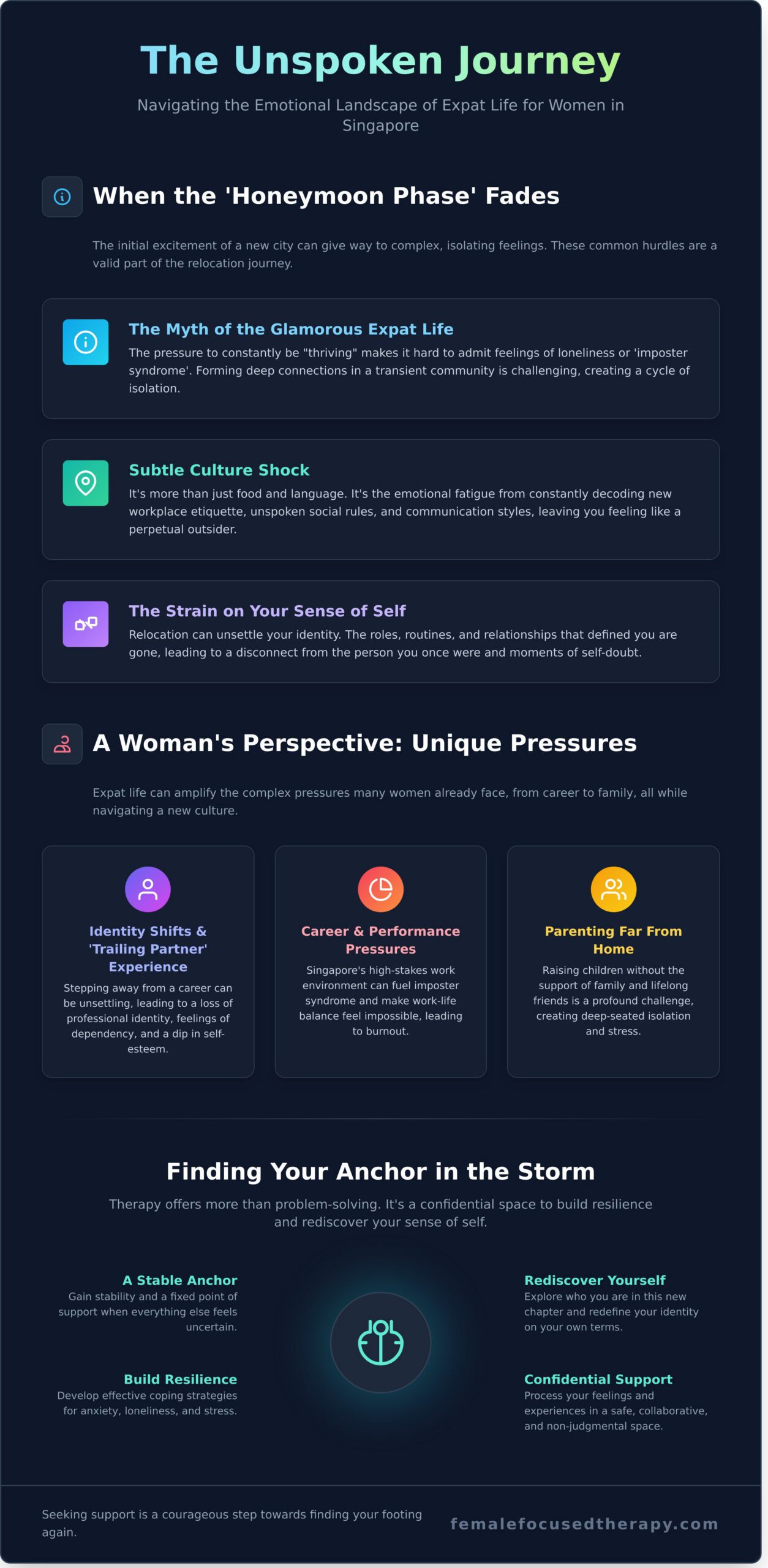
The initial thrill of Singapore-the vibrant hawker centres, the stunning skyline, the endless sunshine-is an intoxicating experience. But once the ‘honeymoon phase’ fades, the reality of building a life so far from home can set in. You may find yourself grappling with a complex mix of emotions that feel isolating and confusing. The truth is, behind the perfect Instagram posts is a common but often unspoken struggle. The distance from your established support network of family and friends can feel immense, leaving you to navigate challenges alone.
This experience is valid, and you are not alone in feeling this way. Understanding these challenges is the first step toward finding your footing. Many women find that specialised expat therapy Singapore provides a safe space to navigate this unique journey.
The Myth of the Glamorous Expat Life
There is often an unspoken pressure to be constantly thriving. This expectation can make it difficult to admit when you’re feeling lonely, isolated, or experiencing ‘imposter syndrome’. Forming deep, meaningful connections can be challenging in a transient community where farewells are frequent. The emotional toll of these constant goodbyes can lead to a reluctance to form new bonds, creating a cycle of loneliness that is difficult to break.
Culture Shock: More Than Just Food and Language
In Singapore, culture shock isn’t always about language barriers; it’s often more subtle. It’s the emotional fatigue that comes from constantly trying to understand new workplace etiquette, unspoken social rules, and different communication styles. This constant need to adapt and ‘read the room’ can be exhausting and is a core part of the psychological stages of moving abroad. Over time, this can leave you feeling like a perpetual outsider, even in a city as welcoming as this one.
The Strain on Your Sense of Self
Relocation can unsettle your very sense of identity. The roles, routines, and relationships that defined you back home are gone, and rebuilding a sense of normalcy takes time and energy. You may feel disconnected from the person you once were, leading to moments of doubt and even regret about the decision to move. These feelings are a natural part of such a significant life transition, and acknowledging them is a crucial step toward rebuilding your confidence and wellbeing.
The Unique Mental Health Pressures on Expat Women
Moving to Singapore is an adventure, but it can also amplify the complex pressures many women already face. You may find yourself juggling expectations-from your career, your family, and yourself-all while navigating a new culture. It’s a journey that can leave you feeling isolated or overwhelmed. Please know that this is a common experience, and you are not alone in these struggles. The right support can make all the difference. Professional expat therapy Singapore provides a confidential space to process these challenges, helping you navigate complex life transitions with greater clarity and confidence.
Identity Shifts and the ‘Trailing Partner’ Experience
For many women, an international move means stepping away from a career and a well-established professional identity. This shift can be deeply unsettling, leaving you to rebuild a sense of purpose from the ground up. You might grapple with feelings of dependency on your partner, which can sometimes lead to resentment or a loss of self-esteem. Therapy offers a supportive space to explore who you are in this new chapter and redefine your identity on your own terms.
Career and Performance Pressures
For professional women relocating for their own careers, Singapore’s dynamic and high-stakes work environment presents its own set of challenges. You might be dealing with ‘imposter syndrome’ as you adapt to a new corporate culture, or you may feel immense pressure to prove yourself. The city’s demanding pace can make achieving a healthy work-life balance feel nearly impossible, leading to burnout and exhaustion. A therapist can help you develop strategies to manage stress and build professional resilience.
Parenting and Motherhood Far From Home
Raising children in a new country without the familiar support of grandparents, siblings, and lifelong friends is one of the toughest challenges of expat life. Navigating different schooling systems and parenting philosophies can add another layer of stress. You are tasked with being the primary anchor for your children’s adjustment, often while quietly managing your own sense of displacement. This isolation can be profound, a key factor in studies on expat homesickness and mental health, and it’s vital to have a space to focus on your own wellbeing.
How Therapy Provides a Safe Harbour for Expats
Stepping into therapy is not an admission of failure; it is a powerful act of self-care. For many, the journey of expat therapy in Singapore is less about fixing something broken and more about building the resilience to thrive. While Singapore is consistently ranked as a top destination for expats, the pressure to succeed can be immense. Therapy offers a stable anchor in the often-transient sea of expat life, providing a dedicated space to navigate your inner world with a neutral, compassionate guide. The goal is to move beyond simply surviving the challenges of relocation to truly flourishing in your new home.
A Confidential Space to Be Unfiltered
Your therapy sessions are a sanctuary. Here, you can express the complex, messy, and honest feelings you may not feel comfortable sharing with partners, friends, or colleagues. It is a professional space free from judgment or gossip, where you can safely process challenging emotions like guilt over leaving family behind, frustration with cultural adjustments, or waves of profound homesickness. Voicing these truths is the first step toward understanding and healing them.
Building a New ‘Emotional Home’
In a life marked by movement and change, therapy provides a consistent and reliable relationship you can count on. It becomes a predictable touchstone that helps you feel grounded, no matter the external uncertainties. Through this supportive partnership, you can begin to rebuild self-trust, learning to rely on your own inner wisdom and resources. This process helps you create a deep sense of an ’emotional home’ within yourself-a place of stability you can carry with you anywhere.
Developing Practical Coping Strategies
Beyond offering a space to talk, therapy equips you with tangible tools to navigate the demands of expat life. It is a collaborative process where you can learn to manage feelings of anxiety, stress, or emotional overwhelm with greater confidence. Together, we can work on skills to support your wellbeing, such as:
- Evidence-based techniques to soothe your nervous system and reduce stress.
- Improving communication patterns to strengthen your relationships.
- Gently processing past experiences or trauma that may be triggered by the stress of relocation.
Finding the Right Expat Therapist in Singapore: What to Look For
Embarking on a therapeutic journey is a significant step, and the single most important factor for success is the connection you share with your therapist. While qualifications and experience are essential, the true foundation of healing is built on a relationship where you feel seen, heard, and genuinely understood. The goal is to find a professional who not only has the right credentials but who also ‘gets’ you and the unique complexities of your life abroad.
A great therapist creates a safe, confidential, and non-judgmental space where you can explore your thoughts and feelings, rebuild self-trust, and navigate your challenges with compassionate support. This is especially crucial when seeking expat therapy Singapore, as your experience comes with its own distinct layers.
Cultural Competence and Lived Experience
A therapist’s ability to understand and respect different cultural backgrounds is vital. However, there is a profound difference between cultural awareness and the lived experience of being an expat. A therapist who has personally navigated the challenges of relocation, culture shock, and building a life far from home can offer a unique depth of empathy. This shared understanding can accelerate trust and connection, making you feel truly validated. You can learn more about my own journey as a Scottish expat in Asia and how it informs my practice.
Therapeutic Approach: Finding Your Fit
Therapy is not a one-size-fits-all process. Therapists draw from various modalities to support their clients, and it’s helpful to find an approach that resonates with you. Some common evidence-based methods include:
- Cognitive Behavioural Therapy (CBT): Focuses on identifying and changing unhelpful thought patterns and behaviours.
- Trauma-Informed Care: An approach that recognises and responds to the widespread impact of trauma.
- Mindfulness-Based Practices: Techniques to help you stay present and manage overwhelming emotions.
I believe in an integrative approach, which means I tailor the therapy to your specific needs, combining different techniques to create a holistic and effective path forward. To understand the different ways I can work with you, I invite you to explore my services.
In-Person vs. Online Therapy Options
The format of your therapy sessions should fit your lifestyle and comfort level. For some, the dedicated time and space of a face-to-face session in a Singapore clinic feels grounding and essential. For others, the flexibility and convenience of secure online therapy is a perfect fit, allowing you to connect from the comfort of your home, even when travelling. Both are powerful ways to engage in therapeutic work, and the right choice is simply the one that works best for you.
Your First Steps: What to Expect from Expat Therapy
Taking the first step toward therapy can feel daunting, especially when you’re already navigating the complexities of life in a new country. Please know that this is a journey of self-discovery and empowerment, not a test you have to pass. The process is collaborative and always moves at a pace that feels safe and sustainable for you. The ultimate goal is to equip you with the insight and tools needed to foster long-term emotional wellbeing, helping you not just survive but truly thrive in your life abroad.
The Initial Consultation: A Two-Way Conversation
Your first session is simply a warm, confidential conversation. It’s a dedicated space for you to share what’s on your mind, ask any questions you may have, and get a feel for the process. More importantly, it’s an opportunity to see if you feel a genuine connection with your therapist. Finding the right fit is the most crucial part of effective therapy, and there is never any pressure to commit until you feel completely comfortable and understood.
Setting Goals for Your Journey
Therapy is a purposeful process with a clear direction that we create together. In our early sessions, we will gently explore the key areas you want to focus on, defining what you hope to achieve. Your goals can be concrete, such as learning to manage panic attacks or communicating better in your relationships. They can also be broader, like rebuilding self-esteem or finding a deeper sense of purpose. This collaborative step ensures your experience with expat therapy singapore is tailored specifically to your unique needs and aspirations.
Building a Trusting Therapeutic Relationship
The foundation of all meaningful change in therapy is the relationship you build with your therapist. This connection is built on consistency, honesty, and unwavering, non-judgmental support. It is a safe container where you can explore your thoughts and feelings without reservation, knowing you will be met with compassion and professionalism. It is within this trusting relationship that the most profound healing happens, allowing you to move forward with greater clarity and confidence.
Ready to begin? Book a complimentary, no-obligation chat today to see if we are the right fit for your journey.
Find Your Anchor: Your Next Step Towards Wellbeing in Singapore
Navigating life abroad is a journey of incredible highs and challenging lows. As we’ve explored, the pressure of adapting to a new culture, building a community, and maintaining your sense of self in Singapore can feel overwhelming. Acknowledging this is a sign of strength, and seeking professional support is a powerful act of self-care. Finding the right expat therapy singapore is not just about coping; it’s about creating the space to truly thrive.
As a specialist in women’s mental health with personal, lived experience as an expat, I understand this journey intimately. My practice is built on a trauma-informed, integrative approach, creating a safe, confidential space where you can process your experiences, rebuild self-trust, and move forward with clarity and confidence.
You do not have to navigate this alone. If you are ready to feel more grounded and connected, I warmly invite you to book a complimentary chat to see if we’re a good fit. It is a gentle, no-pressure first step toward finding your footing and feeling at home, both in Singapore and within yourself.
Frequently Asked Questions About Expat Therapy
How much does expat therapy typically cost in Singapore?
In Singapore, the cost for a private therapy session with a qualified professional typically ranges from S$150 to S$250+ per hour. This fee can vary depending on the therapist’s experience, their specific qualifications, and the clinic’s location. It is helpful to view this as a meaningful investment in your mental and emotional wellbeing. Many international health insurance plans offer coverage for mental health support, so it is always worthwhile to check the details of your policy.
Is what I say in therapy truly confidential?
Absolutely. Confidentiality is the cornerstone of a safe and trusting therapeutic relationship. Registered counsellors and psychotherapists in Singapore are bound by strict professional codes of ethics to protect your privacy. This means everything you share is held in the strictest confidence, creating a secure space for you to explore your feelings without judgment. The only exceptions are rare, legally-mandated situations involving risk of serious harm to yourself or others, which your therapist will explain clearly.
Do I need a therapist from my own home country or culture to be understood?
While a shared background can feel comforting, it is not essential. What is most important is finding a therapist with strong cross-cultural competence who understands the unique pressures and challenges of the expat experience. A skilled therapist, regardless of their nationality, will create a space where you feel seen, heard, and deeply understood. The strength of your connection with the therapist is the most significant factor in a successful therapeutic journey.
What is the difference between counselling and psychotherapy for expats?
Though often used interchangeably, they serve different needs. Counselling is typically shorter-term, focusing on specific, present-day issues like managing relocation stress or navigating a career change. Psychotherapy often involves a deeper, longer-term exploration of recurring emotional patterns and past experiences that impact your current wellbeing. Both paths offer valuable support; the right choice depends on the specific challenges you face and the depth of change you wish to create for yourself.
How do I know if my feelings are just ‘expat blues’ or something more serious?
It’s completely normal to experience ‘expat blues’-periods of sadness or homesickness while adjusting. However, if these feelings persist for weeks, feel overwhelming, and are joined by a loss of interest in activities you once enjoyed, significant changes in appetite or sleep, or difficulty functioning daily, it may be something more. Seeking professional expat therapy in Singapore can provide clarity and support, helping you understand your experience in a safe, non-judgmental space.
Can therapy really help with feelings of loneliness and isolation?
Yes, therapy can be incredibly effective in navigating loneliness. Moving abroad often means leaving our support systems behind, which can feel deeply isolating. Therapy first provides a secure, consistent connection with a trusted professional-a powerful antidote to loneliness. From there, you can explore the roots of your feelings, develop new coping strategies, and rebuild the self-trust and confidence needed to form meaningful new connections. For many expats, this can mean joining local groups or even embracing regional travel opportunities like small group tours New Zealand as a way to meet like-minded people.

Article by
Cheryl Kennedy MacDonald MA BA (Hons) Pg. Dip. SAC BACP
Cheryl Kennedy MacDonald is a psychotherapist specialising in women’s mental health, relationships, and life transitions. She works with women navigating trauma, relationship breakdown, identity shifts, and midlife change, helping them rebuild self-trust, emotional stability, and a clear sense of who they are and what they want.
With over 20 years’ experience working with women internationally, Cheryl is the founder of YogaBellies, a global women’s yoga school, and the creator of the Birth ROCKS method. Her work sits at the intersection of psychotherapy and embodiment, integrating evidence-based therapeutic approaches with somatic, body-based practices that support deep, lasting change.
Known for her grounded and direct approach, Cheryl moves beyond surface-level insight to address the patterns held in the body and nervous system. Her work supports women to regulate, reconnect, and respond to their lives from a place of clarity, strength, and self-respect.
She is a published author in academic journals and has written multiple books on women’s health, pregnancy, and midlife wellbeing, available on Amazon and leading book retailers worldwide.