
You may be here because you’ve felt it for a while-the constant internal hum, the exhaustion from masking, and the quiet frustration of feeling like you’re always trying to catch up. For women, ADHD often looks and feels different, making the thought of finding support both hopeful and daunting. The path to getting help can feel overwhelming, filled with questions about where to even begin your search.
Taking that first step is a courageous act of self-care. But how do you find an adhd therapist in Singapore who truly understands the nuanced ways it impacts women’s lives? How do you know what questions to ask to ensure it’s the right fit, creating a space where you feel genuinely seen and supported? It can be confusing to navigate the differences between psychologists, counsellors, and psychiatrists, leaving you feeling stuck before you even start.
This compassionate guide was created to bring clarity and confidence to your search. Together, we will walk through a clear, step-by-step process for finding the right therapist for you. You’ll learn exactly what to look for, the key questions to ask in a consultation, and how to recognise a therapeutic relationship that will empower you to rebuild self-trust and thrive.
Understanding ADHD in Women: Why Your Experience is Unique
You may be here because you feel a persistent sense of overwhelm, a feeling that you’re working twice as hard as everyone else just to keep up. Perhaps you’ve been told you’re “too sensitive,” “a daydreamer,” or “disorganised,” internalising these labels for years. If this resonates, please know you are not alone, and your struggles are valid. For many women, the journey to an ADHD diagnosis is often long and complex because the condition presents very differently than the stereotypical image of a hyperactive young boy. Understanding this distinction is the first, most empowering step, and finding the right adhd therapist singapore can be an invaluable part of this process.
Attention Deficit Hyperactivity Disorder is a neurodevelopmental condition affecting executive functions like attention, organisation, and emotional regulation. While this comprehensive overview of ADHD provides a foundational understanding, it’s crucial to recognise that societal expectations and gender norms profoundly shape how its symptoms manifest in women. This often leads to misdiagnosis, with symptoms being attributed to anxiety, depression, or even personality flaws, delaying access to the clarity and tools you deserve. Seeking an adhd therapist singapore who specialises in the female experience can be a transformative part of this journey.
Beyond Hyperactivity: Common Signs in Adult Women
While the classic sign of ADHD is external hyperactivity, in women, it often turns inward. This internalised experience can be incredibly isolating. You might recognise some of these common, yet often overlooked, signs:
- Internal restlessness: A mind that never seems to switch off, jumping between thoughts, worries, and creative ideas, making it difficult to relax.
- Emotional dysregulation: Intense emotional responses and extreme sensitivity to perceived criticism or rejection (Rejection Sensitive Dysphoria).
- Chronic overwhelm: Feeling constantly drained by the mental load of managing work, home, and social obligations, often leading to shutdown or burnout.
- Executive function challenges: A persistent struggle with planning, prioritising tasks, time management, and organising physical spaces, despite being intelligent and capable.
The Impact of Masking and Camouflaging
From a young age, girls are often socialised to be agreeable, organised, and emotionally composed. To meet these expectations, many women with ADHD develop sophisticated coping strategies to hide or ‘mask’ their symptoms. This camouflaging requires immense mental energy, as you constantly monitor your behaviour to appear “normal.” While it may help you function, the cost is incredibly high, often leading to chronic exhaustion, profound anxiety, low self-esteem, and a feeling of being an imposter in your own life.
Types of ADHD Support in Singapore: Therapist vs. Psychologist vs. Psychiatrist
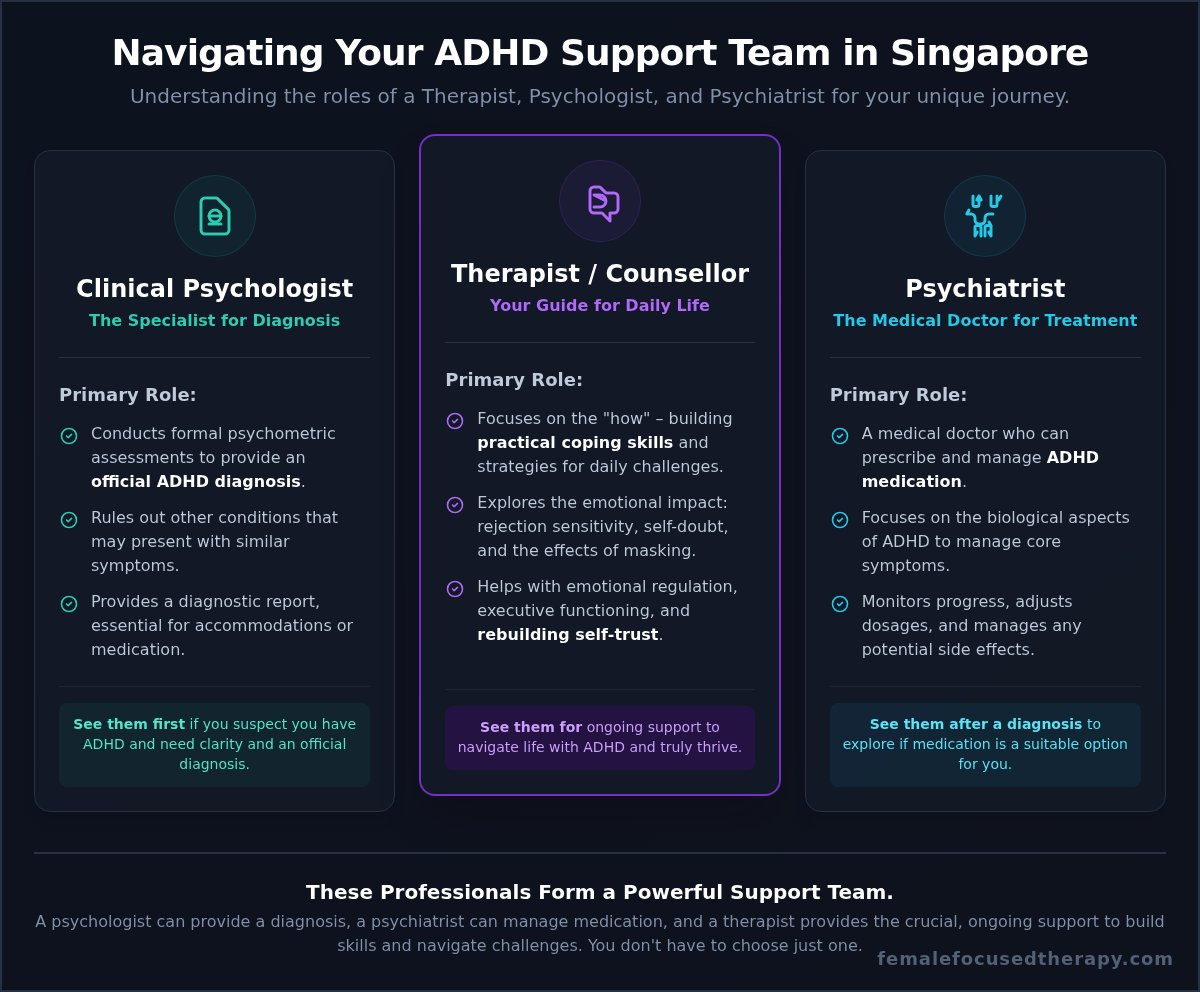
Navigating the world of mental health support can feel overwhelming, especially when faced with titles that sound similar. Understanding the distinct roles of a therapist, psychologist, and psychiatrist is the first step in finding the right support for your journey with ADHD. Each professional offers a unique and valuable piece of the puzzle, and they often work together to provide comprehensive care.
The Role of a Therapist or Counsellor
Think of a therapist as your guide for navigating the daily realities of living with ADHD. Their focus is on the “how” – how to cope, how to build skills, and how to heal. In our sessions, we create a confidential space to explore the emotional weight of ADHD, from rejection sensitivity to chronic self-doubt. This is especially important given the unique clinical presentation of ADHD in women, which often involves internalised symptoms. We work together to develop practical strategies for executive functioning, emotional regulation, and rebuilding self-trust. This ongoing, supportive relationship is the core of what a dedicated adhd therapist in Singapore provides.
When to See a Clinical Psychologist
A clinical psychologist is your first port of call if you suspect you have ADHD and need an official diagnosis. They are trained to conduct comprehensive psychometric assessments to formally identify ADHD and rule out other conditions. This process results in a diagnostic report, which can be essential for workplace accommodations or for a psychiatrist to prescribe medication. While many psychologists also offer therapy, their primary role in your initial ADHD journey is clarification and diagnosis.
The Role of a Psychiatrist
Psychiatrists are medical doctors who specialise in mental health. Their key role in ADHD treatment is medication management. After a diagnosis (often from a psychologist), a psychiatrist can assess if medication is a suitable option for you. They focus on the biological aspects of ADHD, prescribing and adjusting medication to help manage core symptoms like inattention, hyperactivity, and impulsivity. They will monitor your progress and any side effects, ensuring your treatment is both safe and effective.
Ultimately, these professionals are not mutually exclusive; they form a powerful support team. A psychologist can provide the diagnosis, a psychiatrist can manage medication, and a therapist provides the crucial ongoing support to help you build skills, navigate challenges, and truly thrive.
Your Step-by-Step Guide to Finding a Therapist in Singapore
Taking the first step to find support is a powerful act of self-care. While the process can feel daunting, this clear roadmap will help you navigate it with confidence and find a professional who truly understands your experience. This guide breaks down the search into manageable steps, empowering you to find the right therapeutic partner for your journey.
Step 1: Where to Start Your Search
Your search can begin from a few trusted sources. Online directories are an excellent starting point; platforms like Psychology Today have a filter for Singapore and allow you to search by specialty. The Singapore Psychological Society (SPS) also maintains a directory of registered psychologists. Don’t underestimate the value of a referral from a trusted GP. Finally, using specific search terms can narrow the field significantly. Searching for “ADHD specialist for women” or a dedicated adhd therapist singapore will yield more targeted and relevant results.
Step 2: How to Vet a Therapist’s Website
Once you have a shortlist, a therapist’s website is your window into their practice. It’s a space to gather information and get a sense of their professional style. As you browse, look for:
- Specialised Experience: Do they specifically mention working with ADHD, particularly in adult women? This indicates a deeper level of understanding and expertise.
- Qualifications and Approach: Check their ‘About’ page for their therapeutic approach (e.g., CBT, psychodynamic, integrative) and credentials. In Singapore, look for registration with bodies like the Singapore Association for Counselling (SAC) or APACS.
- A Sense of Connection: Read their blog posts or service descriptions. Does their language feel warm, validating, and supportive? The right therapist’s words should resonate with you.
Step 3: The Importance of a Consultation Call
This is perhaps the most crucial step. A brief consultation call is not a therapy session; it’s a “chemistry check.” It’s your no-obligation opportunity to see if you feel comfortable and understood. Treat it like an interview where you are in charge of hiring the right person for your support team. Ask about their experience, their therapeutic process, and any other questions that feel important. This initial connection is a strong indicator of a successful therapeutic relationship.
To help you with this essential step, we offer a complimentary 20-minute chat to ensure we’re a good fit for your needs and goals.
What to Ask a Potential ADHD Therapist: 7 Essential Questions
Making that first call to a potential therapist can feel daunting. You might worry about what to say or how to know if they’re the right fit. To help you feel more prepared and empowered, we’ve gathered some essential questions. Think of this as a gentle guide to help you navigate the conversation and find the support you deserve. The right therapist will welcome your questions and be happy to provide clarity.
Experience and Specialisation
First, you want to understand if they have a deep, nuanced understanding of how ADHD presents in women. This goes beyond textbook definitions and into the lived experience of masking, emotional dysregulation, and Rejection Sensitive Dysphoria (RSD).
- 1. What is your experience working specifically with adult women with ADHD?
Why it matters: This helps you gauge their familiarity with the unique challenges women face, from navigating hormonal fluctuations to managing household and career expectations. - 2. How do you see ADHD presenting differently in women versus men?
Why it matters: A strong answer will likely mention internalised symptoms (like anxiety and self-criticism) versus externalised hyperactivity, showing an up-to-date, female-focused perspective.
Therapeutic Approach
Next, it’s important to get a feel for how they work. Therapy is not one-size-fits-all, and their approach should resonate with your needs and goals. Finding the right adhd therapist in Singapore means finding a style that supports you.
- 3. What does a typical therapy session look like with you?
Why it matters: This gives you a practical sense of their process. Is it structured and skills-based, or more exploratory and conversational? - 4. What therapeutic modalities do you use (e.g., CBT, ACT, mindfulness)?
Why it matters: Different modalities target different challenges. For example, Cognitive Behavioural Therapy (CBT) can be excellent for building practical skills, while mindfulness can help with emotional regulation. - 5. How do you help clients with executive function challenges like procrastination or time management?
Why it matters: This is a core aspect of ADHD. Their answer will reveal if they offer concrete strategies and compassionate support for these daily struggles.
Logistics and Fees
Finally, the practical details are crucial for ensuring therapy is sustainable and accessible for you. Clarity here prevents future stress and misunderstandings.
- 6. What are your session fees, and do you have a cancellation policy?
Why it matters: Knowing the investment upfront (fees in Singapore typically range from S$180-S$300+ per session) allows you to budget accordingly and understand the terms of your commitment. - 7. Do you offer online or in-person sessions, and what is your current availability?
Why it matters: This ensures their schedule and format align with your life, making it easier to attend sessions consistently.
Taking the time to ask these questions is an act of self-care. It’s the first step in building a therapeutic relationship based on trust and a shared understanding. If you’re ready to explore if we are the right fit, you can learn more about my female-focused approach to ADHD therapy.
What to Expect From Therapy: Your Journey to Self-Trust
Embarking on therapy for ADHD is a courageous step towards reclaiming your narrative. It’s not about ‘fixing’ who you are, but about understanding how your unique brain works and, most importantly, learning to trust yourself again. This process is a collaborative journey, one we navigate together at a pace that feels safe and sustainable for you.
Your First Few Sessions: Setting the Foundation
Our initial sessions are dedicated to building a foundation of trust and safety. This is a confidential, professional space for you to share your story-the frustrations, the missed deadlines, the moments of brilliance-without fear of judgment. Together, we will gently explore your key challenges and collaboratively set meaningful goals for our work.
Building Your ADHD Toolkit: Practical Strategies
Therapy provides more than just a place to talk; it’s where we build your personalised toolkit. This often involves co-creating practical, evidence-based strategies to manage daily life with more ease. We may work on:
- Developing systems for organisation that align with your brain’s wiring.
- Learning to recognise the early signs of overwhelm and avoid burnout.
- Techniques to harness your focus and navigate motivational dips.
Healing the Emotional Impact: Rebuilding Self-Esteem
Living with undiagnosed ADHD, especially as a woman, can leave deep emotional wounds. A core part of our work is healing this impact. Working with an experienced adhd therapist in Singapore, you can learn to understand and manage rejection sensitivity, process feelings of shame or inadequacy, and begin to see the incredible strengths of your neurodivergent mind. This is where true self-trust begins to flourish.
Your therapeutic journey is a partnership. It is a process of untangling old beliefs, building new skills, and ultimately, reconnecting with your most authentic self. If you’re ready to explore what this supportive journey could look like for you, I invite you to learn more about how we can work together.
Your Path to Clarity and Self-Trust Starts Now
Beginning your search for support is a courageous first step. Remember that your experience with ADHD as a woman is unique, and finding a professional who truly understands this is key. By asking the right questions, you can confidently find an adhd therapist singapore who aligns with your needs, helping you navigate your challenges and move toward a life of greater self-trust and confidence.
If you’re seeking specialised, compassionate support, we are here for you. Female Focused Therapy offers a trauma-informed, integrative approach in a confidential setting, with sessions available online or in-person in Singapore. We are dedicated to helping women build clarity and reconnect with themselves.
Ready to feel understood? Book a complimentary chat with Cheryl to explore how we can help.
You don’t have to navigate this alone. Reaching out is an act of strength, and you deserve to feel supported and empowered on your journey forward.
Frequently Asked Questions About ADHD Therapy for Women
Do I need a formal ADHD diagnosis to see a therapist in Singapore?
You absolutely do not need a formal diagnosis to begin therapy. Many women start their journey by exploring symptoms like chronic overwhelm, procrastination, or emotional dysregulation in a safe space. A compassionate therapist can provide immediate support and help you navigate these challenges. If pursuing a formal assessment feels right for you later, your therapist can guide you through that process, helping you find clarity and a path forward.
How much does ADHD therapy typically cost in Singapore?
The investment for a private ADHD therapist Singapore can vary depending on their experience and qualifications. You can generally expect session rates to range from S$180 to S$300+ in the private sector. Some therapists may offer packages for multiple sessions. We encourage you to discuss fees during an initial consultation to ensure you find a supportive path that feels financially sustainable for your wellbeing journey.
Is online therapy as effective as in-person therapy for ADHD?
Yes, for many women, online therapy is just as effective as meeting in person. It offers wonderful flexibility and comfort, allowing you to connect from a space where you feel most safe and at ease. The true core of effective therapy is the quality of the relationship and trust you build with your therapist. Whether online or in-person, our focus is always on creating a secure, confidential space for your growth and healing.
How long does therapy for ADHD usually take?
The duration of therapy is a deeply personal journey, and there is no one-size-fits-all timeline. Some women find significant clarity and develop effective coping strategies within a few months. For others, exploring deeper patterns or co-occurring challenges is a longer-term process of reconnection. Together, we will work at a pace that feels safe and sustainable for you, focusing on your unique goals for wellbeing and rebuilding self-trust.
Can therapy for ADHD be covered by insurance in Singapore?
Insurance coverage for psychotherapy in Singapore can be complex. While standard Integrated Shield Plans often do not cover outpatient therapy, some corporate or international insurance policies do offer benefits. It is always best to check directly with your insurance provider about your specific plan’s coverage for “psychotherapy” or “counselling” services. We can provide the necessary documentation to support you in making a claim if your policy allows it.
What’s the difference between ADHD coaching and ADHD therapy?
This is a wonderful question. ADHD therapy, conducted by a qualified mental health professional, helps you navigate the emotional and psychological aspects of your experience. We work on healing co-occurring anxiety, addressing past trauma, and rebuilding self-esteem. ADHD coaching is typically more action-oriented, focusing on practical skills like planning and organisation. Both can be incredibly valuable, and they can even complement each other beautifully on your journey.

Article by
Cheryl Kennedy MacDonald MA BA (Hons) Pg. Dip. SAC BACP
Cheryl Kennedy MacDonald is a psychotherapist specialising in women’s mental health, relationships, and life transitions. She works with women navigating trauma, relationship breakdown, identity shifts, and midlife change, helping them rebuild self-trust, emotional stability, and a clear sense of who they are and what they want.
With over 20 years’ experience working with women internationally, Cheryl is the founder of YogaBellies, a global women’s yoga school, and the creator of the Birth ROCKS method. Her work sits at the intersection of psychotherapy and embodiment, integrating evidence-based therapeutic approaches with somatic, body-based practices that support deep, lasting change.
Known for her grounded and direct approach, Cheryl moves beyond surface-level insight to address the patterns held in the body and nervous system. Her work supports women to regulate, reconnect, and respond to their lives from a place of clarity, strength, and self-respect.
She is a published author in academic journals and has written multiple books on women’s health, pregnancy, and midlife wellbeing, available on Amazon and leading book retailers worldwide.