
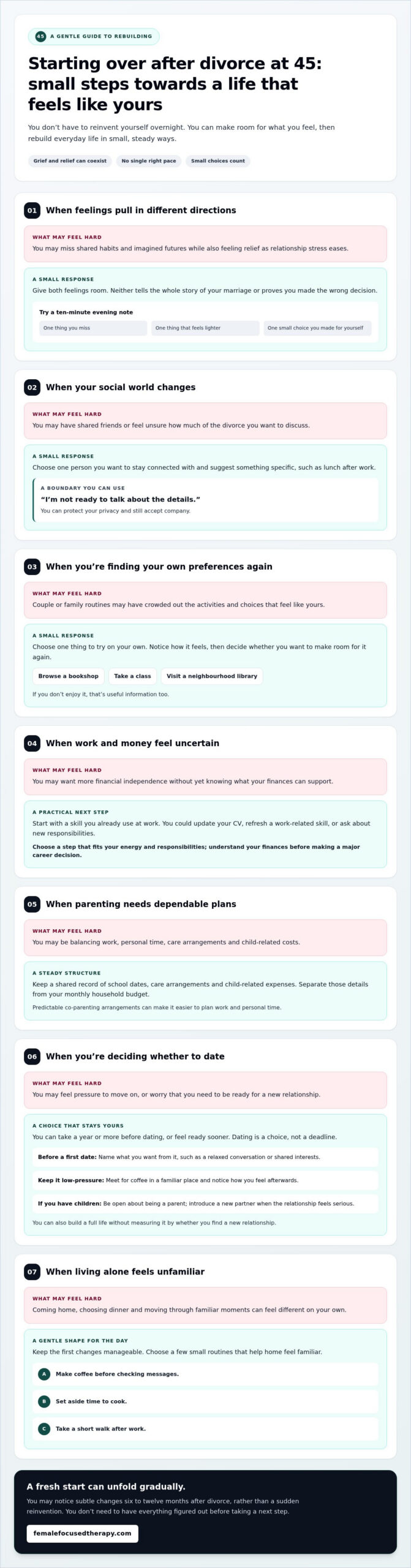
You don’t have to reinvent yourself overnight to start over after a divorce at 45. If you’re wondering how to start over after a divorce at 45, begin by making room for what you feel, then rebuild everyday life in small, steady ways. Grief and relief can sit side by side, even when ending the marriage was your choice.
You might be adjusting to a quieter home, missing familiar routines, or wondering who you are outside the relationship. I know a fresh start can feel less like freedom and more like uncertainty at first. You don’t need to have everything figured out before you take a next step.
I’ll explore how emotional changes can unfold, how to reconnect socially without rushing, and how to make living alone feel more manageable. I’ll also look at the gentle structure that can help daily life feel like your own again. There’s no single right pace; the aim is to build a life that feels steady and true to you.
Key Takeaways
- I explain why grief and relief can coexist after divorce, and how to give your feelings room without setting a deadline for healing.
- You can rebuild social connection gently by reaching out to trusted friends and making space for new interests at your own pace.
- I explore how to approach dating and other new beginnings by paying attention to what feels right for you, rather than following someone else’s timeline.
- Small, familiar routines can help living alone feel more settled while you shape a daily life that reflects who you are now.
Grief, relief, and emotional adjustment
After a marriage ends, grief and relief can appear together, even if you chose the divorce. Your feelings may shift as familiar routines, plans, and your sense of identity change.
Processing Grief and Relief
Grief can reflect the loss of not only a partner, but also shared habits and imagined futures. Relief may sit beside it when the stress of the relationship has eased. Both feelings matter: neither tells the whole story of your marriage or proves that you made the wrong decision.
Try writing for ten minutes at night. You could note one thing you miss, one thing that feels lighter, and one small choice you made for yourself that day. This gives reflection a clear boundary, rather than letting it take over the evening. You may notice subtler changes in your life six to twelve months after divorce, not as a sudden reinvention.
Finding Therapy and Emotional Support
Counselling and therapy offer space to speak openly, sort through emotional stress, and consider what you want your next chapter to include. A trusted friend can offer another kind of support. You might ask for a short call after a difficult family conversation or invite someone to sit with you while you organise paperwork.
If you’re unsure where to begin, write down one concern before speaking with a therapist, such as feeling guilty, replaying an argument, or struggling to make decisions. At Female Focused Therapy, I support women navigating relationship challenges and life transitions. Therapy can help you explore how past patterns affect your present feelings. Begin with the question that feels easiest to say aloud.
Rebuilding friendships and social connections
Divorce can change your social circle, especially if you and your former partner shared friends. Choose one person you’d like to stay connected with and suggest something specific, such as lunch after work. You can also decide what you’d prefer to keep private. A simple “I’m not ready to talk about the details” lets you protect your boundaries while still accepting company.
Rebuilding routines can help you notice what you enjoy apart from couple or family habits. Choose one activity to try on your own, then see how it feels: perhaps browsing a bookshop, taking a class, or visiting a neighbourhood library. If you enjoy it, make it a regular part of your calendar. If not, that’s useful information too. Your preferences can take shape through small choices.
For financial independence, look at the skills you already use in your role and identify one that could support a career change or progression. Updating your CV, refreshing a work-related skill, or asking about new responsibilities can help you explore options. Choose a practical next step that fits your energy and responsibilities, rather than making a major career decision before you understand your finances.
When children are involved, predictable co-parenting arrangements can make it easier to plan work and personal time. Keep a shared record of school dates, care arrangements, and child-related expenses. Separating those details from your own monthly household budget can clarify what you need to rebuild financially. If you’re finding it hard to manage the emotional side of these changes, you can book an individual therapy appointment for support.
How to rebuild life after divorce at 45 years old?
Dating is one part of life after divorce, not a test you must pass. If you’re wondering how to start over after a divorce at 45, begin by asking what you want from this stage, whether that includes dating or not.
Dating After Divorce
Dating after divorce can mean getting to know someone while learning what feels right for you now. A new connection may bring hope, but it can also stir old doubts. Before arranging a first date, name what you want from it: a relaxed conversation, shared interests, or simply the chance to practise meeting someone new.
You can take a year or more before dating, or feel ready sooner. Try a low-pressure first meeting, such as coffee in a familiar place, and notice how you feel afterwards. If you have children, be open with a prospective partner about being a parent. Introduce a new partner to your children only when the relationship feels serious.
Between dates, reflect on what the past marriage taught you about your needs and boundaries. You might realise you want more time for your own interests, or clearer conversations about commitment. That reflection helps you choose with care, rather than treating every match as a chance to replace what ended. If you’re asking how to start over after a divorce at 45, this reflection can help you decide what a new relationship should add to your life.
Embracing Singlehood
Embracing singlehood means making room for a full life without measuring it by whether you find a new relationship. Dating can be a choice, not a deadline. Plan a gallery visit, listen to live music, or invite a friend for dinner, then notice which plans genuinely lift your spirits.
Set one social plan that reflects your interests, whether that’s a walk, a film, or a meal with a friend. If you feel curious about dating, you can explore it alongside those activities. If you’d rather spend a quiet evening at home, that choice can belong to you too.
Starting over can mean rebuilding trust in your own decisions, not finding another partner quickly. Write down what you value in a relationship and what you enjoy doing alone. Revisit your notes before making choices that affect your time, family, or emotional wellbeing.
Adjusting to living alone
Living alone can make ordinary moments feel different, from coming home to deciding what’s for dinner. Begin by choosing a few routines that give your day a gentle shape. Make coffee before checking messages, set aside time to cook, or take a short walk after work. These small patterns can make home feel familiar as you discover what suits you.
Keep the first changes manageable. For example, cook three dinners per week and choose simple meals you genuinely like. Make extra portions for a night when work or family needs take over. If an empty evening feels difficult, plan a call or a favourite programme instead of expecting yourself to enjoy every quiet moment straight away.
Over three months, you could build health, social, and work routines that fit your new circumstances. That doesn’t mean filling every hour. Choose a regular time to shop, leave space for rest, and protect one activity that feels restorative. If a routine becomes another source of pressure, adjust it. You’re learning what works in your home and life now.
Living alone can also bring household tasks, finances, and career decisions into sharper focus. Try a weekly check-in with yourself: note upcoming bills, meals, appointments, and one personal priority. If the quiet at home brings up difficult feelings, notice what tends to happen in those moments. A familiar evening pattern, such as eating at the table or calling a friend, may make the transition feel more manageable.
If you’d like support making sense of these changes, you can book an individual therapy appointment and explore what might help you feel more settled.
Female Focused Therapy: Individual Psychotherapy Sessions
At Female Focused Therapy, I offer Individual Psychotherapy Sessions for women adjusting to divorce, changing routines, or living alone. Therapy offers space to explore what feels difficult, understand patterns that no longer serve you, and reconnect with what matters to you now. I also offer Online Therapy, so you can attend from home in Singapore or online globally.
You might find this support helpful if everyday decisions feel heavier, your confidence has shifted, or you’re still making sense of the relationship’s impact. I can also support you with narcissistic abuse or ADHD-focused Therapy when those concerns connect with your experience. Therapy isn’t about rushing you into a new version of yourself. It offers space to reflect and find your own next steps.
If you’d like to explore working with me, you’re welcome to get in touch through my appointment page.
Let your next chapter take shape at your pace
I believe learning how to start over after a divorce at 45 begins with listening to yourself, not meeting someone else’s expectations. You don’t need a complete plan before you move forward. You can make one choice that feels honest today, then let the next choice become clearer in its own time.
I often encourage you to notice what gives you a sense of steadiness. Perhaps it’s protecting a quiet morning, saying yes to something you’ve missed, or allowing yourself to change your mind. These choices may feel small, but they help you build a life that reflects who you are now.
If you’d like a supportive space to explore what comes next, you’re welcome to arrange an appointment with me. There’s no need to arrive with perfect words or a finished plan. You can begin with what feels most present, and take your next step gently.
Frequently Asked Questions
What practical steps should I take in the first few months after divorce?
I’d use the first 30 days to make essentials visible: note your income, regular bills, housing arrangements, important paperwork, and upcoming family commitments. Then choose one priority each week, such as updating account access or arranging household documents. If children are involved, keep school and care dates in a shared calendar. This gives you a clearer base before bigger decisions compete for attention.
How can I cope emotionally and rebuild confidence after divorce at 45?
To cope emotionally, rebuild confidence through small decisions you can observe. Before agreeing to a plan, pause and ask what you actually want; then practise stating your preference, such as choosing the meeting place. I’d also lean on someone you trust or a therapist if feelings are difficult to carry alone. If you’re in immediate distress, contact Singapore SOS 1767; UK Samaritans 116 123.
How do I create a realistic budget and rebuild finances after divorce?
Start with a monthly budget in Singapore dollars. List take-home income, housing, utilities, food, transport, insurance, debt repayments, and child-related costs. Separate fixed bills from changing expenses, then compare the total with money coming in. Review bank statements for forgotten subscriptions or payments. Prioritise essential bills first, then decide which optional costs you can reduce while rebuilding savings.
How can I rebuild a social life and meet new people after divorce in my 40s?
Choose a setting with a natural shared focus, such as a professional network event, neighbourhood interest meet-up, or school community activity. Return more than once before deciding whether it suits you; familiar faces can make starting conversations easier. You could also reconnect with an old acquaintance and ask about something specific you both enjoy. Let new connections grow gradually instead of filling every spare evening.
When should I consider dating again after divorce, and how can I do so safely?
Consider dating when curiosity feels stronger than pressure and a meeting can simply be an introduction. For a first date, choose a public place, arrange your own transport, and tell someone you trust where you’ll be. Keep personal or financial details private while trust develops. If you feel uneasy, leave. You don’t owe anyone a second meeting or an explanation beyond what feels comfortable.

Article by
Cheryl Kennedy MacDonald MA BA (Hons) Pg. Dip. SAC BACP
Cheryl Kennedy MacDonald is a psychotherapist specialising in women’s mental health, relationships, and life transitions. She works with women navigating trauma, relationship breakdown, identity shifts, and midlife change, helping them rebuild self-trust, emotional stability, and a clear sense of who they are and what they want.
With over 20 years’ experience working with women internationally, Cheryl is the founder of YogaBellies, a global women’s yoga school, and the creator of the Birth ROCKS method. Her work sits at the intersection of psychotherapy and embodiment, integrating evidence-based therapeutic approaches with somatic, body-based practices that support deep, lasting change.
Known for her grounded and direct approach, Cheryl moves beyond surface-level insight to address the patterns held in the body and nervous system. Her work supports women to regulate, reconnect, and respond to their lives from a place of clarity, strength, and self-respect.
She is a published author in academic journals and has written multiple books on women’s health, pregnancy, and midlife wellbeing, available on Amazon and leading book retailers worldwide.