
Your childhood can still affect you, even if you’re unsure how to describe a parent’s behaviour. I use “adult child of a narcissistic parent” to describe someone exploring that impact, not to diagnose a parent. Narcissistic traits exist on a spectrum, and traits alone don’t establish narcissistic personality disorder. Therapy for adult children of narcissists can help you understand what you experienced and what you need now.
You might recognise shame, anxiety, low self-esteem or a habit of putting others first, yet still wonder whether your feelings make sense. You don’t need to prove a diagnosis before exploring your experience. We can begin with what feels most difficult in your life today.
I’ll look at how therapy can help you understand old patterns, consider approaches such as EMDR and attachment-focused therapy, and reflect on what contact with your parent feels right for you. I’ll also help you think about boundaries and rebuilding trust in your own choices, at a pace that feels manageable.
Key Takeaways
- You can explore how childhood experiences may shape your feelings and relationships without needing to diagnose a parent.
- Notice where shame, anxiety or self-doubt show up in daily life; these can help you identify what you want support with.
- EMDR and attachment-focused therapy offer different ways to work with painful memories and relationship patterns.
- Low contact, clear boundaries or no contact are personal choices you can consider in light of your wellbeing and safety.
- Therapy goals can include strengthening self-esteem, reconnecting with your values and practising boundaries that feel right for you.
What Does It Mean to Be an Adult Child of a Narcissistic Parent?
I use “adult child” for an adult exploring how a parent’s behaviour shaped their emotional world. It isn’t a diagnosis or proof that a parent has a particular condition.
Recognising Parental Narcissistic Traits
I understand narcissistic traits as existing on a spectrum. The DSM-5 recognises narcissistic personality disorder as a specific psychological condition, but I wouldn’t diagnose your parent from a few incidents or your memories alone. I’d look with you at repeated behaviour and how it affected you.
You might remember a parent giving you attention when you met their expectations, then withdrawing it when you disagreed. We can explore whether they dismissed your feelings, expected you to manage theirs, or treated your achievements as a reflection of them. A single disagreement isn’t enough to understand the situation; the broader pattern matters.
Perhaps you learnt to stay quiet at family meals because disagreement led to criticism. Or you may have felt responsible for comforting a parent when they became upset. If you’re wondering how these experiences fit into your family story, therapy can help you explore them without trying to diagnose your parent yourself.
Effects on Emotional Development
Emotional neglect or invalidation from one or more parents may have shaped how you respond now. If your feelings were repeatedly overlooked, you may have learnt to hide sadness or anger to keep the peace. As an adult, you might apologise for a reasonable need or feel unsettled after setting a simple boundary.
I use “parental attunement” to describe noticing a child’s signals and responding with care. I also recognise that misattunement or a lack of parental attention can affect a child’s developing brain within the first few years of life. For example, if you received little comfort after a frightening moment, you may now find it hard to trust your feelings.
You might second-guess decisions, seek approval or feel unsure what you want. We can explore how these responses make sense in your own family story, rather than treating them as proof of a cause. Perhaps you were praised only for achievement or criticised for asking for comfort. Specific memories can help us understand what you learnt about expressing your needs.
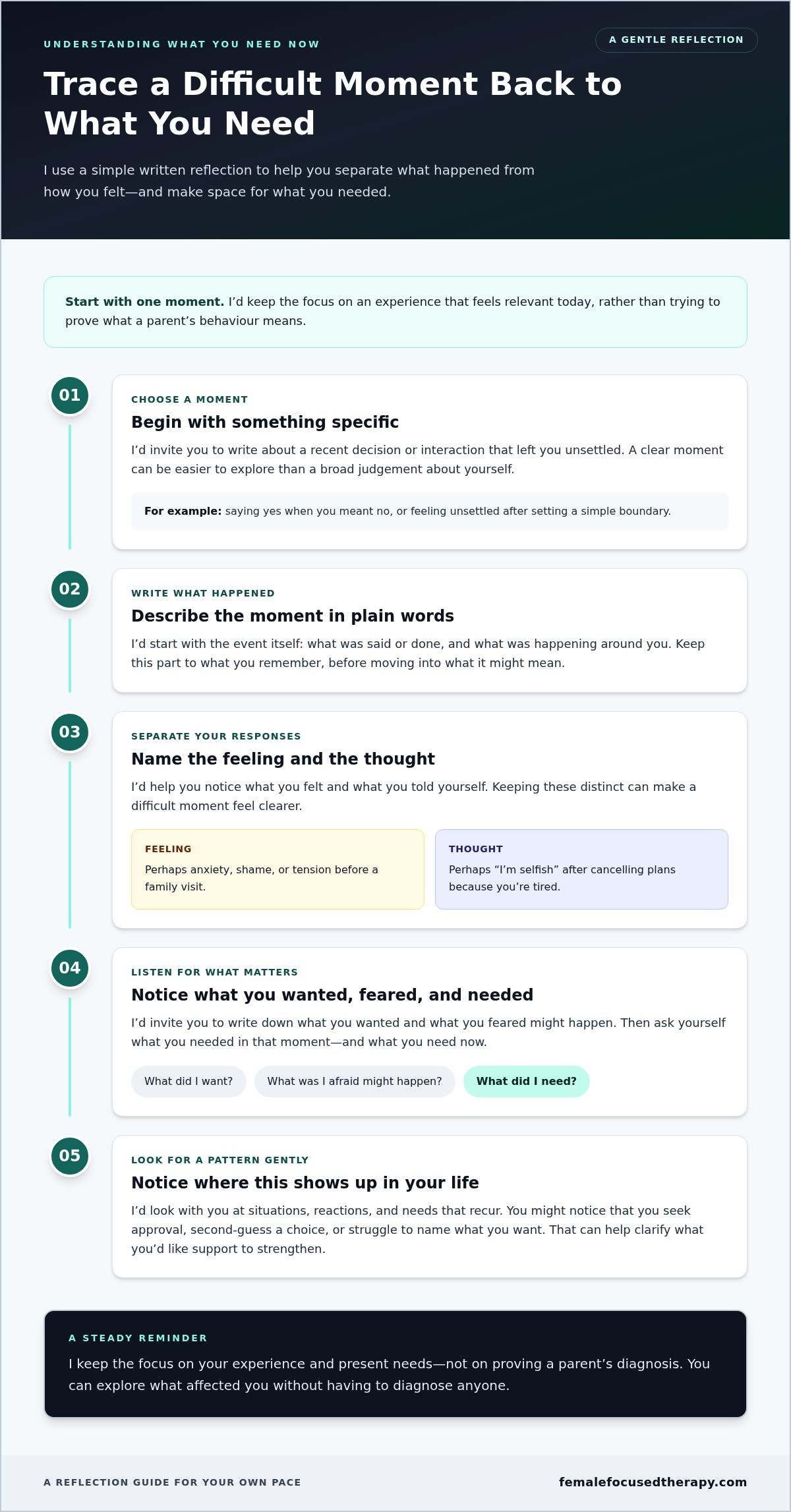
In a session, I’d invite you to describe a memory and notice what you feel toward yourself now. You could write down what happened, how you felt, and what you needed at the time. I’d keep our attention on your experience and present needs, rather than proving a parent’s diagnosis. My work with relationship trauma and narcissistic abuse can give you space to explore these experiences.
Self-esteem, anxiety, depression and shame
Earlier relationship experiences may affect how you judge yourself today. We can start with specific moments, feelings and choices that are troubling you now.
Self-Esteem and Identity
If you learnt to measure your worth through approval, you might feel valuable after helping everyone at work, then guilty when you rest. We can explore how that pattern affects your self-esteem without treating it as a fixed part of who you are.
You might feel unsure which opinions are yours and which you adopted to avoid conflict. Try writing down a recent decision, what you wanted and what you feared might happen. This can help you separate your own preferences from pressure to please someone else.
If your role in the family was to achieve, care for others or stay quiet, you may now feel uncertain about your identity. You might know what your partner, manager or relatives need, but struggle to name what you need. Therapy can make space for questions such as, “What matters to me?” and “What do I enjoy when nobody is grading me?”
Your confidence may also shift across different parts of life. You might trust your judgement with friends but doubt yourself in a relationship that echoes older family dynamics. Notice where that change happens. A short list of situations, reactions and needs can help clarify what you’d like to strengthen.
Anxiety, Depression, and Shame
You may find yourself replaying a conversation, anticipating criticism or feeling tense before a family visit. Perhaps you read a short message several times, looking for signs that you’ve upset someone. Notice when the worry begins and what you’re telling yourself in that moment.
If everyday tasks feel heavy, or shame turns one experience into a judgement about your whole self, it may help to slow down and look at what happened. After cancelling plans, for instance, you might think, “I’m selfish,” rather than recognise that you’re tired. Try naming the event, feeling and thought separately.
You might notice people-pleasing, fear of abandonment or difficulty setting boundaries alongside anxiety or low mood. These experiences alone don’t prove a disorder. In therapy, you can describe specific situations, such as saying yes when you mean no or withdrawing when you feel judged.
Writing can help clarify memories, feelings and uncertainties. You could note a recent moment of shame, what happened just before it and what you needed. We can use your reflection to understand your current responses, not to decide what diagnosis fits your parent.
If you’d like support exploring these patterns, you can book a therapy appointment at a pace that feels manageable.
EMDR and attachment-focused therapy
Different therapy approaches offer ways to explore painful memories and relationship patterns. We can begin with what feels difficult now and what you want support to change.
Therapy for adult children of narcissists may draw on CBT, EMDR, schema therapy or trauma-focused therapy. CBT explores links between thoughts, feelings and actions; EMDR works with distressing memories; schema therapy considers longstanding beliefs. Trauma-focused therapy centres the effects of difficult experiences. The right focus depends on your goals, such as understanding a trigger or changing a self-critical response.
For example, you might feel a surge of shame after receiving feedback at work. CBT could help you notice the thought that one mistake means you’ve failed. Schema work might explore how that belief became familiar. These approaches can be discussed in plain language, so you understand what you’re agreeing to and how it relates to your needs.
Therapy can explore distressing memories at a pace that feels manageable. You can discuss what feels comfortable, agree how to pause and check in about your feelings as you go. You don’t have to begin with the most difficult memory. Starting with a present-day concern can help keep the work focused on what you need now.
Attachment-focused work explores how early relationships may shape what you expect from closeness, trust and care. If a delayed reply from a friend leaves you fearing rejection, you might examine the meaning you give that silence. Therapy for adult children of narcissists can help you understand such patterns without treating them as your whole personality.
Therapy can explore how childhood emotional wounds and difficult family relationships affect your present, while helping you find ways to feel steadier. You can share what feels useful at the time and work with present-day concerns before exploring earlier memories.
When considering a therapist, notice whether they explain their approach, listen to your aims and respect your pace. Pressure to revisit memories or make a major family decision before you feel ready is a reason to pause. Take seriously a response that dismisses your feelings or insists on diagnosing your parent.
You can ask what happens if a session feels overwhelming, how you can pause and how you’ll review your progress. A thoughtful answer should leave space for your questions and choices. Before a first conversation, write down one concern and one hope for therapy. That gives you a simple starting point without needing to tell your whole story at once.
Low-contact and no-contact choices
You don’t have to choose between full contact and no contact straight away. No contact isn’t necessary for everyone. You might choose low contact with firm limits, while no contact may feel necessary for your safety and wellbeing.
Start by noticing what happens before and after contact. Does a short call leave you tense for the evening, or does a family lunch bring up difficult feelings? Write down the situation, your response and what would help you feel more settled. This gives you something specific to consider, rather than a decision made in a moment of pressure.
Low contact can mean shaping how you communicate. You might choose brief phone calls instead of long visits, or answer messages when you have the capacity. A boundary could sound like, “I can talk for a while, but I’m ending the call if we discuss my relationship.” A clear limit gives you a practical way to protect your time.
You can also decide which subjects you’ll discuss. If questions about your finances leave you feeling exposed, you might say, “I’m keeping that private.” Then change the subject or end the conversation if the questions continue. Planning your words beforehand can make it easier to stay connected to yourself during a difficult exchange.
Contact choices can involve other relatives. You may want to attend a birthday gathering but leave before dinner, or travel separately so you can go home when you choose. Think through the details beforehand: where you’ll sit, how long you’ll stay and what you’ll do if an old family pattern begins. Those steps help turn a boundary into something you can practise.
No contact is a personal choice, not a test of your empathy or love. You might consider it if contact repeatedly affects your safety or wellbeing, or if firm limits aren’t respected. You can also take time to think through practical matters, such as shared responsibilities or family events, before deciding what feels right.
Guilt and grief may appear alongside relief. You may miss a parent and still feel calmer after pausing contact. Those feelings can exist together. A trusted person can help you reflect without pushing you towards reconciliation or separation. You’re allowed to notice what each choice brings up for you.
In therapy, you can explore the trauma and family patterns behind your contact choices without being told what to do. I’d help you ask questions such as, “What do I need to feel safe?” and “Which limit can I realistically keep?” If a decision feels too large today, focus on one upcoming interaction and choose a manageable boundary for it.
You may review your choice as circumstances change. A limit that helped during one family event might need adjusting before the next. Notice whether you feel more grounded, more distressed or caught in the same pattern after contact. That reflection can guide your next step, while keeping decisions about your relationship in your hands.
Therapy goals for adult children of narcissists
We can shape therapy around what you want to change in daily life, not a label for your parent. Goals can make healing feel more practical and personal.
Recognising Progress and Treatment Duration
Progress may show up in small moments: you pause before agreeing to a request, recover sooner after criticism or name what you need without apologising. We can reflect on these changes and what still feels difficult. The focus and pace of therapy depend on your needs and goals, and we can revisit them as they become clearer.
Setting Therapeutic Aims
Your aims might include rebuilding self-esteem, practising boundaries, reconnecting with your values, managing triggers and strengthening resilience. For example, you could work towards saying no to an extra family commitment without spending the evening criticising yourself. We can turn a broad wish, such as “I want to feel more like myself”, into a goal you can recognise in ordinary moments.
In a first session, we can discuss what brings you to therapy, what feels most pressing and what you hope might change. We can also explore relevant family experiences and agree on a starting focus. Ongoing sessions give you space to reflect and adjust those aims.
You might also want to understand how a parent’s behaviour affected your emotional responses. Learning about narcissistic personality disorder can provide context, but it doesn’t mean diagnosing your parent. We can focus on the patterns you experienced and how you respond now, such as feeling responsible for keeping the peace during disagreements.
A useful goal could be noticing a trigger earlier. If a relative’s critical comment stays with you all day, you might identify the thought it stirred, then choose what support or boundary would help. Over time, you can look for changes in how quickly you recognise the pattern and care for yourself afterwards.
Therapy can also support healthy relationships beyond your family. You might practise telling a trusted friend what kind of support you want, or notice when you’re agreeing out of fear rather than choice. These are concrete ways to explore trust, connection and self-respect in the present.
We can check whether your goals still fit as life changes. A boundary with a parent may feel central at first, while later you may want to focus on dating, parenting or confidence at work. You can bring those shifts into sessions and decide together what deserves attention next.
If you’d like to work on goals that reflect your experiences and current needs, you can book an individual therapy session.
Female Focused Therapy: Individual Psychotherapy Sessions
At Female Focused Therapy, I offer individual psychotherapy and counselling for women navigating family experiences and choosing goals that feel relevant now. If shame, anxiety, relationship patterns or uncertainty about contact with a parent are affecting your life, we can explore these concerns gently and at your pace.
My work includes support around narcissistic abuse, with sessions available in person in Singapore and online globally. Our work can give you space to understand your reactions, strengthen boundaries and reconnect with what matters to you. You don’t need to arrive with a diagnosis or a finished plan. We can begin with what feels most present for you.
If you’d like to explore whether this feels like a helpful next step, you’re welcome to visit Female Focused Therapy.
Choose One Gentle Step Towards Yourself
You don’t need to settle every question about childhood before beginning. Start with what you need in the present: perhaps a calmer response to a difficult conversation, more room for your choices or a clearer sense of what feels safe. In therapy for adult children of narcissists, I keep your current needs at the centre, rather than making your experience depend on a label for a parent.
You could take a quiet moment to write down one change you hope for, even if it feels small. Maybe you want to speak more kindly to yourself after a mistake, or feel steadier before a family interaction. We can use that intention as a starting point, then make space for it to change as you learn what supports you. You don’t have to arrive with the perfect words.
If you’d like to explore this work with me, you’re welcome to book an appointment with Female Focused Therapy. I’ll listen to what matters most to you and help you consider a next step at a pace that feels manageable. You can begin exactly where you are, with patience for yourself.
Frequently Asked Questions
Do I have to go no-contact?
No, you don’t have to choose no contact to take your experience seriously. You might decide what feels manageable around a specific occasion, such as a family celebration or holiday. Notice whether your choice reflects your needs or pressure from relatives. You can change your approach as circumstances shift; it doesn’t need to become a permanent statement about love, forgiveness or who you are.
What are the long-term effects of narcissistic parenting?
Possible effects include difficulty trusting closeness, feeling responsible for other people’s moods or worrying about repeating family patterns in your own parenting. These experiences vary, and they don’t define your future. You might notice a reaction, such as becoming unusually worried when someone you love is disappointed, and explore what support would help you respond with more choice.
What is narcissistic abuse?
I use the phrase to describe repeated behaviour in a relationship that leaves you feeling controlled, diminished or unsure of your own experience. For example, a parent might repeatedly dismiss your feelings or make affection seem dependent on pleasing them. The phrase describes the impact you’re exploring, not a diagnosis of the other person. A pattern matters more than a single disagreement or difficult moment.
What types of therapy help adult children of narcissistic parents?
Different approaches can help with different aims; there isn’t one method that fits every person. You might explore CBT for present-day thought patterns, EMDR for distressing memories, or attachment-focused work for expectations around closeness and trust. I’d discuss what you want help with and explain how an approach could fit. You can also raise concerns about pace, choice and how you’ll review your goals together.
How can I set boundaries or go no-contact with a narcissistic parent safely?
Before communicating a limit, think through your practical needs. Consider shared responsibilities, important documents, housing arrangements or support you may rely on. Choose a communication method that feels manageable, and tell someone you trust what you’re planning. If you’re concerned about immediate safety, prioritise getting help from appropriate local emergency or support services before making contact or announcing a change.

Article by
Cheryl Kennedy MacDonald MA BA (Hons) Pg. Dip. SAC BACP
Cheryl Kennedy MacDonald is a psychotherapist specialising in women’s mental health, relationships, and life transitions. She works with women navigating trauma, relationship breakdown, identity shifts, and midlife change, helping them rebuild self-trust, emotional stability, and a clear sense of who they are and what they want.
With over 20 years’ experience working with women internationally, Cheryl is the founder of YogaBellies, a global women’s yoga school, and the creator of the Birth ROCKS method. Her work sits at the intersection of psychotherapy and embodiment, integrating evidence-based therapeutic approaches with somatic, body-based practices that support deep, lasting change.
Known for her grounded and direct approach, Cheryl moves beyond surface-level insight to address the patterns held in the body and nervous system. Her work supports women to regulate, reconnect, and respond to their lives from a place of clarity, strength, and self-respect.
She is a published author in academic journals and has written multiple books on women’s health, pregnancy, and midlife wellbeing, available on Amazon and leading book retailers worldwide.